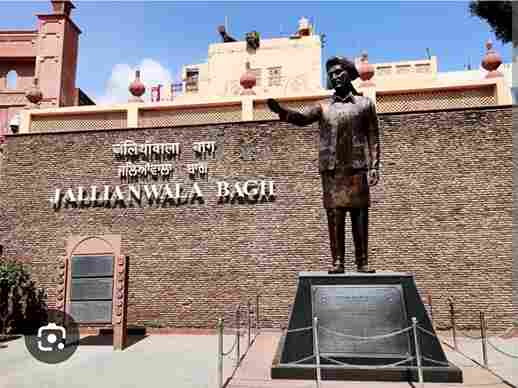
April 13: Ten Minutes That Shook the World
(Remembering 107 Years of the Massacre in India)
By Ali Aminulloh
History is sometimes not changed by a long war, but by ten minutes that never end in human memory. On April 13, 1919, in a narrow garden called Jallianwala Bagh, bullets fired without warning struck bodies, but instead awakened the soul of a nation.
April 13 is not just a point on the calendar. It is a node in time, where events, from love to human tragedy, converge in a single historical line. Some celebrate love, others remember pain, and still others rekindle awareness of the meaning of independence.
But of all the commemorations, the world finds it difficult to turn away from one event: the Jallianwala Bagh Massacre in Amritsar.
It was there that colonialism showed its most naked face.
A Garden Turned into a Trap
That afternoon coincided with the Baisakhi festival, a major holiday for the people of Punjab. Thousands of people, men, women, and even children, gathered. Some came to celebrate the harvest, others to voice peaceful protest against the Rowlatt Act, a repressive law that gave the British the power to arrest without trial.
Little did they know, the garden was a trap.
Jallianwala Bagh was surrounded by high walls with limited access. When Reginald Dyer entered with his troops, there was no room to flee and no warning to save themselves.
Ten Minutes That Killed Fear
At 5:30 p.m., without warning, the order to fire was given.
For approximately ten minutes, 1,650 bullets were fired into the unarmed crowd. Soldiers were even directed to fire at the densest points.
People pressed against each other, some trying to climb the walls, others jumping into a well in the center of the garden to escape the bullets. The well later became a mass grave.
The official British account recorded 379 deaths. However, Indians believe the number was more than a thousand.
Even more tragically, after the firing stopped, the victims were left without help. That night, wounds and death were left to do the rest.
When Bullets Change History
The event was not just a massacre. It was a turning point.
Mahatma Gandhi, who had previously believed in British justice, was completely transformed. From a reformer, he became a leader of resistance.
In his speech, he asserted:
“Their bullets may pierce our bodies, but they will never pierce our souls.”
This was the birth of the Non-Cooperation movement: a mass boycott of the colonial system. Schools were abandoned, degrees were returned, and people chose to stand on their own two feet.
Meanwhile, the great poet Rabindranath Tagore restored the title “Sir” bestowed by the British. A symbol that honor could not coexist with barbarity.
A Revenge That Waited 21 Years
But history holds more than just peaceful resistance.
A young man named Udham Singh witnessed the tragedy firsthand. He helped recover bodies, bury victims, and carry home the trauma that would never be resolved.
For 21 years, he waited. Finally, in 1940 in London, he shot and killed Michael O’Dwyer, a colonial figure considered responsible for the Amritsar tragedy.
For Britain, he was a murderer.
For India, he was a martyr.
History, as he said before his execution, will decide.
April 13: Between Wounds and Meaning
Interestingly, the same date is also filled with other commemorations around the world. There’s International Kissing Day, which celebrates love. There’s Scrabble Day, which commemorates human creativity. There’s even Yom HaShoah, a day to remember the Holocaust.
This contrast seems to emphasize one thing: humans are capable of tender love, but also unimaginable cruelty.
Values That Must Not Be Forgotten
From Jallianwala Bagh, the world learned:
– Power without morality breeds tragedy
– Resistance doesn’t always require weapons
– History belongs not only to the victors, but also to the victims
Those ten minutes in Amritsar may have passed more than a century ago. But the echo of the gunshots can still be heard, not as the sound of bullets, but as a call to never forget.***
Indonesia, April 13, 2026
——-