Laughter Amidst Tension
(Reflection on the Commemoration of Fun Day, April 1st)
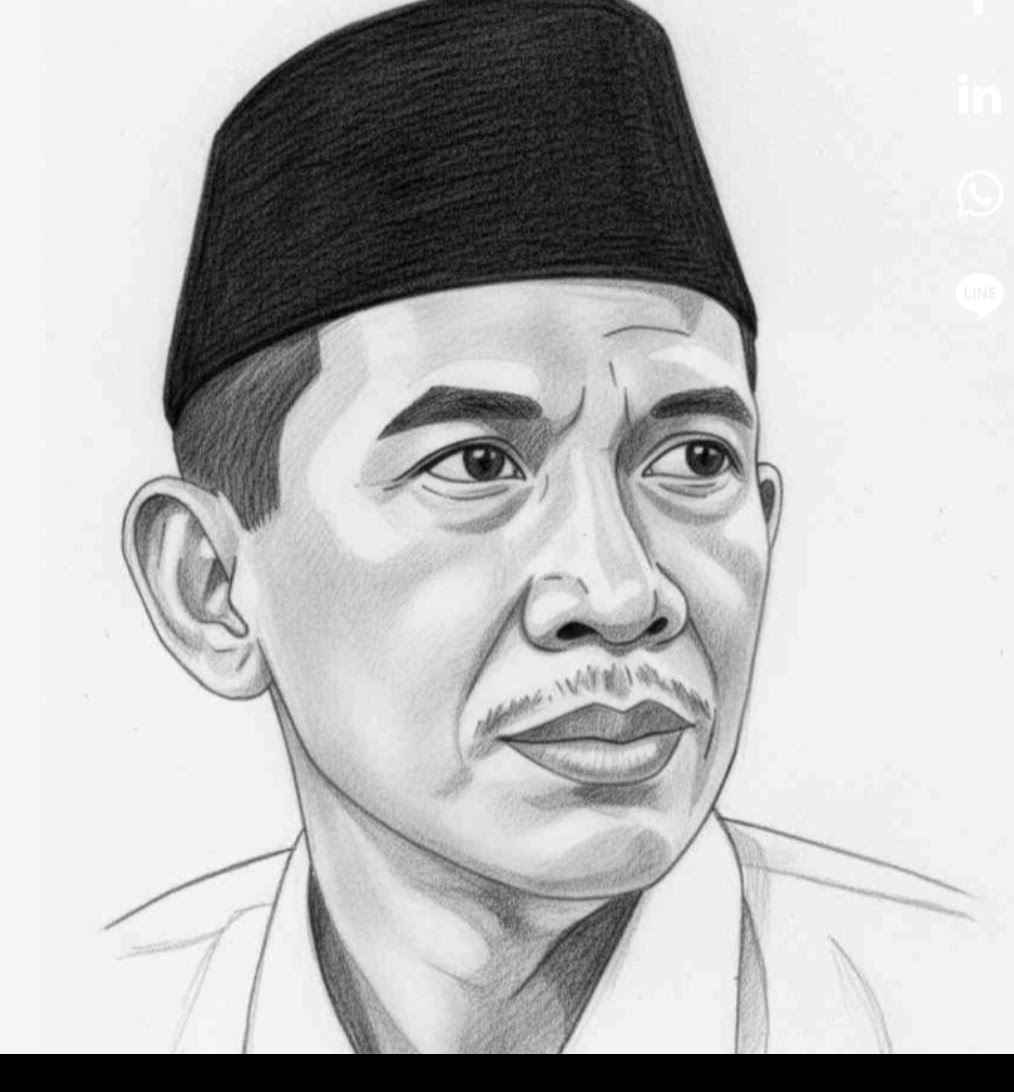
By: Ali Aminulloh
The world is not in a good mood. On the one hand, conflicts are heating up: the shadow of war between Israel, the United States, and Iran haunts the global sense of security. On the other hand, waves of demonstrations are emerging across the country, while work pressures are increasingly suffocating. Life feels like a continuous rush, a continuous seriousness. However, amidst the hustle and bustle and tension, April 1st comes like a small pause, a reminder: humans were not created merely to survive, but also to laugh.
This date holds three unique commemorations that seem simple, yet are full of meaning. There’s International Fun at Work Day: a day of fun at work. There’s Fossil Fools Day: a day of criticism of the environmental crisis, mixed with humor. And, of course, April Fools Day: a global day of jokes. All three seem to unite to convey the same message: amid the seriousness of life, humans still need space for lightheartedness.
In the workplace, for example, fun isn’t just entertainment. It’s a necessity. Amidst the pressure of targets, deadlines, and professional demands, a warm and pleasant atmosphere can actually increase productivity. Simple activities like team games, employee appreciation, and even eating together not only break the monotony but also strengthen social bonds. From a human perspective, these are not trivial matters, but rather part of a basic need for self-actualization.
However, the fun on April 1st doesn’t stop at meaningless laughter. Fossil Fools Day demonstrates that humor can also be a tool for intelligent criticism. In a humorous way, people are encouraged to recognize the “ridiculousness” of humanity’s dependence on fossil fuels, which are destroying the earth. Jokes here aren’t an escape, but a subtle form of resistance, raising awareness without inciting hostility.
Meanwhile, April Fools Day teaches an important lesson in social relationships: closeness often arises from shared laughter. Lighthearted jokes, as long as they’re not hurtful, act as a bridge that melts relationships, breaks down barriers, and brings warmth between people.
In this context, the concept of the trilogy of awareness, as expressed by Shaykh Al Zaytun, is relevant to reflect on.
First, philosophical awareness: that life is not only about seriousness and burdens, but also about balance. Laughter is part of how humans understand life more fully, that beneath the heaviness of reality, there is room to enjoy existence.
Second, ecological awareness, reflected in Fossil Fools’ Day. Humor serves as a medium to raise human awareness and be more environmentally conscious. Protecting the earth doesn’t always have to involve anger, but can also involve creativity and intelligence in conveying messages.
Third, social awareness, evident in shared laughter. Both in the workplace and in everyday life, humor can strengthen relationships, foster empathy, and create harmony amidst differences.
More deeply, Islam has long taught this simple yet extraordinary value. The Prophet Muhammad (peace be upon him) said, “Your smile for your brother is charity.” (Narrated by Tirmidhi). In another hadith, he is known as a person who smiles readily, bringing calm and warmth to anyone with whom he interacts. Tabassum (a sincere smile) is not just a facial expression, but a simple yet impactful form of social worship.
In this perspective, a smile is not just a polite gesture, but a form of caring. It reduces distance between people, soothes anxious hearts, and can even be a source of positive energy for others who are tired of facing life.
Interestingly, what the Prophet Muhammad (peace be upon him) taught centuries ago is now reinforced by modern psychology. Experts have discovered that smiling, even when forced, can trigger the release of endorphins and serotonin, natural chemicals in the body that function to increase feelings of happiness and reduce stress. Research popularized by psychologists like Paul Ekman shows that facial expressions not only reflect emotions but can also shape them.
Neuroscientists also explain that when someone smiles, the brain sends positive signals throughout the body, lowering blood pressure, slowing the heart rate, and creating a sense of relaxation. In other words, smiling is not only a social act of worship, but also a healthy biological therapy.
At this point, we find a harmony between spiritual values, social awareness, and science. That laughing, smiling, and bringing joy are not trivial matters, but rather fundamental human needs, both spiritually and physically.
Therefore, April 1st is not just a day for joking. It is a subtle reminder that humans need a break, a small space to smile, even in the midst of the storms of life. The world may not always be under our control, conflicts may continue, and the pressure may never subside. But how we respond with a little laughter, a little lightness, is what keeps us human.
In an increasingly tense world, perhaps what we need isn’t just grand solutions, but also the courage to smile. Because perhaps, from one simple smile, a stronger soul, a clearer mind, and a slightly warmer world are born.**
Indonesia, April 1, 2026
——–