PRABOWO AND ISLAMIC MASS ORGANISATIONS, A PROJECTION OF THE ROLE OF SHODIQUL HUKUMAH MUI INDRAMAYU
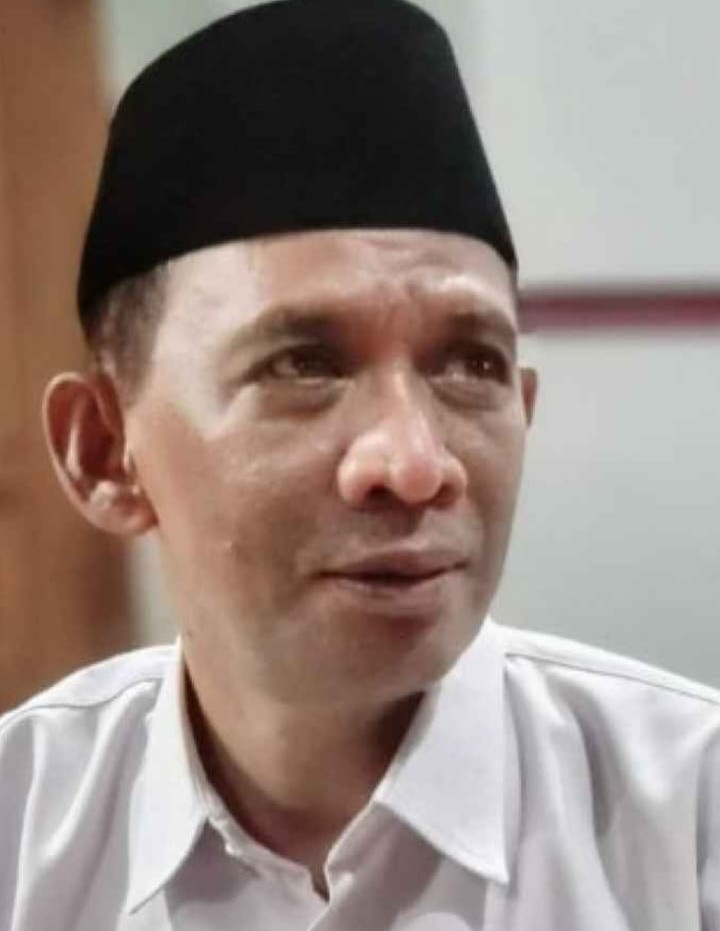
By: H. Adlan Daie
Political analyst, Secretary General of the MUI, Indramayu Regency.
What can we understand from President Prabowo’s “bukber” (“breaking the fast together”) event, which invited religious scholars (the Chairmen of the MUI, the Nahdlatul Ulama (NU), Muhammadiyah Central Board, etc.) and several Islamic preachers to the Merdeka Palace last Thursday (“Kompas”, March 5, 2026) – regardless of the current geopolitical issues surrounding Prabowo?
The author’s perspective reads the above momentum as more than just a ceremony and political protocol for Prabowo to fill the Ramadan period, but rather demonstrates his understanding that Indonesia’s political demographic, with its Muslim majority population, cannot be separated from the role of Islamic organizations in maintaining the morale of political power.
At the elementary level of political science, meaning even the most basic level, for example, in Professor Mariam Budiardjo’s book “Fundamentals of Political Science,” politics is not just about winning elections or regional elections, but how the authority of power achieved is based on the principle of political moral legitimacy.
This moral legitimacy is the central responsibility of the Indonesian Ulema Council (MUI), as a forum for gathering Muslim scholars and intellectuals from various Islamic organizations. Its existence cannot be underestimated in any political power regime within a government structure with a Muslim majority.
Without the moral legitimacy of the ulama, power, even if chosen by the people, will be fragile, its political authority will easily collapse, its span of control will be weak, and it will quickly experience a crisis of socio-political legitimacy. The ultimate effect is the potential for the “collapse” or “breakdown” of the political power base.
As an illustration in the study of the history of political power in Indonesia, Bung Karno was once supported by the moral legitimacy of the ulama. The 1953 National Conference of Islamic Scholars (Munas) in Puncak, Bogor, awarded Bung Karno the title “Waliyul Amri Addaruri bil Syaukah,” a leader with full temporary power.
The legitimacy of “Waliyul Amri” was the basis of Bung Karno’s power, despite not being elected by the people due to the emergency situation. However, it effectively mobilized popular participation in crushing armed civil separatist rebellions and consolidated the state’s fiscal limitations by igniting the “ghiroh” (communal cooperation) of the people.
This is what Prof. Nurcholis Madjid calls a “Psychological Striking Force,” where Islamic organizations provide the inner energy for those in power to effectively exercise their political power in the face of challenges of social disruption and mitigate the possibility of unexpected political dynamics.
Therefore, the role of the Indonesian Ulema Council (MUI), as a forum for gathering Islamic scholars across Islamic organizations, cannot be underestimated; it is not a “small organization.” The MUI is deeply rooted in the history of the movement for Muslim national consciousness, uniting in Islamic organizations since the Dutch colonial era.
The lesson, in the context of Indramayu, is the importance of building a relationship of honest political maturity between the Ulama and the Umara, not a relationship of lip service and “selfie” displays, but rather a relationship of mutual need, reciprocity, and mutual support.
That is the “khittah” of the MUI as “Shodiqul Hukumah,” a partner of the government in the construction of the Unitary State of the Republic of Indonesia (NKRI), a symbol of moral independence, a da’wah movement that commands good and forbids evil, supports what is right and beneficial, and corrects what is wrong and harmful.
That is the true principle of the MUI’s partnership with the government: it remains a pillar of public ethics. The MUI must not become a political opposition movement, but it must not engage in moral infidelity, except to maintain the moral standing of political power in the public sphere.
Therefore, from the MUI’s perspective, political power should not be exercised solely on formal administrative procedures (especially if it’s manipulated “because they want to”) but must also consider the principles of religious morality and ethics, the level of public interest, and the threshold of political propriety in the public sphere.
With this awareness in mind, the regional government, the Regional People’s Representative Council (DPRD), and others must establish a partnership with the Indramayu MUI to pass on the integration of Islamic and national values to future generations.
Beyond the constructive relationship mentioned above, especially if it merely displays “egocentrism of power,” the social costs are too high to be allowed to continue. It has the potential to cause unexpected political turbulence and escalation, and we must work together to prevent this.
Regards.
Indramayu, March 6, 2026
———