Human Rights, Our Everyday Essentials: Grounding Human Rights from the Declaration to the Digital Age
(Reflection on the Commemoration of World Human Rights Day)
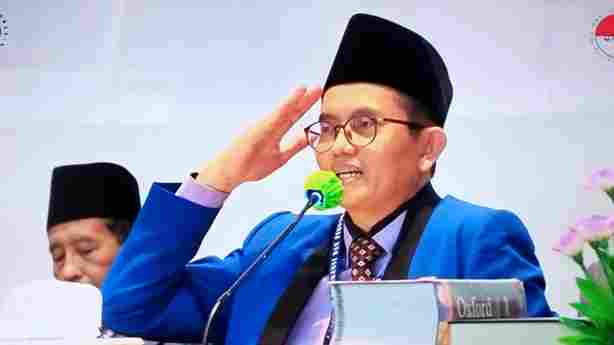
By: Dr. Ali Aminulloh, M.Pd.I., ME
When Humanity is Tested: Global and National Human Rights Challenges
Every December 10th, the world commemorates Human Rights Day, marking the anniversary of the UN’s Universal Declaration of Human Rights (UDHR). The theme of the 2025 Human Rights Day commemoration is “Human Rights, Our Everyday Essentials.” This suggests that the essence of human rights, as our everyday needs, is still frequently threatened, both globally and in Indonesia.
On the world stage, we are witnessing acute humanitarian crises: armed conflicts that claim civilian lives, discrimination based on race, religion, and gender that continues to hinder equality, and a global refugee crisis that demands urgent attention. Freedom of opinion and expression is increasingly being suppressed in many countries, distancing us from the ideals of a democratic and open society.
In Indonesia, despite having a strong constitutional and legislative foundation, the homework related to human rights remains piling up. Classical issues such as the stalled resolution of past human rights violations, unequal access to justice and education, and agrarian issues that often sacrifice the rights of indigenous peoples and farmers remain major challenges. Furthermore, the emergence of social polarization that threatens tolerance and unity is also a serious concern in the context of the right to peaceful coexistence.
Exploring the Spirit of Birth: A Call of History Relevance
The UDHR was born out of the immense suffering of World War II, a collective recognition that atrocities must never be repeated and that every individual has an inherent dignity that must be protected. This Declaration is essentially a global humanitarian promise: the right to life, freedom from torture, freedom of expression, the right to education, and the right to an adequate standard of living.
The spirit we need to carry forward today is the spirit of universality, non-discrimination, and interdependence. Human rights are not simply legal documents; they are the moral compass that guides civilization. In the modern era, this spirit must be implemented through:
• Concrete Action: Not only demanding rights, but also fulfilling the obligation to respect the rights of others.
• Inclusion: Ensuring that minority and vulnerable groups are not marginalized from development and legal protection.
• Contextual Relevance: Applying human rights values to address contemporary problems, such as poverty and climate change.
Facing New Shadows: Challenges to Human Rights in the Digital Age
The digital age offers enormous opportunities for human rights—as a space for expression, access to information, and a means for civil society organization. However, it also presents new challenges. Worrying Facts:
• Mass Surveillance: The massive collection of personal data has the potential to violate the right to privacy.
• Misinformation and Hate Speech: The rapid and widespread spread of disinformation threatens the right to accurate information and fuels discrimination and violence.
• Algorithmic Bias: Discriminatory artificial intelligence (AI) systems can reinforce existing social inequalities, violating the principle of non-discrimination.
Human rights in the digital age now include the right to connectivity, the right to be forgotten (data privacy), and the right to be free from digital manipulation.
Education as the Foundation of Human Rights Civilization: Learning from Al-Zaytun
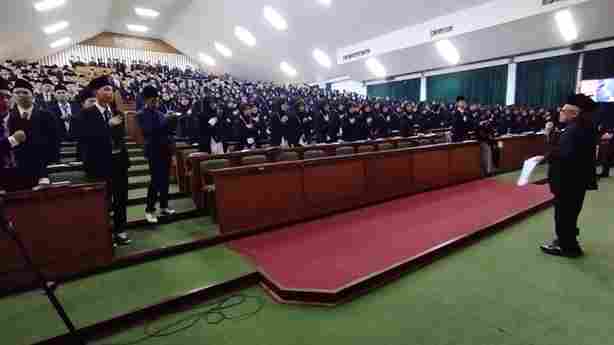
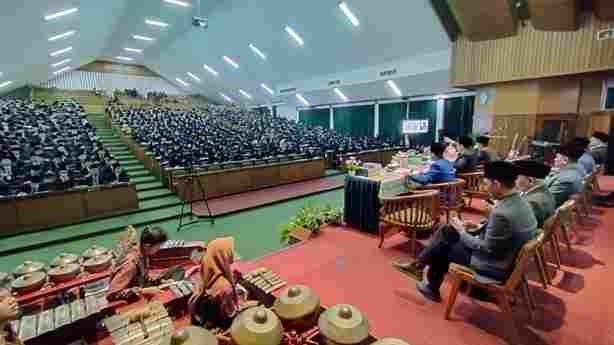
The answer to the ever-growing challenges of human rights lies in education. Human rights must be instilled not as an additional subject, but as a living consciousness.
This is where the role of educational institutions like Mahad Al-Zaytun becomes highly relevant. Since its inception, Al-Zaytun has placed human rights at the core of its educational philosophy, encapsulated in its motto: “Educational Center for Developing a Culture of Tolerance and Peace Towards a Healthy, Intelligent, and Humane.”
Shaykh Al-Zaytun has consistently led efforts to build a civilization rooted in human rights through early childhood education. At Al-Zaytun, human rights are taught specifically and in-depth. In fact, at the end of each academic year, students receive integrated guidance in which human rights are a mandatory topic. This demonstrates our commitment to producing graduates who are not only intellectually intelligent but also possess a high level of human awareness.
Three Pillars of Awareness for the Future of Human Rights
The future of human rights will depend greatly on our ability to dan instill the three pillars of awareness that Al-Zaytun has put into practice:
1. Philosophical Awareness: Cultivating a fundamental understanding that every human being has equal dignity, regardless of background. This is the essence of tolerance and acceptance of differences.
2. Ecological Awareness: Understanding that the right to a decent life is closely linked to environmental sustainability. Caring for the earth is an integral part of safeguarding human rights future generations.
3. Social Awareness: Mobilizing concern and responsibility for others, especially marginalized groups. This manifests in concrete actions for social justice and the rejection of all forms of oppression.

Epilogue: Cultivating True Humanity
Commemorating Human Rights Day is not just a ceremony, but a call to action every day. Human rights are truly a mirror that reflects our own humanity. When we witness human rights violations, we see our collective failure to recognize the dignity of others.
Through transformative education—one that teaches philosophical, ecological, and social awareness—we plant the seeds of true humanity. Al-Zaytun proves that schools can be laboratories of peace, where the seeds of human rights are grown into trees of civilization.
Let us make December 10th a momentum to reaffirm that human rights are the air we breathe, the water we drink, and the foundation of the home in which we live together. Our duty is to safeguard it, protect it, and ensure that every human being, wherever they are, can experience it as an inseparable daily necessity.**
Indonesia, December 10, 2025
——-