UNNES Community Service Team Trains Environmental Cadres at Mugi Berkah Sari Waste Bank in Semarang
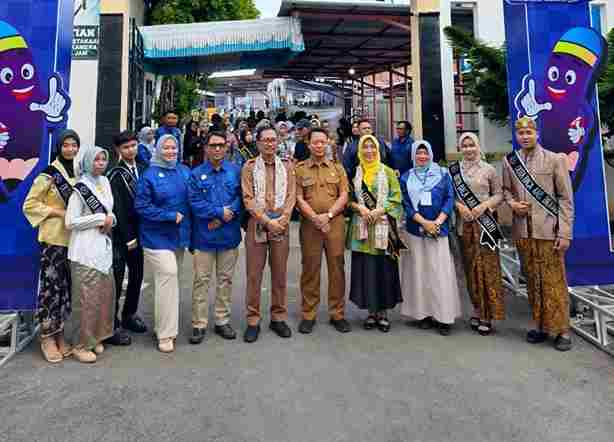
SEMARANG-JAYA NEWS.COM – A team from the Faculty of Mathematics and Natural Sciences (FMIPA) of Semarang State University (UNNES) held team building and environmental cadre training at the Mugi Berkah Sari Waste Bank in Tegalsari Village, Candisari District, Semarang City, on Saturday (September 20, 2025).
Forty participants of various ages attended the training. This activity is part of the Revitalization of Community-Based Waste Management at Waste Banks in Densely Settlements in Semarang City program, funded by the Directorate of Research and Community Service, Directorate General of Research and Development, Ministry of Higher Education, Science, and Technology in 2025.
This community partnership empowerment program has been running since July 2025. The series of activities includes participatory mapping, waste sorting workshops, implementation of a waste recording management system, and team building and environmental cadre training.
Mugi Marjoko, the Head of Tegalsari Village, expressed his appreciation for the community service activities carried out by the UNNES team. He hopes this program can be sustained and expanded to all waste banks in his area.
“Activities like this are very beneficial for the community. I hope this can continue and expand to other waste banks in Tegalsari Village,” said Marjoko.
The Head also expressed his hope that this waste management program could be integrated with the Red and White Cooperative program. This integration is expected to have a greater economic impact on the community.
Untari, Head of the Mugi Berkah Sari Waste Bank, expressed her gratitude for the assistance provided by the UNNES Faculty of Mathematics and Natural Sciences team. She hopes there will be a follow-up program in the form of organic waste processing training.
“We are very grateful to the UNNES team for assisting us. We hope there will be a continuation of the organic waste processing training,” said Untari.
The Mugi Berkah Sari Waste Bank currently focuses on managing inorganic waste such as plastic, paper, and metal. Processing organic waste into compost or other products with economic value remains an unmet need.
Prof. Murbangun Nuswowati, a resource person and member of the community service team, emphasized the importance of waste management starting at home.
According to her, this effort can reduce the burden of urban waste processing while simultaneously providing economic benefits to the community.
“Waste management must start at home and continue at waste banks. This will reduce the burden of municipal waste management and provide economic value to the community,” said Nuswowati.
Data from the National Waste Management Information System (SIPSN) shows that 40 percent of the 70 million tons of national waste per year comes from households. Proper management at the community level can significantly reduce this burden.
Abdul Jabbar, Head of the Community Service Team, explained that this program is part of the Tridharma of Higher Education and is designed to have a real impact on the community.
“This community service is part of the Tridharma of Higher Education. We designed this program to have a direct impact on the community,” said Jabbar.
The program also involves the younger generation in household waste management.
Trida Ridho Fariz, a member of the community service team, encouraged youth participation in waste management innovations using digital technology.
SIPSN data shows that only 38.63 percent of national waste will be managed properly by 2024. The remaining 61.37 percent remains poorly managed.
In Semarang, despite having 497 registered waste banks, not all are operating optimally. Limited management knowledge and a lack of waste processing innovation are major obstacles.
Ongoing mentoring programs like those conducted by the UNNES team are considered crucial for improving the capacity of waste bank managers to serve the community.
This team building and environmental cadre training activity is a concrete step towards increasing the capacity of community-based waste management in Semarang City. This program is expected to become a model for replication in other regions in Indonesia.**
Nur Fateah Mawardi
UNNES Lecturer
—