Building National Character From the Canteen Benches: Queuing Culture at Mahad Al Zaytun Indramayu
By Dr. Ali Aminulloh, S.Ag. M.Pdi. ME (Lecturer at IAI Alazis and Chair of MPAP Al Zaytun)
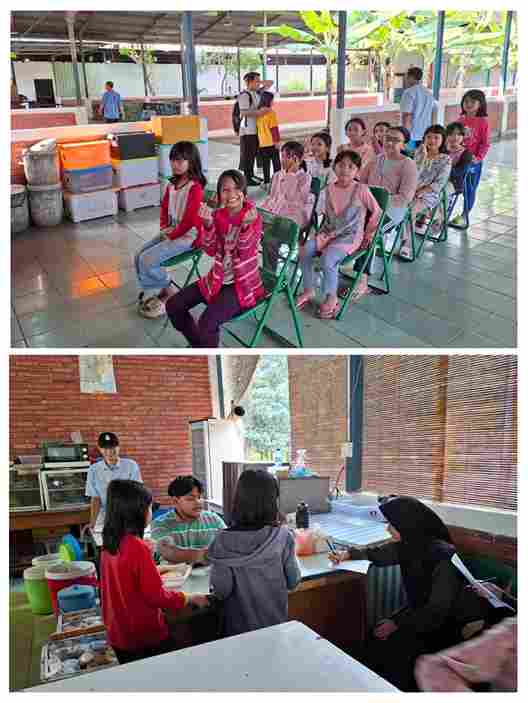
On Thursday afternoon, August 7, 2025, at Mahad Al Zaytun, a simple yet meaningful sight greeted my eyes. In front of a canteen snack stand, dozens of children were lined up neatly, sitting patiently on the chairs provided.
“Queueing for snacks, Ustaz,” they answered in unison with innocent smiles when I asked.
This sight, for an educator, is a reflection of success. Mahad Al Zaytun, known as a center for education and the development of a culture of tolerance, proves that education does not only take place in the classroom. With its boarding school concept, all on-campus activities become an integral part of the learning process. Including queuing.
Elementary school (MI) students shop under the guidance of their seniors, a system that ensures every process runs orderly. Those who arrive early sit at the front, and those who arrive later take their seats at the back. No one jostles or shouts.
They patiently wait their turn, a small habit that fosters discipline and respect for others.
Queuing as a Foundation of Character
The culture of queuing is no trivial matter. In developed countries, this habit is instilled from an early age as a foundation of character (Cahyono, 2018). Children who are able to wait their turn is a crucial indicator of success in non-academic education. A teacher or parent in a country with a high culture would feel like a failure if their child couldn’t queue. Failing in school? That’s normal, because every child has strengths and weaknesses. But not being able to queue? That’s a serious character issue (Wibowo, 2019).
Why is this? Because queuing teaches many things. It trains children to be disciplined, patient, and respectful of others.
This attitude also fosters forward-thinking skills: if you want to be served early, come early. This simple mindset trains them to plan and anticipate.
Three Virtues and Three Key Words
Strong character education in developed countries typically emphasizes three actions and three words instilled from an early age. These three actions are: queuing, disposing of trash properly, and walking in the right direction. Meanwhile, the three words taught are: asking permission, asking forgiveness, and saying thank you.
These three actions and words are key to developing other positive character traits.
By queuing, children learn to respect the rights of others and understand that everyone has a turn. By disposing of trash properly, they learn responsibility for the environment. And by walking in the right direction, they learn order and safety.
This scene in the Mahad Al Zaytun cafeteria is a vivid reflection of education that seems simple but has a tremendous impact on children’s futures. They are not only learning math or science, but also learning to become civilized human beings. They grow into individuals who are disciplined, patient, and respectful of others.
Closing Reflection: Why Must We Change?
Looking at these children, I’m reminded of a society in which we sometimes struggle with simple things like waiting in line.
Queues are often marked by shouting, pushing, and pushing each other. Isn’t it ironic that we, who claim to be a nation that upholds good manners, often fail when it comes to waiting in line?
The scene at Mahad Al Zaytun offers us a valuable lesson. Building national character doesn’t have to start with big things. It can start small, from the benches in front of the cafeteria, from simple daily habits. Let’s instill a culture of queuing, disposing of trash properly, and saying magic words like “sorry” and “thank you” in our children.
After all, the future of this nation lies in their hands. And a bright future can only be built on a strong foundation of character, starting with small, sincere habits.*
Indramayu, Thursday, August 7, 2025
—
References:
Cahyono, A. (2018). Early Childhood Character Education. Jakarta: Grasindo.
Wibowo, A. (2019). Building the Golden Generation: The Role of Families and Schools. Yogyakarta: Pustaka Pelajar.
—