Karawitan Art at Al Zaytun: Harmony in Tones, Peace in the Soul
(Series on Getting to Know the traditions at Al Zaytun)
By Ali Aminulloh
Contributor Jaya-News.com
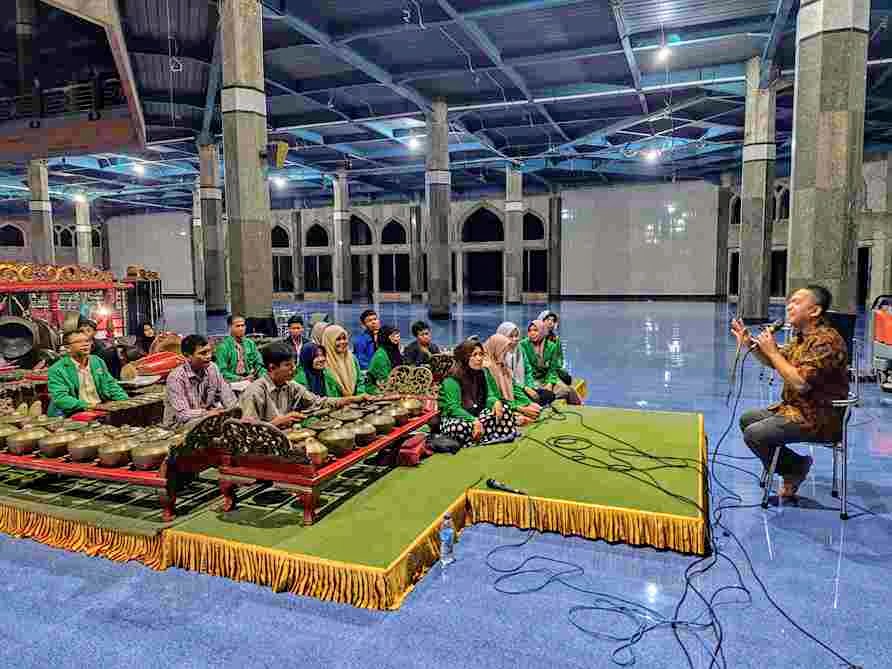
In the beautiful Al Zaytun Campus Arena, every afternoon we will be presented with beautiful, soul-stirring music. Karawitan. This art gets full attention and is always a mandatory offering at every event at Mahad Al-Zaytun. As an original Indonesian art, karawitan is well preserved.
1. Tones that Express the History and Soul of the Nation
Indonesia is a country rich in culture and tradition, and among the gems of its ancestral heritage, karawitan stands as one of the most charming. This traditional Javanese musical art is not just about melody, but also a long narrative about history, philosophy of life, and national identity.
Karawitan has developed since the 8th century AD, based on the palace environment and enriched by Hindu, Buddhist, and Islamic values. The peak of its glory occurred during the Majapahit era, when karawitan became a symbol of the glory and harmony of Nusantara culture. From time to time, this art teaches us the meaning of harmony—between humans and nature, between sound and silence, between feeling and thought.
However, preserving this heritage amidst the rapid flow of modernity is a big challenge. Institutions are needed that not only love culture, but are also committed to preserving it. This is where Mahad Al Zaytun takes a strategic and significant role: making karawitan not just an art lesson, but also part of character formation and strengthening the identity of students and their community.
2. Mahad Al Zaytun: Training the Tone, Sowing the Soul
At Mahad Al Zaytun, karawitan is not only maintained, but also developed with a neat structure and extraordinary sincerity. According to the karawitan trainer Hartono, S.Pd., the karawitan training program is carried out by involving various levels: from MI, MTs, and MA students, to university students, PKBM learners, teachers, and employees.
Each group has a special customized schedule, showing that this art is not a sideline, but an integral part of Al Zaytun’s education system. Starting from Tuesday morning for MI students, in the afternoon at 14.30 – 15.30 for MTs students and university students, in the evening at 18.30 – 19.30 for Aliyah students, even Saturday afternoon for PKBM residents. Not to be left behind, teachers and employees also practice every day starting at 16.17.00.
What’s more interesting is that the art of playing musical instruments at Al Zaytun doesn’t just stop in the practice room. It lives and pulsates in various cultural celebrations, wedding celebrations, and big institutional moments. Karawitan has become the voice of Al Zaytun’s soul, conveying messages of beauty, peace and respect for local wisdom.
3. When Shaykh Works: Rhythm that Enlightens Spiritually
Syaykh Al Zaytun’s attention to the art of musical action does not only touch the administrative or symbolic level. He is truly present in the creative process and substance development. In 2010, Syaykh created three karawitan songs: Nowo Muspro, Ta’awudzain, and Kaweruh Utomo. These songs are not only musical, but also full of spiritual and educational meaning.
For example, Nowo Muspro describes the nine causes of the destruction of the people and their solutions based on QS. At-Taubah: 24. Ta’awudzain conveys the deep meaning of QS. Al-Falaq and An-Nas, while Kaweruh Utomo describes the essence of the book Aqidatul Awam.
In 2011, Syaykh again created a monumental work through a song that raised QS. Al-Baqarah: 163 and QS. Al-Fath: 29 with the Gambuh style. During the pandemic, two more works were born: Dzikir Topo Broto, a high-level contemplation of monotheism, and a new version of the song Tombo Ati which was performed with a different arrangement, showing the adaptive ability of art to the times.
Not only creating, Syaykh also directly oversees the training process. From his residence in Masyikah until now moving to the second floor of the Rahmatan Lil Alamin Mosque, his spirit remains burning. This is not just an art project, but part of a grand vision: to form a complete human being through culture, faith, and knowledge.
Epilogue: When Gamelan Speaks of Civilization
The echo of gamelan at Mahad Al Zaytun is not just the strains of music, but the vibrations of conscience that invite us to reflect. Behind every jingle of the saron, every flowing gending, are hidden noble values: patience, perseverance, harmony, and respect for ancestral heritage.
Gamelan is not just a tradition, but a statement of love for culture, for life, and for the future. At Mahad Al Zaytun, this art becomes a bridge to a more humane society—one that is healthy in soul, intelligent in reason, and peaceful in attitude.
And when dusk begins to fall on the horizon of Al Zaytun, the sound of gamelan flowing softly not only divides the silence. It blends with the whispers of the sky, becoming a prayer and hope that this nation will continue to maintain harmony—in tune, and in life.*
Indramayu,June 25,2025
—