Government System of the Islamic Republic of Iran
By,Jacob Ereste
Freelance Journlist
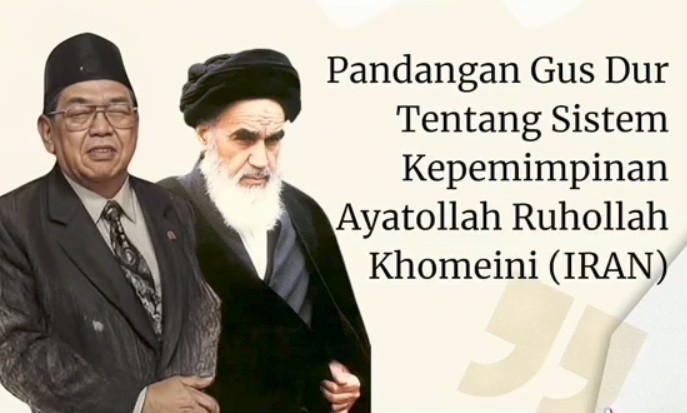
Since the Islamic Revolution of Iran was successfully realized in 1979, there have only been two Supreme Leaders, namely Ayatollah Ruhollah Khomeini who founded the Islamic Republic of Iran by implementing the concept of Wilayat Al Faqih until his death on June 3, 1989. Then replaced by Ali Khamenei, in 1989 until now. Previously Ali Khamenei served as President of the Islamic Republic of Iran from 1981 to 1989.
The supreme leader is the holder of the highest authority in Iran, exceeding the authority of the president in all matters, including foreign policy and supervision of existing state institutions. Between the two — Ayatollah Ruhollah Khomeini and Ayatollah Ali Khamenei are not close relatives, only have a very close ideological and political relationship, between students and loyal followers and important figures in the Islamic Revolution of Iran.
After Ayatollah Rohullah Khomeini died in 1989, the Assembly of Experts appointed Ayatollah Ali Khamenei as his successor. After serving as President of the Islamic Republic of Iran — a combination of republican and theocratic systems — Ayatollah Ali Khamenei was officially appointed as Supreme Leader in Iran. As the Head of Government elected by the people, the president’s authority in Iran is only to manage domestic policy and some foreign relations, but remains under the authority of the highest leader, namely the Supreme Leader.
Iran has 290 members of parliament elected by the people to make laws, approve the budget and oversee the president’s performance. Then there is the Guardian Council consisting of 12 members with a composition of 6 clerics appointed by the supreme leader and 6 legal experts elected by parliament. Its main task is to oversee the law and screen presidential and parliamentary candidates.
The Assembly of Experts consists of 88 clerics elected by the people every 8 years and has the right to assess and has the authority to elect or remove the supreme leader.
Since the Islamic Republic of Iran was founded in 1979 thanks to the success of the revolution, successively the President of Iran was held by Abolhassan Banisadr (1979-1981), Muhammad Ali Raja’i (1981) only for a few weeks, because he was killed in a bomb attack. Then replaced by Ayatollah Ali Khamenei (1981-1989) who was then appointed as the Supreme Leader of Iran after the death of Ayatollah Ruhollah Khomeini.
The next president of Iran was Akbar Hashemi Rafsanjani (1989-1997) with a focus on economic reconstruction after the Iranian war against Iraq. The next turn was President Muhammad Khatami (1997-2005) who was trapped in reformism promoting civil liberties and interfaith dialogue. Next was Mahmoud Ahmadinejad (2005-2013) who was trapped in conservatism because of his harsh rhetoric against Israel and the West. Then President Hassan Rouhani (2013-2021) who was very moderate and became the main architect of the 2015 Iran nuclear deal (JCPOA). Then Ebrahim Raisi (2021-2024) who was also known to be conservative until he died in a helicopter crash in May 2024. Until then he was temporarily replaced by Mohammad Mokhber until the extraordinary elections in Iran were held. And so Masoud Pezeshkian was elected in 2025 until now. He is very democratic and has strong support from the reformist camp in Iran.
In the government system of the Islamic Republic of Iran there is also the Head of the Judiciary, the Expediency Council, so that in the Islamic Republic of Iran this system makes the supreme leader the center of political and spiritual power.*”
Banten, June 23, 2025
—