Ambon Conflict and Peace Strategy: From Laskar Jihad to the Maluku Diaspora in the Netherlands
Caption:
Part 2
3. Pela Gandong and the New Generation of Maluku: Bridges to Future Peace
Efforts to reduce the conflict did not stop at the security approach. The government also initiated dialogue between the conflicting groups. General Wiranto assigned 19 Maluku officers to “return to their hometowns”, to have direct dialogue with the community. President BJ Habibie also sent a minister to Ambon, although he failed to stop the conflict, he successfully held the 1999 General Election peacefully.
President Abdurrahman Wahid (Gus Dur) also opened the door for academics and clerics to voice their views on the Maluku conflict. From interviews with members of Laskar Jihad, it was revealed that they felt called because the government was considered to have failed to protect Muslims in Ambon, and wanted to protect the Republic of Indonesia from the threat of RMS separatism.
However, this narrative is complemented by the perspective of the Maluku diaspora in the Netherlands. They questioned why Maluku, which is rich in natural resources, is lagging behind in human resource development. In fact, history records that many important Indonesian figures came from Maluku, such as Siotesi (Father of Indonesian Nuclear) and Vice Admiral Yohane Lewena (Father of Indonesian Health Centers). Basic education in Ambon and Saparua during the colonial era was one of the best, producing quality graduates to Europe.
One of Ambon’s important cultural heritages that is a symbol of peace is Pela Gandong. The bond of brotherhood between these different religious customary lands rejects the practice of intermarriage and instead strengthens the obligation to mutually guard each other’s houses of worship. These values are the strong roots of true peace.
The Malino II Agreement signed on February 12, 2002 became an important milestone. The government opened up space for dialogue between the Islamic and Christian communities, involving customary and community leaders. Rebuilding trust between groups is not an easy job, but it is the only way to lasting peace.
Epilogue: Peace is a Choice, Not a Coincidence
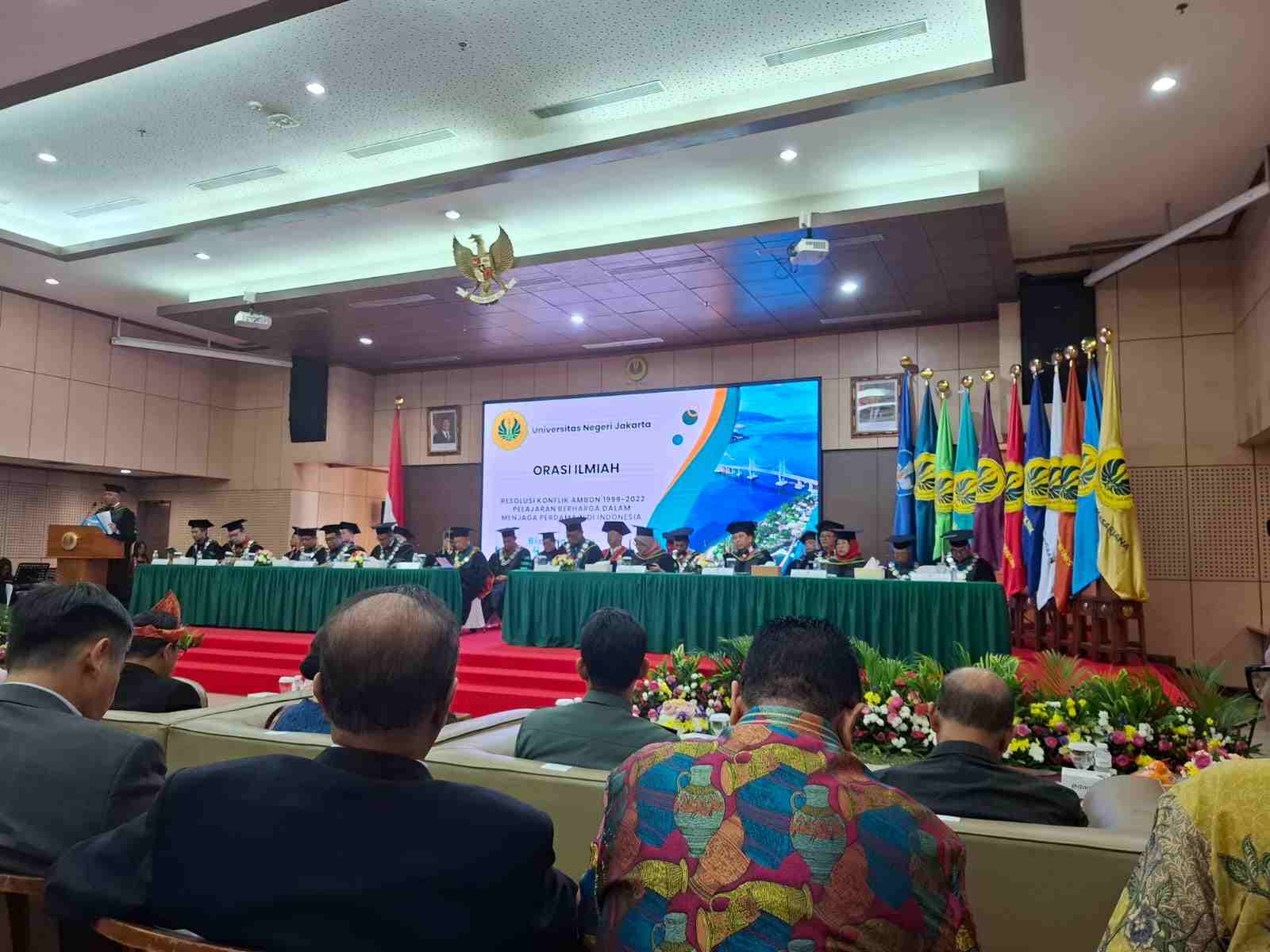
To close his speech, Prof. Dr. Abdul Haris Fatgehipon delivered a pantun entrusted by the UNJ Ambassador Alumni:
Spread peace, not anger
For harmony in one feeling
Conflict is not a divider
Make it a unifier of the nation
He also expressed his gratitude to Allah SWT for his academic achievements. His gratitude was conveyed to the Minister of Higher Education, the Chancellor of the Jakarta State University, the members of the Senate, and the entire academic community who have given their trust and support.
This oration is not only an academic trace, but also a moral call that peace is a collective, multi-layered work, and requires the courage to have a dialogue, honestly read history, and humanize those who are different.**(End).
Ali Aminulloh
Special Contributor
—