By: Adlan Daie
Political Analyst, General Secretary of MUI Indramayu Regency
There are three ideological messages behind the “serious” book discussion stage (Sunday, 8/11/2026) held by the DPC PKB of Indramayu Regency on the socialist thought of HOS Tjokroaminoto and Ali Shariati, two intellectual figures who in Antonio Gramsci’s category are called “organic intellectuals”, where intellectual struggle intertwines with political activism.
Indeed, there is almost no electoral “cashback” when PKB Indramayu holds such a “serious” book discussion. But PKB as a pillar of democracy must not fall and be buried under the “garbage” of false political imaging. PKB’s political work must not be only about scraping for electoral votes, starting from within its thinking.
It is at this point that the book discussion sends an ideological message.
First, the “serious” book discussion forum presented the thoughts of HOS Tjokroaminoto and Ali Shariati. Although both differed in their choice of struggle strategy, they agreed that the peak of political struggle is to bring public justice. This is the ideological message.
Here, PKB becomes a space for growing political intellectualism, that a political party in a democratic system is not merely electoral work to win elections, but how the political power it gains is able to guide the life of the nation and state in the ethical principles of justice.
Without the ideal of struggling for public justice, a party is present only to betray itself. From the era of Imam Al-Mawardi, who laid the foundations of politics in Islam, to the contemporary political scientist Francis Fukuyama, politics is a “noble and civilized path” because the ideal being fought for is to bring justice in the public space.
Second, in the context of the book discussion, although PKB was founded by the NU organization, the intellectual references it discussed were not from NU figures, but from the figure of the Sarekat Islam organization (HOS Tjokroaminoto) and Ali Shariati, a Shi’a intellectual figure, who is always positioned as different from “Ahlus Sunnah wal Jamaah”, the ideological basis of NU.
PKB seems to be starting to “leap”, not questioning the “packaging” and “identity”, but the commitment of the ideological struggle for justice above all differences in political gestures and choices of struggle strategy. One thing that binds their struggle is the affirmation of justice in political struggle.
Third, social change and transformation in the social theory of Arnold Toynbee, an English historian, always arise from an awareness he called the “creative minority”, a small group of the “middle class” layer (intellectuals, ulama, academics, mass organizations, etc.). In the context of a democratic system, the party is the locomotive pulling the carriage of social change.
In this perspective, PKB as a political party in the spectrum of the modern democratic system is placed. That is, PKB which was born from NU is a harakah ijtima’iyyah siyasiyyah, a socio-political movement, a structured “creative minority” group, pulling the carriage of social transformation for benefit and affirmation of public justice in state life.
This is the ideological message of the function of the party in the perspective of the Qur’an, namely “let there be a group among you” (Q.S. Ali Imran: 104 & 110) to struggle for amar ma’ruf nahi munkar, which cannot be done sporadically except in a structured way. In the context of a democratic system, it requires a political party.
The perspective of the two verses above necessitates that the struggle of amar ma’ruf nahi munkar must be organized. Once again, in the context of a democratic system, it must be articulated by the struggle of a political party entering into state policy for the affirmation of justice.
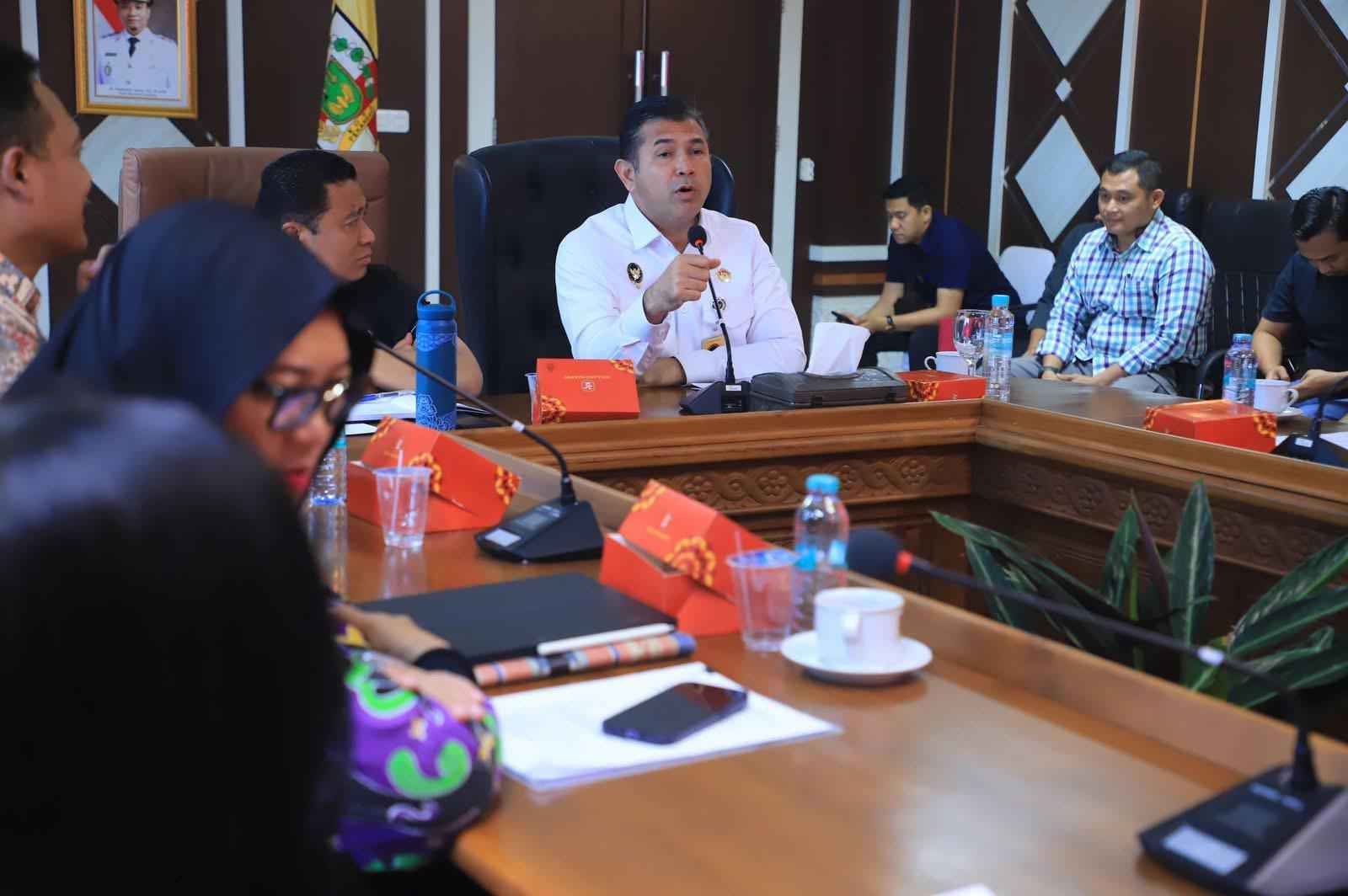
That is what H. Amroni, Chairman of DPC PKB Indramayu Regency, realized in his speech at the book discussion event, that politics has been almost entirely won by imaging algorithms that crush the inner space of the public. He invited people not to blame anyone, except to reflect and take early prevention.
Allowing politics to be driven only by the “processing factory” of imaging, quoting the theory of George Orwell, author of the book entitled “Political Animalism”, political work only revolves in the spectrum of designing lies as if they were truth, playing dramas of crime as if they were care, and suppressing public psychology to love lies and falsehood.
In this context, the author is appreciative of PKB’s initiative in holding this “serious” book discussion, perhaps the first party in Indramayu Regency. At least, the book discussion forum is a kind of “early prevention”, that there is always a way to “pause” for a moment for PKB to refresh its ideological responsibility.
In other words, the book discussion forum adapts the lyrics of Ebiet G. Ade’s song, a kind of contemplative reflection “we must be naked and really clean, look inside”, to refresh and reaffirm that the mandate of PKB’s struggle is the struggle for public justice. Heavy but noble.
Wassalam.
Indramayu, November 11, 2026
—-