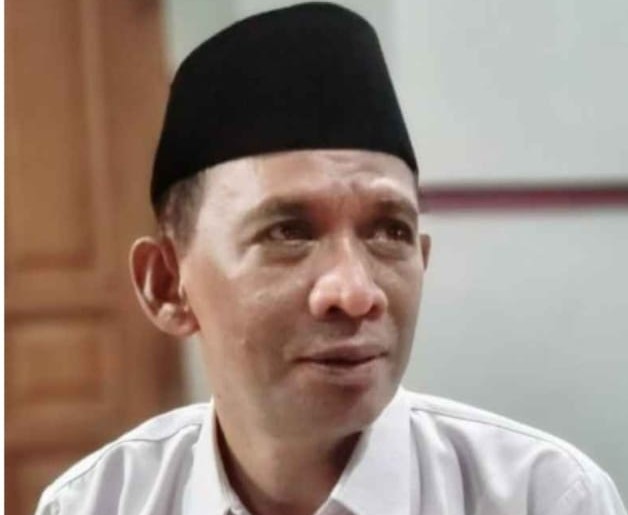
General Secretary of the Indonesian Ulema Council (MUI), Indramayu Regency
Indramayu, October 18, 2026
Santri (students of Islamic boarding schools) represent a social variant that congregates through social and political activism rooted in various Islamic mass organizations. This is the definition of *santri* from the perspective of political anthropology, as constructed by Clifford Geertz—an anthropologist who studied various socio-political segments in Indonesia (1956).
Today, this definition of “*santri*” is institutionally reflected within the Indonesian Ulema Council (MUI)—a “melting pot” where a diverse array of Islamic mass organizations converge. In this context, from the standpoint of political anthropology, the MUI shares an “ideological” connection with *Santri* Day.
From a cultural perspective, the *santri* constitute a social variant within the ecosystem of the *pesantren* (Islamic boarding school) network associated with Nahdlatul Ulama (NU), as described by Dr. Zamakhsyari Dhofir in his book, *Tradisi Pesantren* (1985). This is what Abdurrahman Wahid (Gus Dur) referred to as a “subculture.”
It is at this juncture that the establishment of *Santri* Day—formalized through Presidential Decree No. 22 of 2015—finds its historical lineage in the “Jihad Resolution” (*Resolusi Jihad*) issued by NU in 1945.
The “Jihad Resolution” was an NU religious *fatwa* (ruling) declaring it an obligation to resist Dutch military aggression in defense of the nation. It is this *fatwa* that served as the inspiration for the inception of *Santri* Day.
Within the *pesantren* doctrine, this is encapsulated by the concept of *Hubbul Wathon minal iman*—the idea that love for one’s homeland is an expression of one’s faith. It represents an integration of Islamic identity and national commitment.
Following the formal establishment of *Santri* Day, KH Mustofa Bisri (Gus Mus) broadened the definition of a *santri* to encompass “any Indonesian Muslim who loves their homeland and possesses noble character.” This definition dissolves the three social categories—*santri* (devout Muslims), *abangan* (nominal Muslims), and *priyayi* (the Javanese nobility/elite)—that were once mapped out in the research of Clifford Geertz.
A reflective question arises: setting aside the various definitions of *santri*, what meaning should be drawn from the 2026 *Hari Santri* (Santri Day)—eleven years after its official establishment in the state record?
Our current national challenge is not merely about reaffirming the foundational principles of the state (Pancasila, the 1945 Constitution, the Unitary State of the Republic of Indonesia, and *Bhinneka Tunggal Ika*—Unity in Diversity); it is about addressing social inequality. In this context, the *santri* community requires “political welfare”—affirmation through state policy.
In other words, *Hari Santri* should not be interpreted merely as a political victory for *santri* identity within the national political spectrum, nor is it sufficient to view it solely as an “ideological” meeting point between Islam and the nation.
This is where the responsibility of the Indonesian Ulema Council (MUI) lies: given today’s national challenges, the state’s recognition of *Hari Santri* should not be seen merely as an “ideological” convergence of Islam and the nation—a unified expression of Indonesian identity.
Beyond that, it must be framed within the perspective of a “jurisprudence of statehood” (*fiqih kenegaraan*)—a struggle to narrow social inequality by constructing justice for the *ummah* (community) from an Islamic religious standpoint.
This constitutes the khittah (foundational mission) of the MUI within the framework of the Unitary State of the Republic of Indonesia (NKRI): serving as a symbol of moral independence and a movement for *da’wah*—enjoining good and forbidding evil by supporting what is right and beneficial ( maslahat), while correcting what is erroneous and harmful (mafsadat).
The MUI acts as a pillar of public justice ethics. While it must not function as a political opposition, it also cannot compromise its moral integrity; rather, it must uphold national integration based on the principles of “a just and civilized humanity.” It is in this capacity that the Indonesian Ulema Council (MUI) must be mobilized serving as a focal point for the moral legitimacy of justice to reinforce the integration of Islamic identity and national identity. These two must be woven together into a single, unified Indonesian spirit, within the framework of a nation-state where the overwhelming majority of the population is Muslim.
This represents the ideological role of the MUI a reflection prompted by “Santri Day” 2026 aimed at strengthening national integration. This integration should not merely be an empty “ideological” slogan, but rather a form of nationhood that actively manifests as social justice for all the people of Indonesia.
Wassalam.
——-