AL-ZAYTUN PARTNERS WITH INDRAMAYU FARMERS TO BUILD FOOD SELF-RELIANCE
LKM Rahmatan lil Alamin Mosque Partnership with P3KPI Connects Land, Production, and Agricultural Marketing
By: Ali Aminulloh
Food self-reliance cannot be built on vast land and seed availability alone. It requires empowered farmers, fair partnerships, well-managed production processes, and guaranteed market access for harvests. Based on this awareness, Al-Zaytun has built a partnership with the farming community of Indramayu as a joint effort toward food self-reliance and food sovereignty.
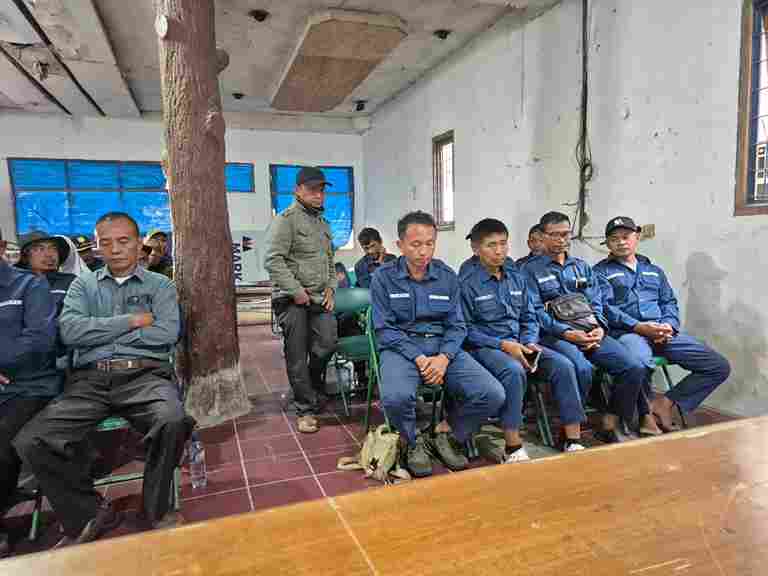
This commitment was realized through the signing of a Memorandum of Understanding (MoU) between the Mosque Welfare Institution (LKM) of Rahmatan lil Alamin Mosque and 33 farmers from the Association of Farmers Supporting Indonesia’s Food Security (P3KPI) on Monday, August 10, 2026.
The LKM of Rahmatan lil Alamin Mosque was represented by Dr. Ali Aminulloh, M.Pd.I., M.E., Secretary of LKM. Also present were Muslih Faiz, S.H., M.P., Acting Manager of Al-Zaytun Agricultural Activities; Primuhardi, S.E., Agricultural Supervisor; and M. Sadid, a foundation representative, as witness.
The event began with the recitation of Bismillah, followed by singing the national anthem “Indonesia Raya” in all three stanzas. The anthem was led by Zaenuri, S.H., a farmer representative.
Singing “Indonesia Raya” in three stanzas was not merely ceremonial. It embodies the ideals of a united, independent, happy, and prosperous Indonesia. These ideals can only stand firm if the Indonesian people are able to meet their food needs through their own strength.
Partnership to Address Farmers’ Challenges
Farmers are the main actors in food development. However, in practice they still face three fundamental problems: limited access to land, weak support in the production process, and uncertainty in marketing their harvests.
These three issues are interconnected. Land availability alone does not guarantee farmers’ welfare if cultivation is not supported by good management. Successful production is also not enough if the harvest has no clear market or fair price.
Therefore, the partnership between Al-Zaytun and P3KPI farmers is directed at building a more comprehensive agricultural ecosystem. The cooperation does not stop at providing farming space, but also includes agricultural management, supervision, division of responsibilities, and market orientation for the produce.
Through this model, farmers are not positioned merely as laborers, but as strategic partners in building food resilience, self-reliance, and sovereignty.
Farmers as the Pillars of Civilization
In his remarks, Dr. Ali Aminulloh stated that farming is a noble profession. Through the work of farmers, food is produced and basic human needs are met.
“Farmers are not just people working in the fields. Farmers are guardians of life, providers of food for society, and the pillars of civilization’s sustainability,” he said.
In Arabic, a farmer is called fallāḥ. This term is closely related to the word falāḥ, meaning victory, happiness, fortune, and prosperity. The word falāḥ is also proclaimed daily in the call to prayer: ḥayya ‘al falāḥ come to success and prosperity.
The closeness between fallāḥ and falāḥ carries the message that societal welfare cannot be separated from the existence of farmers. No matter how much wealth a person has, it means nothing if food is not available.
Therefore, building farmers’ welfare is an essential part of building national welfare. Strong farmers will support adequate food supplies, a peaceful society, and a sovereign nation.
Roots, Trunk, and Fruit of the Partnership
Dr. Ali illustrated the agricultural partnership through the metaphor of a good tree as mentioned in QS Ibrahim verses 24–25. A good tree has strong roots, a towering trunk, and fruit that continuously benefits.
The roots symbolize what is unseen but determines the strength of the whole tree. In farmers, those roots are the belief that farming is part of worship and devotion to God. This belief gives rise to sincerity, honesty, diligence, and responsibility.
In national life, those roots are Pancasila. All activities begin with faith in God Almighty and are directed toward achieving Social Justice for All Indonesians. Food self-reliance is one real path to realizing that welfare.
The trunk represents hard work, discipline, professionalism, and real commitment. For the trunk to grow straight and strong, the partnership must be bound by a clear agreement. The MoU serves as the foundation to regulate rights, obligations, responsibilities, and shared goals between LKM and the farmers.
The fruit is increased production, guaranteed marketing, farmers’ welfare, and stronger community food security.
This spirit aligns with the parable in QS Al-Baqarah verse 261 about a single seed that grows seven stalks, with a hundred grains on each stalk. One seed can produce 700 grains, and even more by the will of Allah.
This parable inspires that an effort planted with good intention, managed properly, and nurtured through cooperation can produce multiplied benefits.
Ensuring the Agreement is Understood
Before the signing, Dr. Ali read the full content of the MoU before the farmers. Each clause was explained so it could be heard and understood by all participants. The farmers were also given the opportunity to ask questions if anything was unclear.
This step is important because an agreement should not be merely an administrative formality. The MoU must be a consensus born from understanding, readiness, and willingness of all parties.
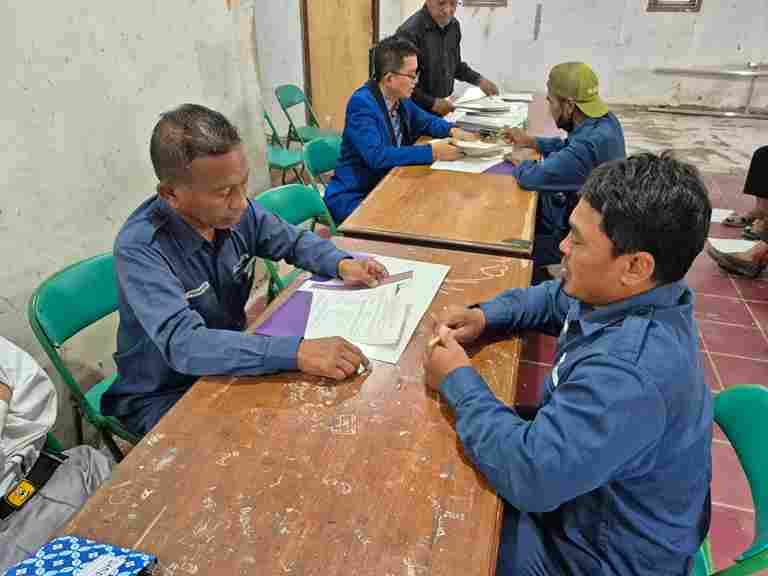
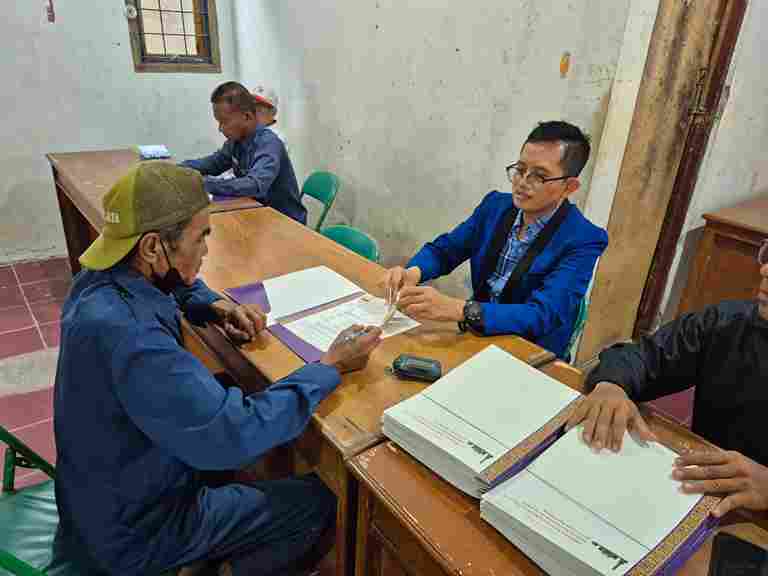
After all participants stated their understanding, the farmers were called one by one to sign the document. They sat facing LKM representatives and the agricultural supervisor. The process began with reciting Bismillah and the Shahada.
Each farmer was asked three fundamental questions:
“Do you understand?”
“Are you ready to carry it out?”
“Will you do it sincerely?”
After affirming their readiness, each farmer signed and initialed every page. The MoU was made in two copies, one for the farmer and one for LKM. The process was sealed with a handshake as a sign of agreement and trust.
Each signing ended with Hamdalah. After all documents were signed, the event was closed together with Alhamdulillah.
From Food Security to Food Sovereignty
This cooperation is the first step of a larger agenda. Food security means sufficient food availability for the people. Food self-reliance means the ability to meet those needs by optimizing our own resources. Food sovereignty affirms the right of the nation and its people to determine and manage their food system with dignity.
All three goals can only be achieved if farmers are given an honorable place and their welfare becomes a priority.
Through this partnership with Indramayu farmers, Al-Zaytun seeks to bring together land, farmers’ labor, management systems, supervision, and marketing into one directed movement. This is a form of collective work to transform agricultural potential into economic strength and national resilience.
The MoU signed on August 10, 2026 may be just one step. But from one step, a long road can open. From one seed, hundreds of grains can grow. From 33 farmers, an agricultural movement can develop involving more families and bringing wider prosperity.
Al-Zaytun and the farmers of Indramayu have planted the seed of this partnership. Its roots are faith and Pancasila. Its trunk is hard work and a fair agreement. The fruit to be harvested is prosperous farmers, a food-secure society, and an increasingly self-reliant and sovereign Indonesia.
Indramayu, August 11, 2026
——-