
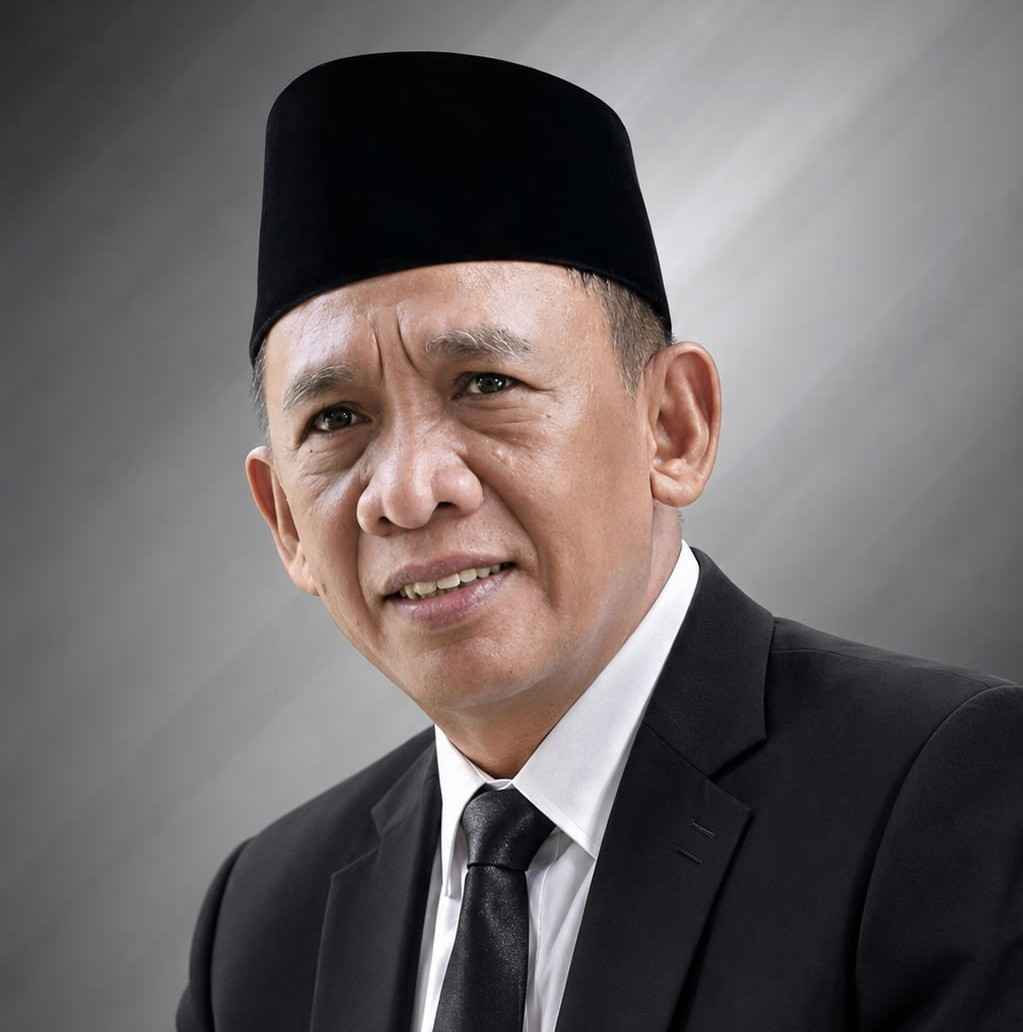
*H. TAUFIQ HIDAYAT ACTING CHAIRMAN OF THE GOLKAR PARTY IN INDRAMAYU, A MERITOCRATIC CHOICE AND POLITICAL CREDENTIALS*
By: Adlan Daie
Political analyst, General Secretary of the Indonesian Ulema Council (MUI) of Indramayu Regency
Indramayu, July 18, 2026
The appointment of H. Taufiq Hidayat as Acting Chairman of the Golkar Party in Indramayu Regency is not only meritocratic but also politically credible—following H. Daniel Muttaqin, the “epicenter” figure of the Golkar Party in Indramayu, who rose to lead the Golkar Party in West Java Province.
The meritocratic and politically credible qualities—meaning he is more than worthy of holding the position of Acting Chairman of the Golkar Party in Indramayu—can be seen from H. Taufiq Hidayat’s track record and his understanding of the inner workings and ecosystem of the Golkar Party in Indramayu.
First, H. Taufiq Hidayat was active in the Golkar Party’s political infrastructure, climbing from the bottom up, leading the party at the sub-district level, becoming the chairman of the Golkar Party’s Lohbener sub-district leadership committee (PK), and then becoming a key member of the elite circle of the Golkar Party’s Indramayu Regional Leadership Council (DPD).
Second, alongside his activities in the Golkar Party’s political infrastructure, H. Taufiq Hidayat also served in the government’s political superstructure, representing the Golkar Party in Indramayu, from serving as a member of the Regional People’s Representative Council (DPRD) to the chairman of the Indramayu Regency DPRD.
His experience in the political superstructure was further enhanced when he was entrusted with the position of deputy regent and subsequently became Regent of Indramayu, albeit for a relatively short time. He now serves as a member of the West Java Provincial DPRD representing the Golkar Party in Indramayu.
These two variables—his track record in political infrastructure and regional government superstructure—place H. Taufiq Hidayat in a position of “credentials,” more than just deserving of the mandate to become the acting chairman of the Golkar Party in Indramayu.
Moreover, he is not only capable as the acting chairman of the Golkar Party in Indramayu to carry out the mandate of the Golkar Party’s Regional Conference (MUSDA) in a democratic and conducive manner, but he is also worthy of being elected as the definitive and legitimate chairman of the Golkar Party in Indramayu.
Of course, the political process depends on the legitimate mechanisms within the Golkar Party’s Regional Conference (MUSDA), but what this article will emphasize is that the Golkar Party is characterized by “workmanship,” which Professor Willeim Lidlle, a Professor at Ohio University, calls “pragmatic realism.”
“Pragmatic realism” is a political characteristic in which the Golkar Party adapts to meet public aspirations within political power relations. Therefore, it is crucial for Golkar Party leaders to have meaningful experience in the two variables mentioned above: political infrastructure and the superstructure of political power.
The above construction explains that the Golkar Party’s target in Indramayu is not simply to win the 2029 election in a “minimalist” manner, but to project itself to seize opportunities for political power in the 2023 regional elections.
The Golkar Party in Indramayu possesses the prerequisites, superior political variables, and sufficient social capital to develop a roadmap to achieve these two political contestation targets.
Social infrastructure, political skills, skill in tactically handling issues, political orchestration capabilities, logistical resources, and a stable political ecosystem are all factors that give the Golkar Party its superiority over other parties in Indramayu.
Given these advantages, the Golkar Party in Indramayu must demonstrate what Jefry Wonters calls “political differentiation,” a political approach that distinguishes it from other parties in the 2029 election.
This is especially important because the Gerindra Party and the Nasdem Party are not only “Golkar Party descendants” with close “electoral links,” but both also possess political power at the central level (Gerindra) and at the Indramayu level (Nasdem), serving as electoral political instruments.
This is where the Golkar Party’s leadership, once again, demonstrates the importance of having experience in the two aforementioned infrastructure and superstructure variables. H. Taufiq Hidayat is one of the Golkar Party’s “stock” of cadres who fulfill these requirements to maintain the party’s rhythm in the dynamic political contestation of 2029 and 2030.
Above all, the author would like to congratulate H. Taufiq Hidayat on his appointment as Acting Chairman of the Golkar Party in Indramayu. Hopefully it will be a way of benefit for the people and people (Indramayu).**
Greetings.
——–


