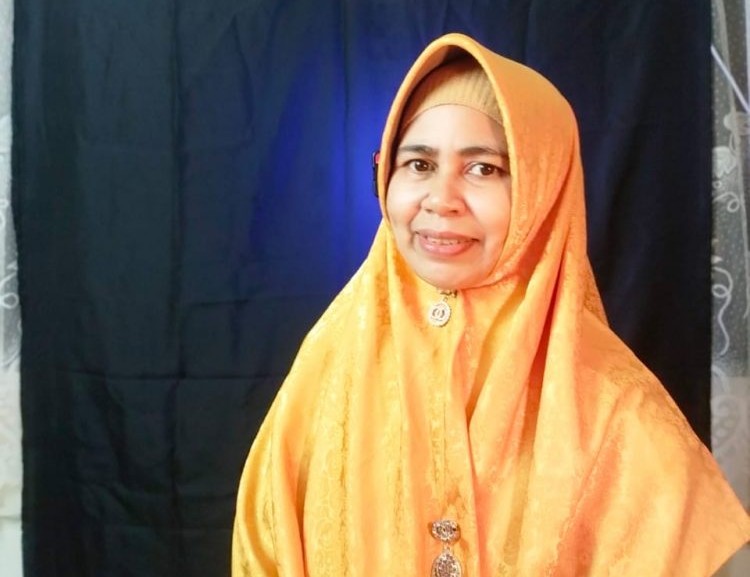
*DR. MASDUKI DURIYAT, DEPUTY CHAIRMAN OF THE INDRAMAYU EDUCATION COUNCIL AND THE CHALLENGES OF EDUCATION MECHANIZATION*
By: H. Adlan Daie
Political analyst, General Secretary of the Indonesian Ulema Council (MUI) for Indramayu Regency.
Dr. Masduki Duriyat, whom the author knows well, is an education practitioner who serves on the Indramayu Education Council. He is not only qualified for the position, but also possesses “credentials,” meaning he is more than worthy of serving as deputy chairman of the Indramayu Education Council.
He possesses the soft skills of writing in-depth on a wide spectrum of regulations in the education sector and presenting them from diverse perspectives, having grown up in the dynamics of education in Indramayu. These are the “credentials” of Dr. Masduki Duriyat, as mentioned above.
That’s what Alvin Toffler called “think globally and art locally” in the theory of “futurology”—the design of the future—a combination of a broad spectrum of educational knowledge yet locally adaptive in understanding the complex problems of the education landscape in Indramayu.
The author is not praising Dr. Masduki Duriyat, but rather emphasizing that as an education practitioner and consistent contributor to his thoughts in public media, he understands that education is not about “practical” matters but rather the work of imaginative, critical, and progressive thought.
Education is a space for imaginative processes, not always summarized in shallow, impulsive PowerPoint slides, abundant in information but lacking in depth of literacy. Social media has a surplus of content sources but a deficit in the richness of imagination. This is one of the problems in our educational process today.
The demands of “new” pragmatism by education practitioners to modernize themselves methodologically by using PowerPoint on screens in educational spaces can be justified to some extent practically, but making it the sole practical mainstay, in Rocky Gerung’s words, loses its “power” and “point.”
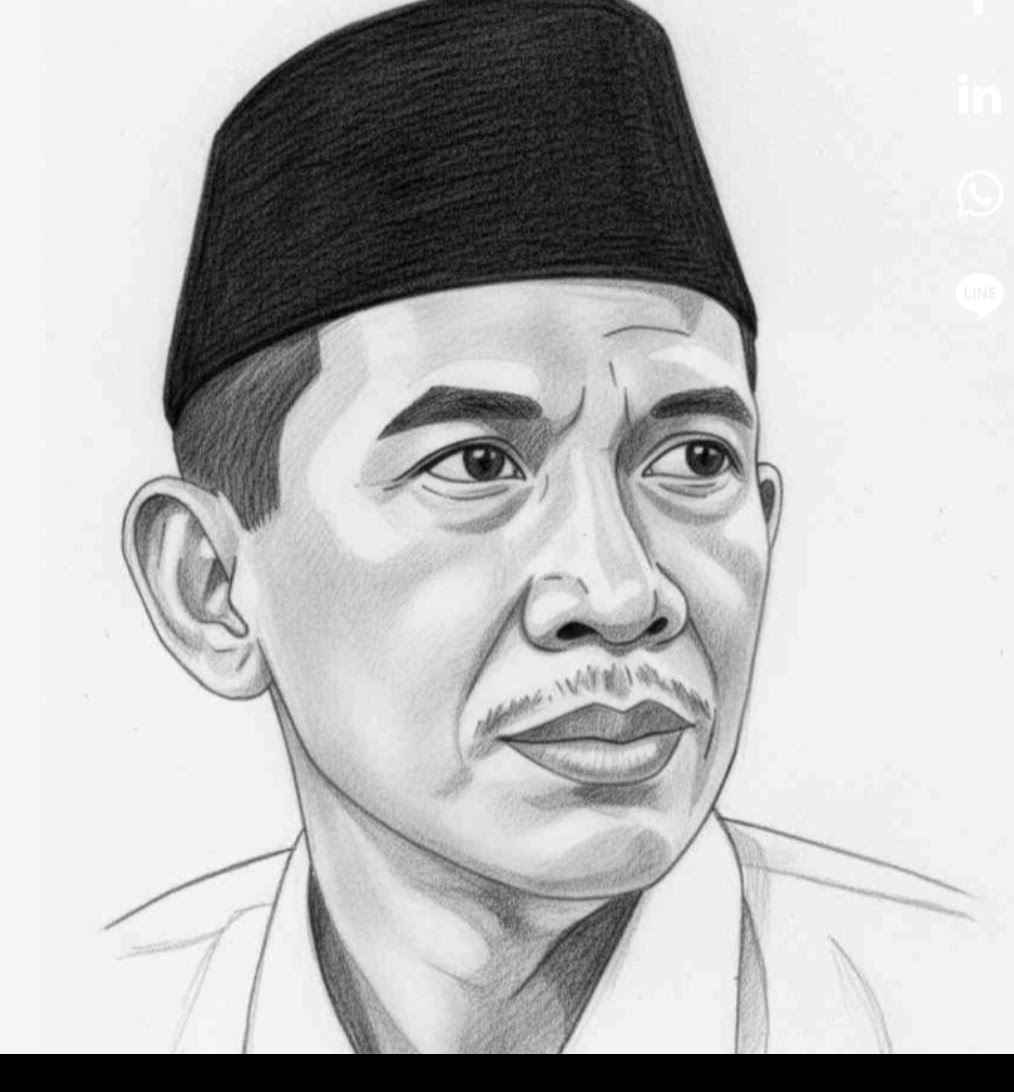
Prof. Fuad Hasan, the Minister of Education and Culture with a background in literature, once reminded the world of education not of “mechanical worlds” but of the imagination of students. Therefore, even though he served as Minister of Education and Culture during an authoritarian militaristic era, he firmly believed that education was a branch of the “humanities,” not a “link and match” in terms of technological skills.
The paradigmatic illustration of education above illustrates Dr. Masduki Duriyat’s inclusion in the “Box” of the Indramayu Education Council. The author positions him as a meritocratic choice for reforming education in Indramayu. At the very least, he can add color to the roadmap for the “blueprint” of education in Indramayu.
Here, the combination of Dr. Masduki Duriyat’s practical experience in education and his ability to express the paradoxes of education in Indramayu in writing that begins to break free from bureaucratic and rigid language, from the author’s perspective, is crucial in his efforts to enlighten the education ecosystem in Indramayu.
Many of Dr. The author has followed online discussions about education by Dr. Masduki Duriyat, ranging from the irony of the state budget’s bias toward education, inconsistent education sector regulations, and most recently, when the President “misspoke” about tripling teachers’ salaries at an official state forum, which lasted only a “fraction of a second”—and became “for the judges.”
Two of his articles that are relevant in the context of this short piece are “The Curse of Resources in Indramayu: Rich in Nature, Poor in Education” (Intijaya newspaper, March 9, 2026) and “Uninterested Principals, Alarm of Failure of Regional Education Governance” (Jayanews, March 18, 2026), which are a wake-up call about Indramayu’s future.
Within this perspective, we hope for Dr. Dr. Masduki Duriyat, in the “Box” of the Indramayu Education Council, consistently maintains that education is not a “mechanical world” that can be manipulated by impulsive success rate indices, but must be the anchor that protects the “glory” of education.
Ala kulli hal, above all, the educational paradigm within school institutions must not shift from its three basic functions: enlightenment, enrichment, and empowerment of educators. It is at this point that Dr. Masduki Duriyat stands shouldering the mandate.
Political regimes at any level and for any individual are short-lived, while the noble work of education is long-lasting. Its noble value must not be diminished by political opportunism to prevent the early passing of a negative “cultural disease” to the growth of future generations.
Wassalam.**
Indramayu, June 1, 2026
——-