From Oil and Gas to Digital: Al Zaytun Students Forged into Architects of a Values-Based Economy
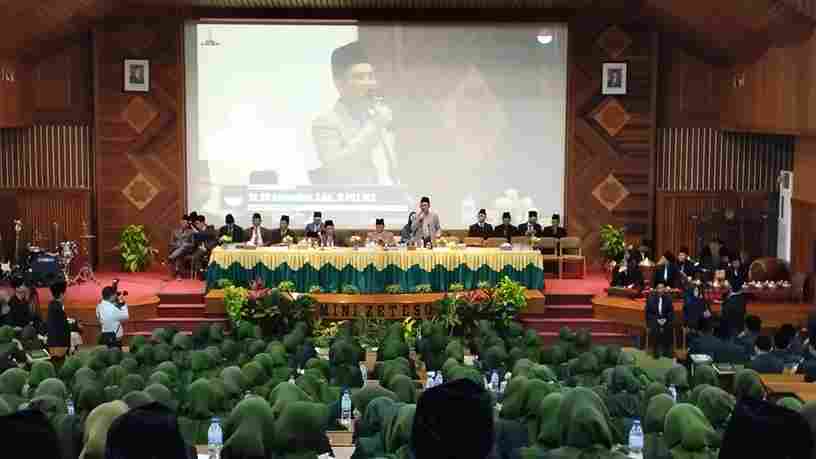
INDRAMAYU-JAYANEWS.COM – Amidst the maelstrom of global change, where world conflicts are often rooted in the struggle for resources, students are not left to become mere spectators of history. On Wednesday, April 15, 2026, Ma’had Al Zaytun presented a learning space that brought together divine values, geopolitical realities, and the challenges of the digital economy through the Integrated Guidance program for students of class XII Aliyah class XXII.
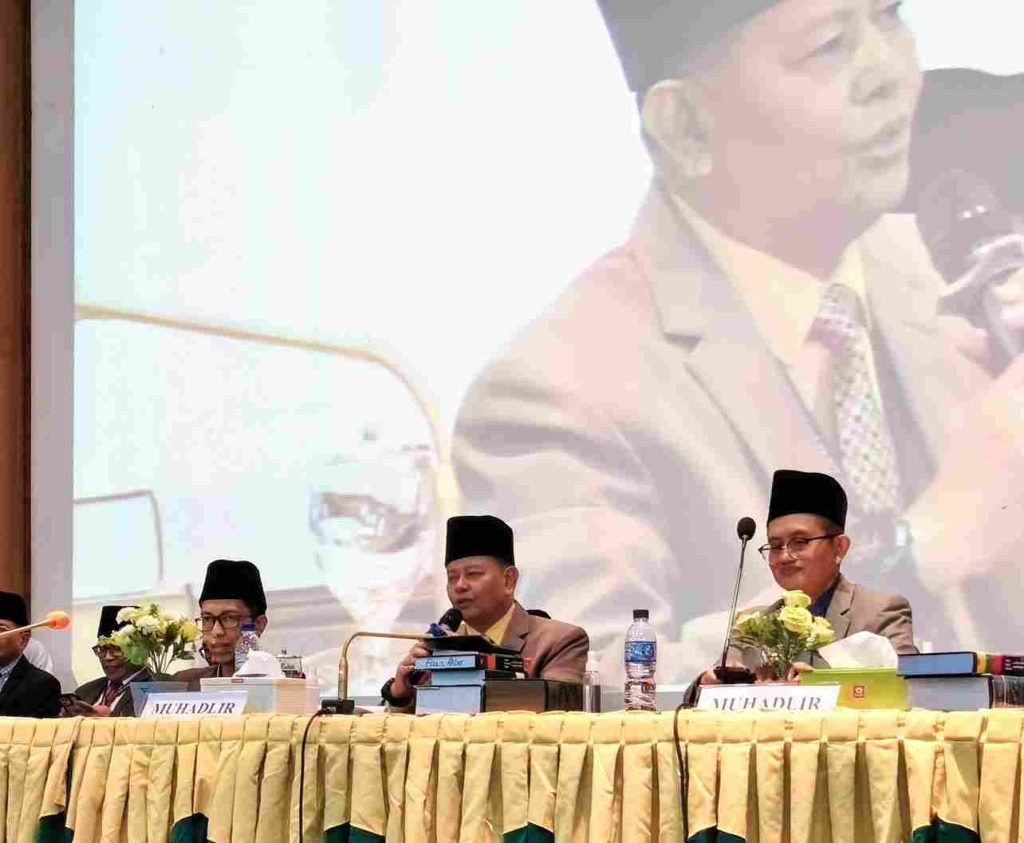
The Nidzam Iqtishad fil Islam session, featuring speakers: Syaifuddin, S.I.P., M.Pd., Dr. Ali Aminulloh, M.Pd.I., M.E., and Dr. Irvan Iswandi, S.E., M.T., not only presented theory but also encouraged students to read the world holistically. Dr. Ali Aminulloh broadened his perspective by linking global phenomena, particularly the tensions between America, Israel, and Iran, to realities inextricably linked to economic motives. Oil and gas, as a vital energy source, is the primary driver of this dynamic. However, at this point, he invited students to return to the Islamic perspective that humans are truly united in three fundamental matters: food, water, and energy: a concept that places common interests above domination.

From there, the discussion moved on to the relationship between economic systems and ideology. Capitalism grew from the womb of liberalism, socialism emerged from communism, while Indonesia, through Pancasila, built a people’s economy. Islam, in this regard, offers an economic system rooted in revelation. Economic activity is no longer understood merely as an effort to meet the necessities of life, but as part of worship. Human needs, whether primary, secondary, or tertiary, become a means to support the primary purpose of human creation: worship of Allah.
Within this framework, the principles of Islamic economics are emphasized as a foundation that cannot be separated from human activity. True ownership belongs only to Allah, while humans are merely trustees. Wealth is not an end in itself, but rather a means to attain His pleasure. The universe, subjugated to humans, is not to be exploited greedily, but rather to be used responsibly. The world, with all its glitz, is positioned as a path, not a destination.
This insight was further reinforced by Syaifuddin, who shifted the focus to the position of Islamic boarding school students (santri) as human capital in civilization. Students are seen not merely as individual learners, but as strategic assets possessing social, cultural, and economic capital. From an Islamic economic perspective, human potential is not suppressed but rather directed. The desire for ownership, power, and family love is understood as an innate desire that must be properly channeled. This is where Islamic economics emerges as a system that maintains a balance between human instinctive drives and divine values.
Furthermore, economic activity in Islam cannot be separated from morality. Values such as honesty, compassion, and mutual assistance are the spirit that animates economic practices. This system also demonstrates its commitment to individual well-being through a multi-layered mechanism that begins with personal responsibility for work, the state’s role in providing employment, family support, and social intervention through instruments such as zakat (alms), infaq (donations), sedekah (charity), and waqf (endowments). Even in extreme circumstances, the state has full responsibility to ensure that people’s needs are met. This is the face of an economy that is not only rational but also just.
Entering the final session, Dr. Irvan Iswandi brought the students to an equally important reality: the era of the digital economy. The world has moved toward a fully digital system, where economic activity takes place through e-commerce platforms and technology-based financial services. Indonesia itself is projected to reach a digital transaction value of up to $1,000 billion by 2026, a figure that demonstrates the enormous opportunities available.
This change has given rise to a variety of new professions that were previously unimaginable. Content creators, programmers, data analysts, and even digital entrepreneurs are now part of the modern economic landscape. Data has even become a strategic asset that determines the direction of policy and business. However, amidst these enormous opportunities, Dr. Irvan emphasized that ethics remains the primary foundation. Technological advancements without honesty and responsibility can actually lead to a deeper moral crisis.
Therefore, Islamic boarding school students are encouraged not only to master technical skills such as digital literacy, communication skills, and data-driven innovation, but also to build strong character. The courage to start, even with small steps, is key. The story of an 85-year-old grandmother in Japan who was able to create a digital application symbolizes that age doesn’t limit us rather, it’s about the willingness to learn and adapt.
Ultimately, this Integrated Guidance program presents a strong common thread: that economics cannot be separated from values. At Ma’had Al Zaytun, students are not only prepared to face the world of work, but also to interpret every economic activity as part of worship. Amidst the currents of globalization and digitalization, they are being shaped into a generation capable of bridging revelation and reality, creating an economy that not only grows but also fosters blessings.**
Reporter: Ali Aminulloh
—-