PKB ELECTORAL MAP AND DETERMINATION OF NU INFLUENCE, POLITICAL INDICATOR SURVEY ANALYSIS*
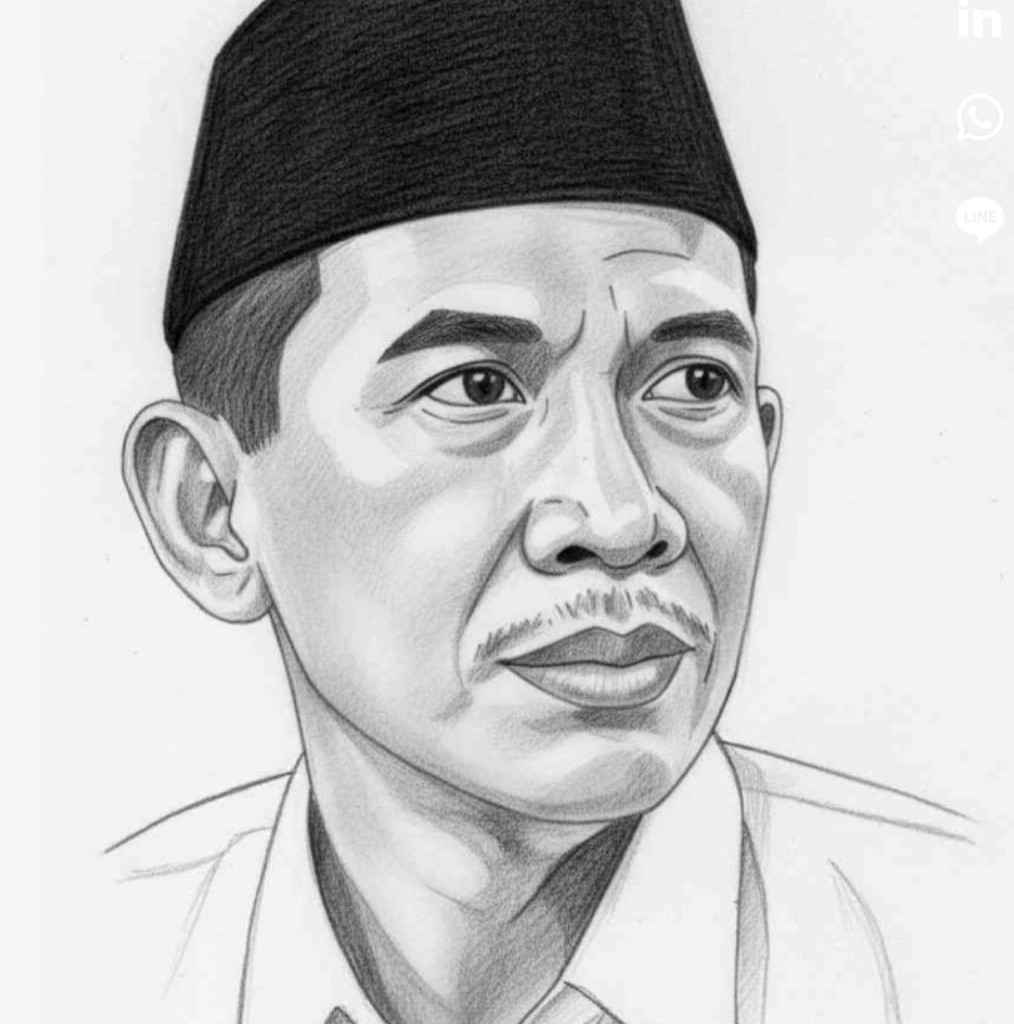
By: H. Adlan Daie
Political analyst, General Secretary of the Indonesian Ulema Council (MUI) in Indramayu Regency.
A classic but still relevant question: why do the vast number of citizens who “feel” and “claim” to be part of the NU cultural religious community (51%, according to LSI data, 2021) not automatically vote for the party strongly associated with NU, namely PKB?
If the definition is more precise, it means “NU members” (meaning not just “claiming” to be NU members), which, according to SMRC survey data (2023), NU “members” constitute 20% of NU members, why is PKB’s electoral gain so far so far below that number of NU “members”?
For political analysts who diligently and intensively observe the electoral dynamics of the National Awakening Party (PKB), the above questions are worth examining in more depth to assess PKB’s probability of success in the 2029 election projections.
This is because PKB alone enjoys a unique relationship with Nahdlatul Ulama (NU), unlike other parties. It is the only party born from a large, rural-based organization called the Nahdlatul Ulama (NU) organization.
The findings of the 2025 survey by the “Political Indicator” institute on NU voter behavior in the 2024 election provide some subtle insights into the above questions.
First, NU, as a social base of voters, is vast, but its electoral base is not monolithic; it is fragmented and not singular. Therefore, NU’s large social base is not reflected in a monolithic and hegemonic majority in PKB’s electoral results.
PKB’s electoral data from election to election demonstrates this reality. In the 1999 elections, the National Awakening Party (PKB) won approximately 13.34 million votes, or 12.61 percent. In 2004, this figure dropped to 11.99 million votes, or 10.57 percent. In 2009, it plummeted to 5.15 million votes, or 4.94 percent.
After internal conflict, PKB rebounded: 11.30 million votes, or 9.04 percent, in 2014, 13.57 million votes, or 9.69 percent, in 2019, and rose to 16,115,655 votes, or 10.62 percent, in 2024.
The implication is clear: PKB remains alive, even quite healthy, but for a quarter-century of the Reformation, it has been operating within the “middle” party spectrum, far from the social capital PKB possesses, namely its Nahdlatul Ulama (NU) social base.
In terms of percentage, the National Awakening Party (PKB) won 10.62% of the vote in the last election in 2024, still below the 12.61% it achieved in the first election of the reform era in 1999. A 2% figure for national vote conversion is no less than four million votes.
The electoral potential of PKB, as the sole “incarnation” of the Nahdlatul Ulama (NU), is based on its consistent 18% share of the vote in two elections under different political regimes: the democratic Old Order election with 42 participants in 1955 and the authoritarian New Order election with 10 participants in 1971.
Second, NU’s influence remains relevant as PKB’s electoral base. The historical argument is simple. Had PKB not been officially founded by the Nahdlatul Ulama (NU) organization in 1998, inheriting NU’s cultural network, it would have been difficult for PKB to exist, survive, and become a major political force on the national stage today.
If the National Awakening Party (PKB) had been founded solely by “individuals” from NU clerics, its fate might have been similar to that of the Nahdlatul Ummat Party (PNU) and the National Awakening Party of Ulama (PKNU), which only lasted a short time.
That is the “exception” of PKB, that is the “inner power” of PKB, officially founded by the NU organizational structure. It is impossible for PKB to be separated from NU. That is what shapes public perception of PKB.
In other words, because it was born from NU, PKB’s social capital base is enormous. No matter how modern electoral politics becomes increasingly “personalized,” its electoral base depends on how PKB tactically and multi-layeredly organizes NU’s vast social base into a PKB electoral majority.
This explains PKB’s continued strength but lack of hegemonic capture of NU’s social base of voters. PKB remains stable but has not grown exponentially to approach the 20% NU membership (SMRC Data, 2023).
Another insight from the “Political Indicator” survey findings is that NU’s social base of voters, although fluid, is more easily connected and electorally aligned with PKB as their active membership organization and NU activities become more intense and widespread.
Therefore, everything depends on PKB’s organizational structure maintaining its “one-blood” relationship with NU, which is PKB’s significant social capital.
The perspective of these “Political Indicator” survey findings in PKB’s projections for the 2029 election is not simply to give PKB resilience but to leapfrog beyond the top tier, reaching at least a top three position nationally.
Other options, such as cultivating outside of NU’s social base, are certainly open to PKB, but carry the risk of very high costs. It will take considerable time to build a social ecosystem and a connected “spiritual atmosphere” within a single political frequency to become PKB’s electoral base.**
Indramayu, May 18, 2026
Wassalam.
——