
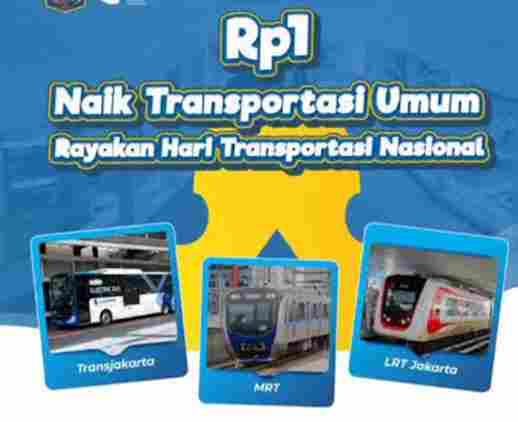
“When Public Transportation Became Indonesia’s New Hope”
(Reflection on Public Transportation Day, April 24)
By Ali Aminulloh
Morning had just broken as the roar of a bus engine slowly filled the city streets. Amidst the hustle and bustle of private vehicles jostling for space, an old bus drove by, surely carrying workers, students, and hopes that never truly stopped moving. That is where the story of this country begins: from the wheels that tirelessly carry life.
April 24, known as National Transportation Day, is not just a marker on the calendar. It traces the long journey of Indonesian public transportation from the wartime era, through independence, to the modern era that demands speed and sustainability.
History records that the origins of national public transportation were born during the Japanese occupation in 1943. After independence, the spirit of nationalization gave birth to DAMRI as a symbol of the state’s presence in ensuring people remain connected, even to remote areas of the country.
DAMRI’s journey was not a straight line. It grew from a simple “djawatan” to become the backbone of national land transportation. From city transportation to cross-border transportation, from busy routes to remote areas, it stands as proof that mobility is a right, not just a service.
The theme of National Transportation Day 2026 affirms a new direction: strengthening the role of public transportation, improving public services, and reducing congestion. This theme feels increasingly relevant amidst the reality of Indonesia’s increasingly congested city streets, where time is often spent on the asphalt.
However, looking at developed countries, a different picture emerges.
In Tokyo, public transportation isn’t just an option. It’s a culture. Trains arrive on time down to the second, the network is seamlessly integrated, and people have embraced public transportation as part of their daily lifestyle. Nearly all city activities rely on this disciplined and efficient system.
Meanwhile, in Singapore, the government has succeeded in creating a transportation system that is not only comfortable but also “gently compels” people to abandon private vehicles. Affordable fares, streamlined intermodal connectivity, and policies restricting private vehicles make public transportation the most logical choice.
In Europe, cities like Berlin demonstrate how integration is key. Buses, trams, and trains operate under one ticketing system, one schedule, and one vision: facilitating mobility for citizens without dependence on private vehicles. Even walking and cycling are part of a complementary transportation ecosystem.
This comparison is not intended to denigrate, but rather to raise awareness: that progress in public transportation is not just about technology, but about commitment, consistent policies, and changes in public behavior.
Indonesia itself is not standing still. Modernization efforts continue, from electric buses and digital payment systems to integration with the MRT, LRT, and trains. Programs like Teman Bus are concrete steps towards more professional and standardized services.
However, challenges remain. The dominance of private vehicles remains strong, infrastructure is uneven, and public awareness of the need to switch remains a significant challenge. This is where the most striking difference lies with developed countries: not just the system, but the collective discipline in using it.
Behind all this, there are figures who often go unnoticed: drivers, conductors, and mechanics. They are the guardians of the nation’s travel rhythm, navigating traffic jams, time pressures, and road risks, ensuring every passenger arrives safely.
National Transportation Day should not remain an annual ceremony. It must become a momentum for change, both in terms of policy and public awareness. Because, without public participation, public transportation will only be a second choice, not the primary solution.
Developed countries have proven one thing: when public transportation is prioritized, cities become more humane. Streets are more spacious, the air is cleaner, and time is more valuable.
Indonesia is on its way there. It may not be perfect, it may still be faltering. But every bus that departs this morning, every bus stop built, and every passenger who chooses to take public transportation is a small step toward major change.
And as those wheels continue to turn, what is truly being set in motion is not just vehicles, but Indonesia’s future.**
Indonesia, April 24, 2026
——-


