Rare Earth: When “Foreign” Elements Determine the Fate of the World
By: Dr. Ali Aminuloh, M.Pd.I., ME.
The world cries out for peace, but secretly it is preparing for war. Not with conventional weapons, but with control of elements barely known to the public: rare earths.
This paradox marks our time. The more technology advances, the more fragile humanity’s dependence on the earth’s resources becomes.
Rare earths are not just a mining issue. They are a story about the future.
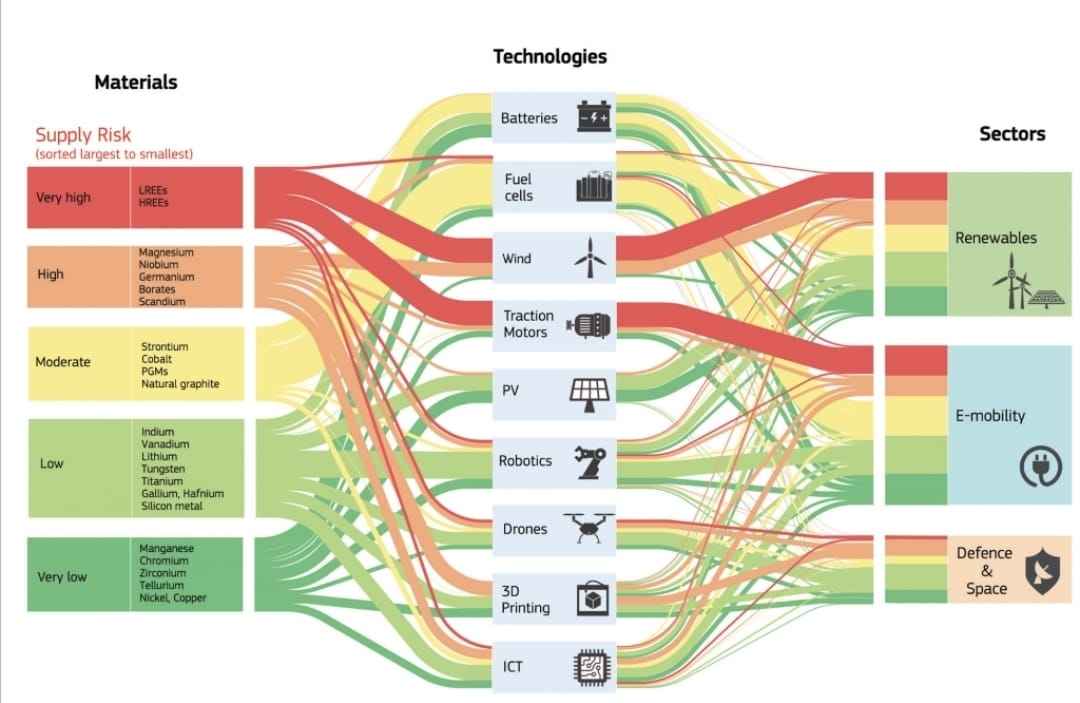
Rare earths, or rare earth elements, are a group of minerals that have for decades lived on the fringes of public discussion. They are not as popular as gold, not as simple as coal, and not as political as oil. But precisely because of this, they have become a new strategic weapon. Rare earths are the foundation of nearly all cutting-edge technology: smartphones, electric vehicles, solar panels, wind turbines, satellites, and even high-precision weapons systems. Without rare earths, the digital world would be paralyzed, the energy transition would stall, and modern militaries would lose their edge.
What makes rare earths special is not simply their existence, but their unique and difficult-to-replace properties. These elements enable tiny, super-strong magnets, high energy efficiency, and the miniaturization of technology. The modern world rests on a very fragile foundation: a handful of minerals that cannot be reproduced in human laboratories. Nature, once again, holds the key.
However, the main problem with rare earths is not their reserves, but rather their supply chain. Geologically, these elements are distributed across many countries. But economically and technologically, their processing is concentrated. Over the years, China established its dominance not only by mining but also by mastering a complex, expensive, and environmentally risky refining process. Other countries chose the safe route: buying, not producing. By the time the world realized this dependency, it was too late.
Since then, rare earths have become a global geopolitical issue. The United States and its allies view supply dependence as a strategic threat. This is not due to a lack of technology, but because their technology relies on raw materials from outside their political control. This is where rare earths have become a bargaining chip, not just a trade commodity. Trade wars, export restrictions, mining subsidies, and strategic mineral alliances have emerged. The world isn’t short of resources, but rather of trust.
Today’s global trends point in one clear direction: the green energy transition is actually increasing dependence on rare earths. Electric cars, touted as environmentally friendly, require more rare earths than conventional cars. Giant wind turbines in new energy fields are built on rare earth magnets. This means that the more the world strives to be “green,” the greater the pressure on the earth. This is the modern ecological paradox: good intentions without wisdom can lead to new damage.
Indonesia is at the heart of this massive trend. We have long been known as the world’s nickel giant. However, little is realized by the public that behind the processing of nickel and tin lies the potential of rare earths as by-products. Indonesia is not resource-poor, but lacks technological mastery and long-term vision. If rare earths are viewed solely as an additional value for exports, Indonesia will be left behind. But if they are understood as a gateway to strategic industries, the nation’s geopolitical position could fundamentally change.
This is where Islam offers a different perspective. The Quran does not speak of rare earths literally, but speaks very explicitly about humanity’s relationship with the earth. Humans are referred to as caliphs, stewards, not plunderers. Nature was created to be utilized, but also to be protected. Any ecological damage is positioned as a direct result of human moral imbalance. In the context of rare earths, this message is particularly relevant: high technology without ethics will only accelerate destruction.
Shaykh Al Zaytun’s ideas are crucial in this context. Through his trilogy of awareness: philosophical, ecological, and social awareness, he reminds us that resource management should not stop at technical capabilities. Philosophical awareness invites humans to question the purpose: why technology was created, and where civilization is headed. Ecological awareness demands caution, as the earth has limits. Social awareness ensures that the results of natural management do not only benefit a few, but also bring widespread benefit.
Within this framework, Al Zaytun’s vision becomes geopolitically and spiritually relevant. Al Zaytun views education not merely as a transfer of knowledge, but as the formation of healthy, intelligent, and humane individuals. Individuals capable of managing differences, fostering tolerance, and rejecting violence.
In a world that views rare earths as a potential source of conflict, Al Zaytun offers a counter-narrative: resources should be a means of peace, not a reason for hostility.
Rare earths, ultimately, are a mirror of the times. They reveal both human ingenuity and its limitations. They demonstrate how technological progress can outpace moral maturity. The world today lacks not knowledge, but wisdom. And this is where Islam plays a role: not as a religion that rejects technology, but as a guide to keep technology on the path of humanity.
The most important question is no longer who controls rare earths, but whether humanity can control itself. Without it, the silent rare earth elements can become a catalyst for global unrest. And history has proven time and again: civilizations collapse not because of a lack of resources, but because of a failure to manage them fairly and civilized.**
Indonesia, January 9, 2026
———