Langen Mataya Bedhayan Gandrungmanis Performance, a Dance Re-Actualization Based on an Ancient Manuscript
JAKARTA-JAYA NEWS.COM – The Langen Mataya Bedhayan Gandrungmanis performance, a dance reactualization based on an ancient manuscript, will take place in the multipurpose room on the 4th floor of the National Library of Indonesia, on Jl. Merdeka Selatan, Central Jakarta, on Sunday, October 26, 2025, from 1:00 PM to 4:00 PM WIB.
The choreographer is Naufal Anggito Yudhistira, dance advisor Ely D Lutan, gamelan instructor Ngatiman, and musicians from the Sekar Widya Makara Karawitan Student Activity Unit (UKM Karawitan) at the University of Indonesia (UI). The dancers include Dayinta Melira, Indah Prawita, Dwi Candra Auliya, Kurnia Dewi, Ika Anggraeni, Triana Olivia, Rini Kusumawati, Lembayung Ranum, and Dewi Nur.
“The performance, titled ‘Langen Mataya Bedhayan Gandrungmanis,’ is a performance that embodies the spirit of revitalizing and exploring classical Javanese dance in the Surakarta style,” explained Naufal Anggito Yudhistira, M.Hum., choreographer and doctoral student in Literature at the Faculty of Cultural Sciences, University of Indonesia (UI), to reporters in Jakarta on Monday morning (October 20, 2025).
According to him, this performance will feature the Bedhaya Gandrungmanis dance, based on Naufal Anggito Yudhistira’s dissertation research at the University of Indonesia on the extinct Bedhaya Gandrungmanis.
This performance involves various young dancers and musicians from Jakarta and the surrounding areas.
“This is driven by the desire to introduce Surakarta-style classical dance to the younger generation and to recruit and regenerate classical Javanese dancers in Jakarta,” he added.
This spirit of regeneration is part of an effort to develop art as an educational vehicle (art for education).
The performance is not the final point of the long process of exploring the Bedhaya Gandrungmanis dance, but rather part of a seemingly never-ending process.
The performance, which will be held on October 26, 2025, is not intended to be “perfect.” It is part of the learning and regeneration process for traditional arts practitioners.
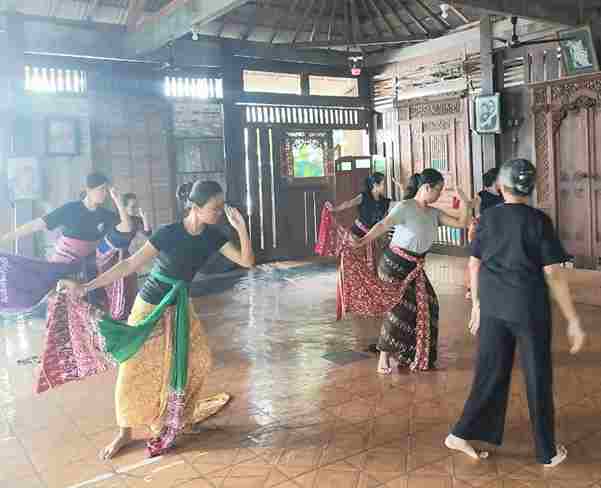
Dance Rehearsal Process
The Bedhaya Gandrungmanis rehearsal process began in June 2025. The initial rehearsal phase involved exploring the movements and consolidating the dance form. Dance rehearsals only began in August 2025.
The dance rehearsal process began with memorization of various movements, floor patterns, refining movement techniques, practicing with musicians, and finally, practicing appreciation. Rehearsals with musicians were conducted with the Karawitan team of the Sekar Widya Makara Student Activity Center (UKM) at the University of Indonesia (UI) in the Pusgiwa (Student Activity Center), assisted by trainer Ngatiman.
The core rehearsal process for the Langen Mataya Bedhayan Gandrungmanis performance began on September 19, 2025, at the Pusgiwa (Student Activity Center).
This activity began with a thanksgiving ceremony or wilujengan (prayer ceremony) as the opening act for the tempuk gendhing (joint rehearsal of musicians and dancers).
This activity continued with the first rehearsal of Bedhaya Gandrungmanis, accompanied by live gamelan.
Entering early October 2025, rehearsals were also accompanied by Ely D. Lutan, a classical Javanese dance maestro based in Jakarta.
“He provided detailed guidance on movement, musical understanding, and appreciation for the Bedhaya dance,” said Naufal Anggito Yudhistira.
The Bedhaya Gandrungmanis dance rehearsal process faced many challenges, making the pre-performance process very interesting.
First, there was the search for common ground between the musicians and dancers. Understanding of the work, technique, and feeling was crucial in creating a complete dance performance.
Second, there was the difference in dance styles of each dancer. These differences in styles and schools of thought illustrate the rich diversity and branches of the Surakarta classical dance tradition.
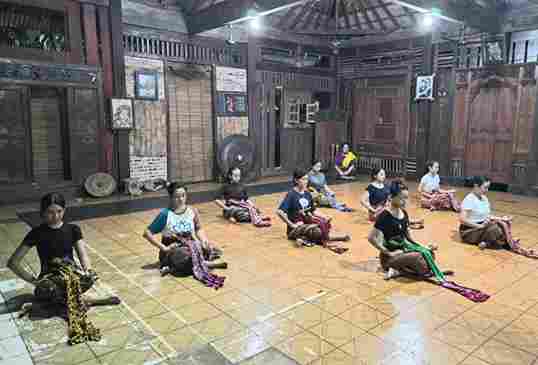
This made the process of finding the form and embodiment of the Bedhaya Gandrungmanis dance even more dynamic and engaging.
During the process of understanding the feeling and spirituality of the dance provided by Ely D. Lutan, it became apparent that the emotional aspect of feeling was crucial.
The nine Bedhaya dancers are essentially a single entity, so finding common ground between the nine dancers is a challenge in itself.
Furthermore, this process is carried out in a relatively short time. The dancers experience many unique touches within themselves during the rehearsals.
They become more familiar with their bodies, understanding that they are an inseparable part of themselves. The dancers understand that trying to understand the feeling of bedhayan is an effort to maintain concentration with a sense of surrender and humility, while remaining grateful for all the power that comes from God.
The performance will be held in the Multipurpose Room on the 4th floor of the National Library of the Republic of Indonesia. The choice of the National Library of the Republic of Indonesia as the venue is a manifestation of the hope that the Bedhaya Gandrungmanis dance, which this ancient work can be appreciated more widely.
“The National Library of the Republic of Indonesia always welcomes anyone, including arts activists, who wish to create literacy-based events. This performance is inseparable from the process of preserving ancient manuscripts, which is one of the driving forces behind the advancement of Indonesian culture,” he concluded. (***)
Contributor: Lasman Simanjuntak
—–