The Principal’s Position Is Not a Throne;
_Reading Teachers’ Fears about Permendikdasmen No. 7 of 2025
By:
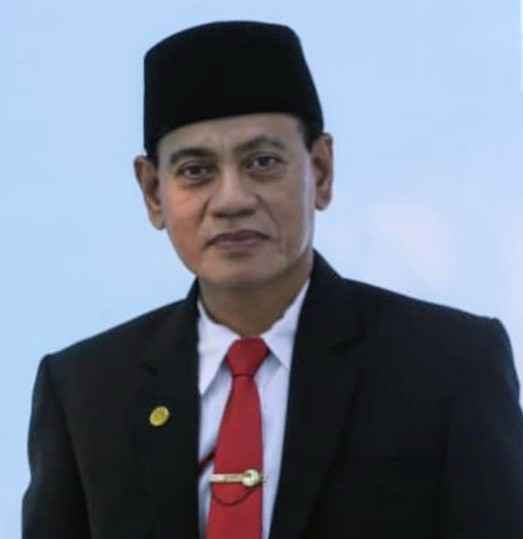
Dr. Masduki Duryat*
(_Indramayu Education Council_)
Some were secretly anxious when the state began limiting principals’ terms of office to eight years. Others were offended when principals were required to return to teaching after their terms ended. Ironically, many teachers themselves admit that the position of principal today is very demanding: the administrative burden is mounting, local political pressure is high, legal risks are high, while the benefits are not particularly significant.
However, when the position must be relinquished, some experience psychological fear. It is at this point that Permendikdasmen No. 7 of 2025 actually addresses a latent problem in Indonesian education: the position of principal has for too long been viewed as a symbol of social status, rather than a temporary professional mandate.
The regulation limiting the term of office for ASN principals to a maximum of two terms or eight years and a maximum age of 56 when first appointed actually has strong bureaucratic reform logic. From an organizational governance perspective, term limits are necessary to prevent leadership stagnation and the prolonged concentration of power in a single figure (Mulyasa, 2022). Schools that are led by the same person for too long have the potential to foster a culture of patronage, resistance to criticism, and minimal regeneration.
*Principal: Large Burden, Small Incentive*
The problem is, this regulation emerged amidst the reality that the position of principal is increasingly unattractive from a professional perspective. Today’s principal is not only an academic leader, but also a budget manager, bureaucratic administrator, conflict mediator, and even responsible for all school matters. In fact, many principals have been caught up in administrative legal issues due to technical errors in managing education funds.
In educational management theory, an unbalanced workload and rewards will reduce leadership motivation (Bush, 2018). The phenomenon of many teachers reluctant to become principals indicates a crisis in the position’s attractiveness. Rational teachers are beginning to calculate that the psychological and administrative risks are not worth the additional benefits received. The position of principal is ultimately perceived more as a “structural burden” than a professional honor.
This situation is exacerbated by the highly hierarchical culture of Indonesia’s educational bureaucracy. Principals are positioned as the school elite, while ordinary teachers are at the bottom of the symbolic structure. As a result, when a principal must return to teaching after completing their term, a feeling of “demotion” arises. Yet, substantively, teachers are the core of education, while the principal is merely a temporary leadership role.
*Feudal Mentality in Education*
This is where the sharpest criticism of the attitudes of some teachers and principals needs to be raised. The unwillingness to return to teaching demonstrates that our education system remains trapped in a bureaucratic feudal mentality. Position is seen as a permanent identity associated with social honor. This perspective is dangerous because it shifts the orientation of education from professional service to a struggle for position.
Pierre Bourdieu (1986) referred to this situation as a struggle for “symbolic capital,” namely, the social power derived from position and recognition. The principal is no longer simply a learning leader, but a symbol of prestige that is difficult to relinquish. Therefore, it is not surprising that some principals seek to maintain influence even after their term ends.
In fact, in the modern education system, leadership rotation is commonplace. In many developed countries, principals can return to teaching without social stigma. Teacher professionalism is not determined by structural position, but rather by pedagogical capacity and contribution to learning (Fullan, 2020). Indonesia, however, remains trapped in the logic of administrative power.
*Minister of Elementary and Secondary Education Regulations That Need Support, Yet Criticism*
Minister of Elementary and Secondary Education Regulation No. 7 of 2025 deserves praise for its efforts to break the tradition of “lifelong principalship,” which has often hindered regeneration. Schools need a circulation of new ideas and dynamic leadership. Age restrictions are also important so that principals have sufficient energy to implement educational transformation.
However, this regulation should not stop at merely administrative restrictions. The state must have the courage to improve the welfare system and professional protection of principals. If principals are expected to become modern education managers, then institutional support must also be modern: reducing administrative burdens, legal protection, strengthening managerial staff, and providing adequate incentives.
Without this, this regulation could actually have the side effect of a shortage of candidates quality principals. Potential teachers will choose to remain in the comfort zone of teaching rather than take on stressful positions with limited tenure.
*Honoring Teachers, Not Honoring Positions*
Ultimately, the controversy surrounding the Minister of Education and Culture’s Regulation (Permendikdasmen) reveals a profound irony in Indonesian education. Many say teaching is a noble profession, but culturally, it is structural positions that are more revered.
When returning to teaching is considered a degradation of dignity, the real problem is not the regulation, but our perspective on the teaching profession itself.
Schools don’t need petty kings who want to maintain unlimited power. Schools need leaders who are ready to come, work, make changes, and then return to teaching with dignity. Because in education, a position should only be a temporary stopover, while dedication as a teacher is the primary identity.**
Indramayu, May 11, 2026
——