Justice Without Stereotypes
(Reflection on Women’s Justice Day, March 10th)
By: Ali Aminulloh
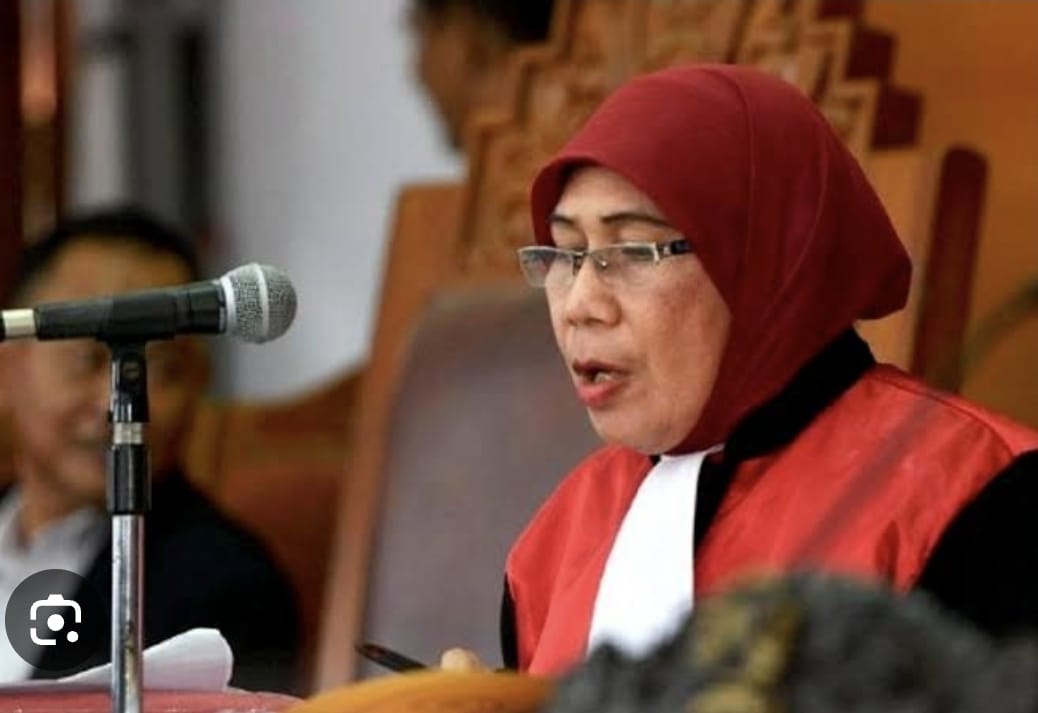
The morning of March 10th always brings an important reminder: justice must not rest solely on the voices of men. In the courtrooms that determine the fate of humanity, the world is beginning to realize that the presence of women is not merely an accessory, but a vital part of the face of justice itself. It is from this awareness that International Women’s Justice Day is commemorated. It is a global momentum that affirms that a fair justice system must provide equal space for women.
International Women’s Justice Day was established by the United Nations General Assembly through a resolution proposed by the State of Qatar. Its goal is simple yet fundamental: to encourage women’s participation in various levels of the judicial system, which has traditionally been dominated by men. In many countries, women remain underrepresented in strategic positions such as judges, prosecutors, and legal decision-makers.
This commemoration typically includes conferences, seminars, academic discussions, and awards for women who have contributed to the legal world. The year 2026 itself is in the same spirit as the theme of International Women’s Day, namely “Rights. Justice. Action. For All Women and Girls.” A global call for all women to truly experience rights, justice, and real action.
However, if we look deeper, the idea of equality in justice is actually not a new concept. From the perspective of the Quran, the principle of human equality has been emphasized from the beginning. The Quran states that men and women were created from the same source and have equal human dignity. Allah’s word in Surah Al-Hujurat, verse 13, emphasizes that human dignity is not determined by gender, but by piety. Similarly, Surah An-Nahl, verse 97, affirms that anyone, whether male or female, who does good will receive a good life.
This principle demonstrates that in the Islamic theological perspective, justice recognizes no gender hierarchy. Men and women have equal moral responsibility in building a just social life, including in the legal and judicial spheres.
However, throughout history, social realities have often not aligned with these basic values. The patriarchal culture that existed long before the arrival of Islam, particularly in the Jahiliyah tradition, placed women in a subordinate position. Women were perceived as weak, emotional, and unfit to participate in public decision-making.
Remnants of this perspective even influenced some classical legal thought. In some classical fiqh literature, for example, there are views that restrict women from serving as judges in certain cases. This view was not entirely derived from religious texts, but was also influenced by the patriarchal social context of the time.
Contemporary Muslim scholars have extensively re-examined this issue. Fatima Mernissi, in *The Veil and the Male Elite*, explains that many religious interpretations that developed in Islamic history were influenced by patriarchal social structures, not solely by the normative messages of the Quran. Meanwhile, Amina Wadud, in *Quran and Woman*, asserts that the Quran actually contains the principle of moral and spiritual equality between men and women. In modern fiqh studies, Yusuf al-Qaradawi also states that there is no qat’i (legal) evidence prohibiting women from serving as judges as long as they possess competence and integrity.
These perspectives open up new avenues for understanding women’s roles in the legal system. Justice is no longer understood as a gender-exclusive domain, but as a shared mandate.
This is where International Women’s Justice Day (IWJD) becomes significant. It is not simply a global ceremony, but a reminder that justice is more complete when it incorporates women’s perspectives. The presence of women in the justice system brings a different sensitivity to issues of violence, discrimination, and the rights of vulnerable groups.
More than that, this commemoration also serves as a reflection that the struggle for equality is not an effort against men, but rather a collective effort to restore the values of justice that have been taught by religion and humanity.
Because ultimately, justice has no gender. It simply requires the courage of humans—both men and women—to keep it standing.
Indonesia, March 10, 2026
———-