When the World Preached Peace, But Sowed Hegemony
(Reflection on the International Day of Human Fraternity)
By: Dr. Ali Aminulloh, M.Pd.I. ME
Today’s world is full of paradoxes. Peace is celebrated from international platforms, but at the same time, a new face of colonialism is emerging. It’s subtle, modern, and disguised as a narrative of global stability. Powerful nations speak of maintaining world order, yet they actually interfere, oppress, and even annex other sovereign nations. In the name of peace, actions taken often fuel the fires of division.
Amidst this unequal reality, the world has designated a special day to remind us of the most fundamental meaning of humanity: fraternity.
Every February 4th, the world commemorates the International Day of Human Fraternity, a global initiative established by the United Nations through Resolution A/RES/75/200 on December 21, 2020. This commemoration stems from the realization that global conflict is not merely a political or economic issue, but rather a crisis in how humans view each other.
The moral foundation of this important day is rooted in the Document on Human Fraternity, signed in 2019 by Pope Francis, Sheikh Ahmad Al-Tayeb, and world religious leaders. The document affirms a simple yet revolutionary message: peace cannot be born from domination, but from dialogue and cooperation across faiths and cultures.
The 2026 theme, “Dialogue, Not Division,” serves as both a subtle critique and a sharp mirror for the world. While many nations resort to military force and economic pressure, the UN is calling on humanity to return to sitting together, listening to one another, and recognizing each other.
International Day of Human Fraternity is commemorated in various countries through interfaith dialogues, humanitarian social activities, public discussions, and cultural celebrations that celebrate diversity. However, in Indonesia, these values are not only present in annual ceremonies.
At Al Zaytun, human fraternity is not a seasonal event, but rather the lifeblood of everyday life. With a vision to be a center for education, developing a culture of tolerance and peace towards a healthy, intelligent, and humane society, Al Zaytun practices tolerance as a lived practice, not just a discourse.
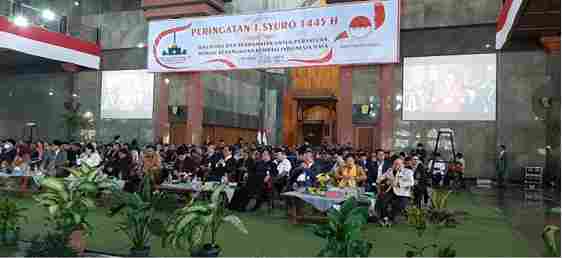
At important moments such as the commemoration of Muharram, Al Zaytun hosts interfaith gatherings. Faith leaders meet not to judge one another, but to engage in dialogue. Differences are not standardized, but nurtured. In spaces like these, students learn that tolerance is not a theory found in textbooks, but rather a lived experience that is then passed on.
While the global world is often mired in divide-and-rule politics, Al Zaytun instills the value of togetherness from an early age. When powerful powers claim peace while imposing their will, Al Zaytun proves that true peace is born from respect and a willingness to listen.
Ultimately, International Day of Human Fraternity is more than just a calendar marker. It is a reminder that amidst a world bent on domination, there are always small spaces that faithfully humanize others. And from these spaces, hope for a more just and peaceful world continues to burn.
Indonesia, February 4, 2026
——–