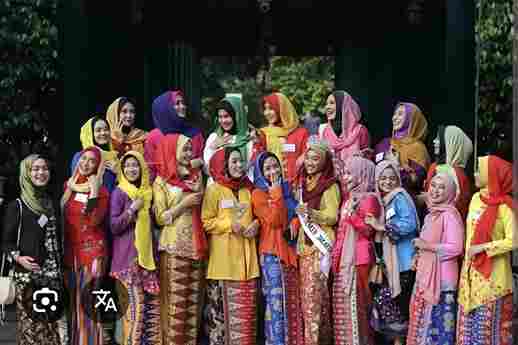
The Hijab: A Covering That Opens Awareness
(Reflection on International Hijab Day)
By: Dr. Ali Aminulloh, M.Pd.I., M.E.
If equality means uniformity, then why did God create differences?
The question hangs in the air, striking at our reason, which often misunderstands justice. In an age when equality is often misinterpreted as the erasure of boundaries, the hijab presents a paradox: it covers the body, but opens consciousness; it limits the physical, but liberates dignity.
Humans, by nature, are created differently, male and female. Both are equal creations of God, and both bear equal rights and obligations before Him. However, equality does not mean absolute equality. In the biological, psychological, and social dimensions, each has a prominent and distinctive role. It is at this point that justice finds its meaning: placing things according to their nature and function, rather than forcibly standardizing them.
This kind of awareness aligns with the trilogy of awareness often proposed by Shaykh Al Zaytun: philosophical, ecological, and social awareness. Philosophical awareness encourages people to think clearly about the essence of self and role. Ecological awareness teaches harmony, stating that balance arises from mutually supportive differences. Meanwhile, social awareness demands justice in human relations, without negating identity.
At Al Zaytun, this idea is translated concretely. Men and women are placed equally, even in mahdhah worship. Rows are arranged parallel, without a veil as a covering. This is a powerful symbolic message: spiritual value is not determined by gender. However, at the same time, sharia still emphasizes the protection of women’s private parts in a personal context. The goal is clearly to maintain honor, not to limit humanity.
This is where the hijab finds its relevance in an era that promotes the slogan of equality. Precisely as boundaries become increasingly blurred, the hijab’s space becomes crucial as an affirmation of women’s existence, that they exist with a distinct role and physicality that deserve respect. The hijab is not a sign of backwardness, but rather a statement of awareness: about the body, dignity, and choice of faith.
Every February 1st, the world commemorates World Hijab Day. This commemoration was initiated by Nazma Khan, a Bangladeshi woman living in New York. The bitter experience of discrimination due to the hijab in school and university led her to launch a global movement in 2013. She encouraged non-Muslim women to try wearing the hijab for a day, not to convert to Islam, but to foster empathy.
Today, World Hijab Day is celebrated in more than 150 countries. It takes various forms: discussions and seminars on the hijab and Muslim women’s rights, social media campaigns, educational activities in schools and universities, and even Try Hijab Day. The 2026 theme, #UnityInHijab, emphasizes the message of unity that differences in identity do not have to lead to discrimination.
Ultimately, the hijab is more than just a head covering. It is a symbol of philosophical awareness of justice, ecological awareness of balance, and social awareness of respect. In a world rife with debates about equality, the hijab reminds us: fairness does not mean equality, and freedom does not mean limitlessness.**
Indonesia, February 1, 2026
——