HISTORY OF THE ARRIVAL OF THE MALAY AND CHINESE ETHNICIANS ON THE ISLAND OF KALIMANTAN
By: Hamly Hadi
History Observer
1. The arrival of the Malay tribe in 1511 AD
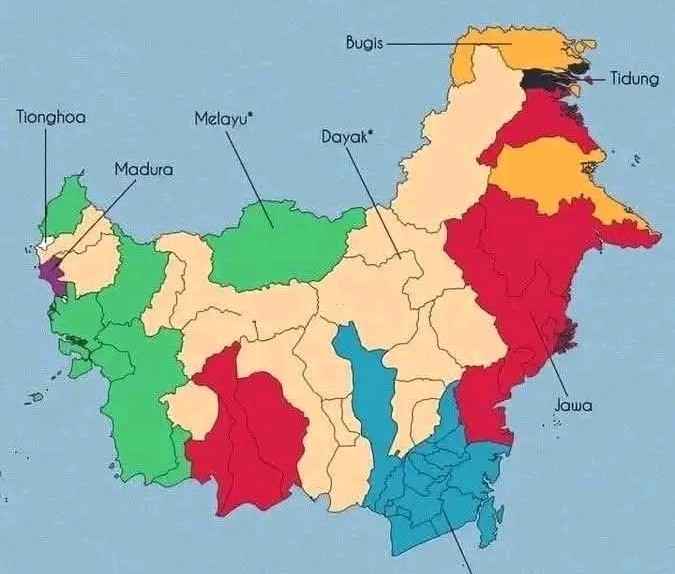
The Malay tribe was born in the kingdom of Malacca in 1406 after Prameswara and his followers converted to Islam, then in 1511 Malacca was attacked by the Portuguese so that many Malay people left Malacca and fled to various regions such as Kelantan, Terengganu, Pahang, Pattani, Kedah and Perak, Riau, Riau Islands, West Kalimantan.
So the Malay tribe began to come to Kalimantan on a large scale starting in 1511 AD. The Malays who came to West Kalimantan brought Islam with them. Islam spread along the Sambas River, which also gave rise to the Sambas Sultanate, the first Islamic sultanate in West Kalimantan. It then spread to Singkawang, Mempawah, and Pontianak along the Kapuas River. Islam then spread along the Landak River, passing through Tayan, Sanggau, Sekadau, Sintang, and Nanga Pinoh, all the way to Putussibau. This spread lasted from 1550 AD to 1800 AD. Some Dayak tribes in the interior of West Kalimantan who had embraced Islam directly adopted Malay lifestyles and eventually identified themselves as Malay.
2. Arrival of Chinese Ethnic Groups Begins in 1740 AD
Chinese people first arrived in West Kalimantan, specifically in Mempawah, in 1740. They were brought by the ruler of Mempawah, Daeng Opu Manambun, to work in the gold mines there.
Then, in 1750, the ruler of Sambas, Sultan Abubakar Kamaluddin, also brought in Chinese laborers to work the gold mines, which were abundant in the Monterado (Montraduk), Seminis, and Lara areas.
In 1764, Sambas again brought in more Chinese as miners, following the discovery of more new gold mines in the country. By 1767, the number of Chinese laborers working in the various Sambas gold mines had soared to tens of thousands.
In 1770, Chinese gold miners in Sambas and Mempawah established the Thaikong (Fosjoen) and Lanfang trading companies, as well as several other smaller companies subordinate to them, one of which was called Samtiaokiu. They were granted autonomy but were still required to pay tribute to the Sultans of Sambas and Mempawah, respectively.
Banjarmasin, January 27, 2026
References:
1. Ahyat. Ita Syamsiyah. 2005. Dynamics and Influence of Malay Culture in West Kalimantan. Proscidings of the International Conference on Indonesia Studies
2. Yusriadi. 2018. Dayak and Malay Identity in West Kalimantan. Center for the Study of Borneo Language and Society. IAIN Pontianak
——-