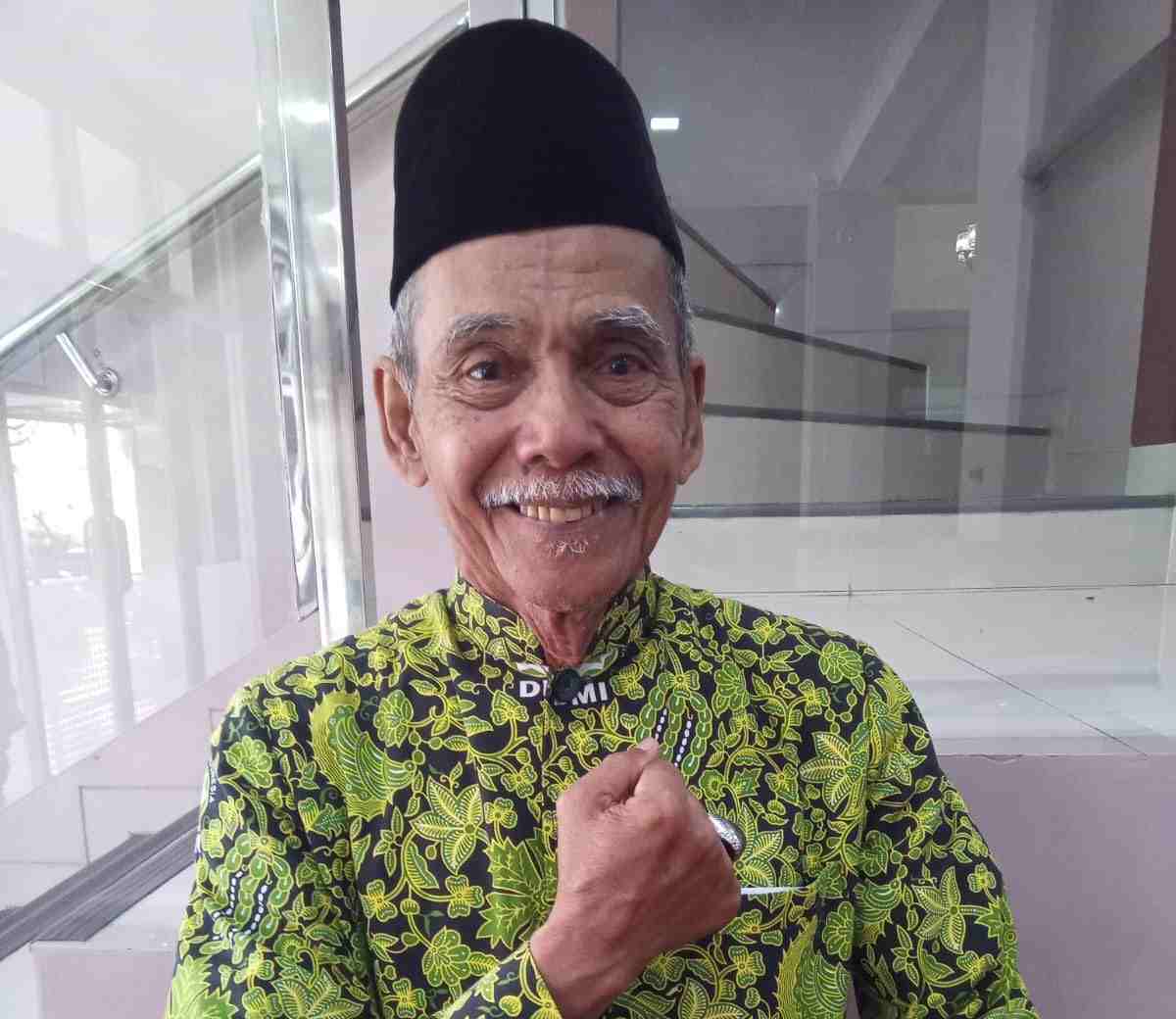
KH. SYAIROZI BILAL ELECTED CHAIRMAN OF THE MUI INDRAMAYU, FROM KHADIMUL UMMAH TO SHODIQUL HUKUMAH
By: H. Adlan Daie.
Political and socio-religious analyst
The election of KH. Syairozi Bilal as chairman of the MUI in Indramayu Regency for the 2025-2030 period at the 7th Regional Conference (Musda) of the Indonesian Ulema Council (MUI) of Indramayu Regency (Monday, December 29, 2025) at the Trisula Hotel Ballroom, Indramayu – is apt.
Precise and even “credentialed,” meaning more than just worthy of reading from his track record of scholarly credentials, his social legacy, and his leadership in socio-religious interactions.
First, borrowing the political anthropological theory of Dr. Zamakhsyari Dhadir, author of the book “Tradition of Islamic Boarding Schools” (1982), posits that the election of KH Syairozi Bilal as chairman of the Indramayu MUI is not merely about the person, but about strengthening the MUI’s religious mindset and perspective within Islamic boarding schools.
He is an alumnus of Lirboyo (1980), a cultural anchor of the Nahdlatul Ulama (NU), with a strong sanad of religious scholarship that is “tawashut” and moderate. Gus Dur, in his article for Tempo magazine (November 14, 1980), even called Lirboyo an “inclusive” and “resilient” culturally within the diversity of various mass organizations.
Second, KH. Syairozi Bilal has a long history as a “Khadimul Ummah,” choosing to serve the community by establishing and managing the Darul Falah Kepolo Singaraja, Indramayu, Quranic memorization boarding school and the Raudlatul Muta’allimin Hajj Guidance Group (KBIH).
These two socio-religious institutions have built public trust and confidence in his credibility and competence in the religious field, demonstrating that his role as “Khodimul Ummah” is a “moral calling,” a moral calling to serve the community.
Third, KH. Syairozi Bilal is the chairman of the Interfaith Communication Forum (FKUB) for the 2023-2025 period. This forum serves as “Shadiqul Hukumah,” a government partner in maintaining and nurturing interfaith harmony as a vital component of national harmony and social stability.
These three variables—a track record of scholarly ties, a strong personal reputation, and experience in social interactions across mass organizations—place KH Syairozi Bilal in a credible position, exceeding his mandate as chairman of the Indonesian Ulema Council (MUI) for Indramayu Regency.
MUI, as a forum for the diverse representation of Islamic organizations in Indonesia, historically traces back to the founding of the Indonesian Supreme Islamic Council (MIAI, 1937 – during the Dutch East Indies era). This accommodated the social reality of Indonesia’s absolute Muslim majority.
During the New Order era, although the MUI was established on the initiative and funded by the government, the two did not always operate in a linear fashion, but rather in a relationship of ebb and flow regarding several government issues and policies. The MUI had at least three roles and missions in the construction of Islam and the nation.
These are “Himayatul ummah,” protecting the community from social practices prohibited in Islam; “khadimul ummah,” serving the community; and “shadiqul hukumah,” partnering with the government, helping to guide the government regarding religious aspects in national and state life.
Placing the MUI in these three roles is certainly not simple; its actualization in the public sphere is based on the context of principled, strategic, tactical, and pragmatic working relationships.
These four relationships are equally important in terms of their “situational specificity,” amidst the phenomenon of social disruption within the framework of the Pancasila ideology within the Unitary State of the Republic of Indonesia (NKRI).
The “pragmatic” relationship here is not political pragmatism that seeks to opportunistically legitimize government policies, but rather a relationship of MUI’s usefulness in empowering the community in its relations with the government and other institutions.
Strengthening strategic, tactical, and pragmatic cooperative relationships for the Indramayu MUI with government institutions, the private sector, and the business world. will narrow the space for the growth of the seeds of “radicalism” and social “intolerance,” which have long been a “latent” threat to national harmony.
In other words, social protection against the growth of the seeds of “radicalism” and “intolerance” currently within the socio-political construction cannot be addressed solely by the power of a single religious narrative but is intertwined with solutions to other social problems.
This is the solemn path of the MUI Indramayu, a role and mission for guiding culturally grounded religious spaces in efforts to strengthen social harmony within the construction of national politics.
Congratulations to KH Syairozi Bilal. Maximum dedication will not betray optimal results.***
Indramayu, December 30, 2025
Wassalam.
——-