Alternative Options for Ideal MBG Management Procedures for Success
Author : Jacob Ereste
Freelance Journalist
The government program implementing free nutritious meals (MBG), under the responsibility of the National Nutrition Agency (BGN), for children attending school, deserves support so that children can be healthier and better able to absorb the lessons they need to prepare for a better and more quality future.
The problem is that the technical implementation of MBG seems to be forced upon large businesses, requiring orders of a minimum of 3,000 portions. The maximum capacity for small businesses is between 500 and 1,000 portions. If orders exceed this number, the MBG implementers will be overwhelmed.
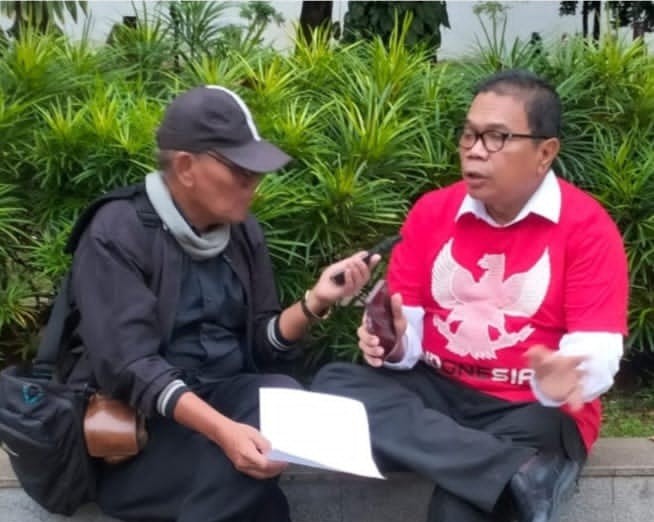
This was stated by Sri Eko Sriyanto Galgendu, a Spiritual Guardian of the Archipelago who also runs the Ayam Ancur and Soto Gubeng restaurants on Jl. Ir. H. Juanda, Central Jakarta, once achieved a daily turnover of 3,000 orders, which had to be fulfilled quickly and on time, while ensuring the menu met standard standards consistent with what customers had previously enjoyed.
According to Sri Eko Sriyanto Galgendu, fulfilling 3,000 orders is only feasible for middle- to upper-class entrepreneurs. This means they are entrepreneurs with strong capital and human resources who must manage the food served to school children. This means that if the management mechanism is to be implemented in such a way, everything from preparing the kitchen and the necessary equipment must be carefully calculated.
This means that preparing the kitchen with the necessary cooking equipment clearly requires a significant amount of funds. Furthermore, culinary experts and coordinators must have a dedicated team to source the ingredients for the next day’s meal, all of which must be prepared at least one day in advance.
If this teamwork mechanism is not implemented diligently, the MBG menu will certainly be in disarray. This story about the MBG management mechanism is separate from the assumption that all necessary food ingredients will be dropped off by a specific company, thus allowing the management to be separate, assuming that only cooking is necessary.
If the food management mechanism for the MBG is like that, the final stage of the task is distribution—delivery—to the schools where the children will consume the MBG. Therefore, a dedicated team, including clean and hygienic transportation vehicles, is required so that the MBG food can be enjoyed with joy and happiness by the students, stimulating their enthusiasm and passion for learning, according to the schedule agreed upon with the schools concerned.
Additional questions regarding the MBG team’s work phase, coordinated by the National Education Agency (BGN), also need to be addressed regarding the allocation of teachers’ or teaching staff at the schools. At least 10 to 15 extra portions of food are needed. Furthermore, what about the cleaning process that must be carried out after the MBG event, carried out by the children or students? In practice, in many places, this is the responsibility of the schools. In some places, schools even require the school to collect used cutlery and bring it back to the kitchen where the food is prepared.
So, managing this type of MBG is indeed quite complicated and rigid, compared to providing the allocated funds directly to guardians or parents to prepare MBG meals from home. Furthermore, the equipment used must be suitable and relevant for each student to manage, bringing their own food.
This method can at least avoid the costs of the kitchen, its management, and the staff who distribute the food from the kitchen to the school.
An alternative method for managing MBG could be a cooperative or through a local Women’s Family Welfare Movement (PKK) group, with a maximum of 500 portions. This model can be implemented by PKK women’s groups to gain value—at least they can participate, not be oriented towards making large profits. At the very least, they can enjoy the MBG menu in reasonable and appropriate portions as part of the MBG management at the regional level. Therefore, similar groups can be created in more than one group. Because to serve a school with around 1,000 students or more, it can be created several times. How many groups should each serve? Each group should serve a maximum of 500 to 1,000 servings.**
Pecenongan, September 29, 2025
—-