Mojowarno: Traces of Majapahit, the Gospel, and Tolerance in the Heart of Jombang
JOMBANG-JAYA NEWS.COM – Hidden amidst the green expanse of Jombang Regency, East Java, an area called Mojowarno, holds a myriad of stories that not only summarize the history of the glory of Majapahit, but also present a unique mosaic about the entry of Christianity, the struggle under colonialism, to the eternal spirit of tolerance.
Mojowarno is not just a dot on the map, but a long narrative about the blend of culture, beliefs, and tenacity.
To explore Mojowarno, we must go back far to the era of the Majapahit Kingdom (13th to 16th centuries). Although there are no specific records of “Mojowarno” in ancient inscriptions, the Jombang area in general was the heart of Majapahit, a food barn and vital trade route.
Historians suspect that Mojowarno at that time had become a prosperous agrarian settlement, with a rural life that was thick with Javanese tradition. The name itself, “Mojowarno,” could be a description of the natural wealth and diverse village life, reflecting the glory of Majapahit.
A major change came with Dutch colonialism in the 19th century. In addition to resource exploitation, the “ethical policy” policy paved the way for European missionaries, especially from the Nederlandsch Zendeling Genootschap (NZG), to spread the Gospel in Java.
Mojowarno, with its open society and fertile land, became one of the main targets.
However, the seeds of Christianity were not only planted by Europeans.
It was Kyai Paulus Tosari, a native Javanese who had converted to Christianity elsewhere, who became the first Gospel teacher and played a crucial role. With a deep understanding of local culture, Kyai Tosari succeeded in approaching the Mojowarno community. Not surprisingly, many Javanese converted to Christianity thanks to an approach that respected local values. This was not just a change of belief, but a social and spiritual transformation that slowly formed a solid Christian community.
With the growing congregation, the need for a decent place of worship was non-negotiable.
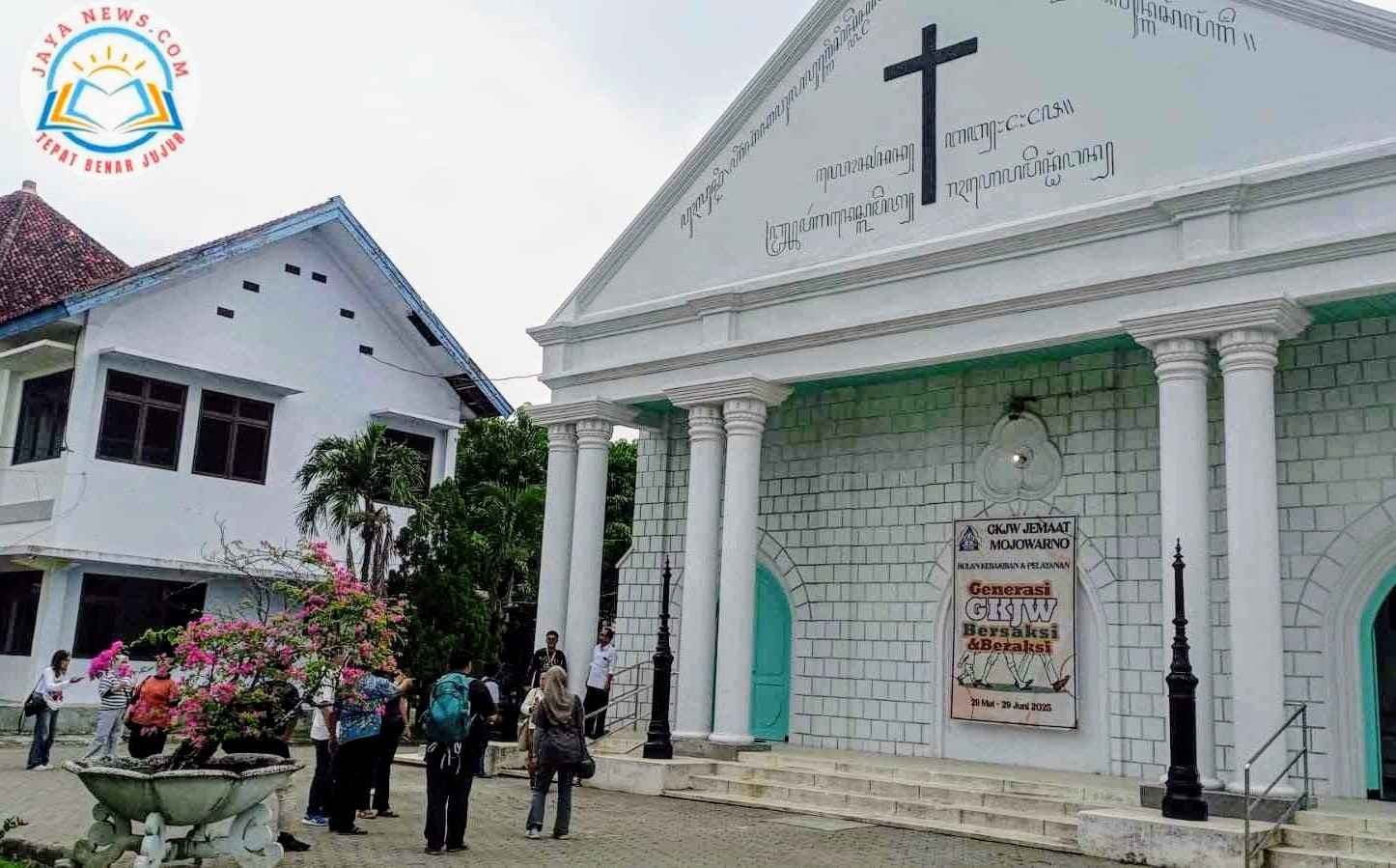
In 1881, the East Java Christian Church (GKJW) of Mojowarno was officially established. This church is not only a center of worship, but also a community hub, a place where people gather for social and educational activities. Its architecture, which combines colonial style and local touches, seems to be a reminder of the traces of Christianity that have taken root in Javanese culture.
Not only spiritual, the service also expanded into the health sector.
On June 6, 1894, the Mojowarno Christian Hospital (RSK) was founded by missionaries. This hospital became an oasis of health services that was much needed at that time, emphasizing the commitment to channel love to others regardless of ethnicity, religion, or status. Until now, RSK Mojowarno still stands strong, becoming one of the leading health facilities in Jombang, serving thousands of patients every year.
Over time, Mojowarno has continued to develop with the emergence of villages around it. This settlement pattern is often closely related to agricultural centers and, interestingly, also to the spread of religion. Some villages grew from early Christian communities, while others developed from traditional Javanese villages.
The population growth of Mojowarno also shows a graph that continues to climb. Fertile soil, complete educational and health facilities (churches and hospitals), and adequate transportation access, are magnets that attract immigrants. Migration from other areas also enriches the demographic mosaic of Mojowarno.
The Japanese occupation (1942-1945) brought its own challenges to Mojowarno. Churches and hospitals, although still operating, had to face pressure and strict supervision from the Japanese army. Limited supply and exploitation of resources made people’s lives very difficult. However, in the midst of these difficulties, the spirit of mutual cooperation and solidarity of the Mojowarno community remained strong.
After Indonesia’s independence in 1945, Mojowarno participated in the flow of national development. Infrastructure was repaired, access to education expanded, and the economic sector began to recover. Until now, Mojowarno continues to transform. It has become one of the important economic, educational, and religious centers in Jombang.
The Christian community in Mojowarno, together with other elements of society, continues to actively contribute.
One of the most prominent characteristics of Mojowarno is tolerance between religious communities. Diversity here is not just a difference, but a wealth that is valued and maintained, creating a beautiful harmony.
Mojowarno, with all its layers of history, is a reflection of how a region is able to adapt to the blows of time, without ever losing its deep cultural and spiritual roots. A story of courage, faith, and unity in the heart of East Java.
Ev.Lukius
—-