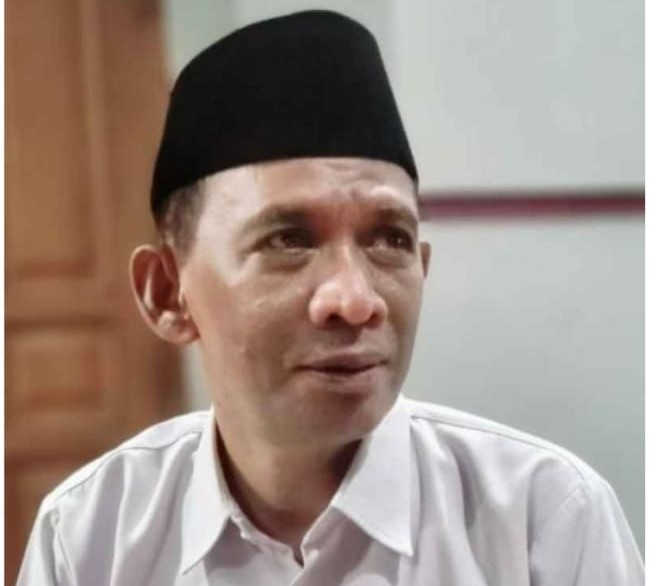
General Secretary of the Indonesian Ulema Council (MUI), Indramayu Regency
The “Tanwir” forum—held in conjunction with the 114th anniversary of the Muhammadiyah organization in Palu, Central Sulawesi (November 13–15, 2026)—is currently underway. Attended by the President of the Republic of Indonesia, Prabowo, the event carries the theme “Uniting the Nation Together.” This signifies the future direction and universal message of the Muhammadiyah movement.
The “Tanwir” forum—a deliberative body within Muhammadiyah positioned just below the *Muktamar* (National Congress) and analogous to the “grand conference” (*konferensi besar*) within Nahdlatul Ulama (NU)—warrants close attention. It takes place amidst heightened political tensions among the elite, following the revelation that several active high-ranking Indonesian National Police (Polri) generals had been wiretapping President Prabowo. Furthermore, the event coincides with the resignation of Gibran from his position as Vice President, triggered by a scandal involving a fraudulent high school equivalency certificate—a matter confirmed by a Supreme Court ruling.
These two political developments are major events on the national stage. In this context, Muhammadiyah’s (religious) perspective becomes vital in guiding the nation’s course—ensuring that the governance of the state is not conducted in a “reckless” or “irresponsible” manner, to borrow the term used by Prof. Haidar Nasir, General Chairman of the Muhammadiyah Central Executive Board.
Mitsuo Nakamura, an anthropologist from Japan, considers Muhammadiyah to be of equal importance to Nahdlatul Ulama (NU); together, they serve as the two wings of the “Garuda” (the national symbol of Indonesia) and act as cultural anchors for the nation.
In Nakamura’s view, these two Islamic organizations serve as the primary pillars of “civil society” and stand as icons of moderate Islam in Indonesia, even though their specific areas of focus and modes of operation naturally differ. Therefore, it is important for Muhammadiyah—as a major Islamic organization in Indonesia—to provide an articulate response to the two aforementioned political events. There is no need to be “allergic” to politics, provided it is framed within the context of national and state-level politics, rather than being reduced to practical or partisan maneuvering.
Much like Nahdlatul Ulama (NU), no one questions Muhammadiyah’s contributions to the nation—even if their approaches and forms of movement differ. This includes their role during the era of the struggle for Indonesian independence, as well as their ongoing contributions throughout various political regimes up to the present day.
The challenge facing Muhammadiyah today—much like it was 45 years ago, as noted by Gus Dur in his essay “Muhammadiyah and the Islamic Revival in Indonesia” (published in the 1981 book *Muslim di Tengah Pergumulan* [Muslims Amidst the Struggle])—lies in the emphasis placed on professionalism in organizational management and the outcomes of its programs.
On one hand, as Gus Dur observed, this focus on professionalism has lent a modern character to Muhammadiyah’s charitable endeavors—such as its educational institutions at all levels and its hospitals spread across Indonesia—producing professional human resources. It has also allowed the organization to adapt to the requirements of a modern state bureaucracy, though this has arguably led to a certain “elitism.”
Consequently, from Gus Dur’s perspective in the aforementioned essay, Muhammadiyah has tended to become too preoccupied with “technical” matters, failing to broaden the spectrum of its charitable work to include the kind of grassroots empowerment championed by its founder, KH Ahmad Dahlan. That was Gus Dur’s perspective on Muhammadiyah at the time.
It is precisely here that the role and function of the Muhammadiyah organization must be re-emphasized—as suggested by Prof. Nurcholish Madjid—by serving as a “psychological striking force.” This acts as an inner, guiding energy for those in power, ensuring that political authority is not merely effective in carrying out its mandate, but is also firmly rooted in a foundation of moral ethics and public justice. This is the true religious stance of Muhammadiyah—much like that of Nahdlatul Ulama (NU): it must remain a pillar of moral ethics within the life of the nation and the state. It should not become a political opposition movement, yet it must also avoid any moral compromise driven by political pragmatism—unless such engagement serves solely to uphold moral standards for the exercise of political power in the public sphere.
The dilemma is this: if Muhammadiyah focuses exclusively on its own organizational professionalism, and if NU concerns itself solely with building “political bargaining” power in its relationship with the state—then to whom can the people turn when the state’s narrative is entirely co-opted by paid “trolls” (buzzers) seeking to legitimize political power?
This is the core national problem we face today. It is not that the nation’s ideology, Pancasila, is under threat, nor that the territorial integrity of the Unitary State of the Republic of Indonesia (NKRI) is being torn apart; rather, the nation’s moral foundation is being slowly eroded because the state is being managed in a reckless, haphazard manner. Rules are bent and manipulated to suit the appetites of those in power, straying far from the principles of public moral justice.
It is toward addressing these issues that Muhammadiyah’s “Tanwir” forum in Palu, Central Sulawesi, is directed—all while maintaining a clear focus on the organization’s internal strategic agenda.
Best wishes for the Tanwir and the 114th anniversary of Muhammadiyah. May it contribute to guiding the direction of our national life—a universal mission that Muhammadiyah carries as it walks the path of the nation’s civilization.
Wassalam
Indramayu, November 14, 2026
—–