Between Dreams, Wiralodra’s Legacy, and the Test of Power
By:
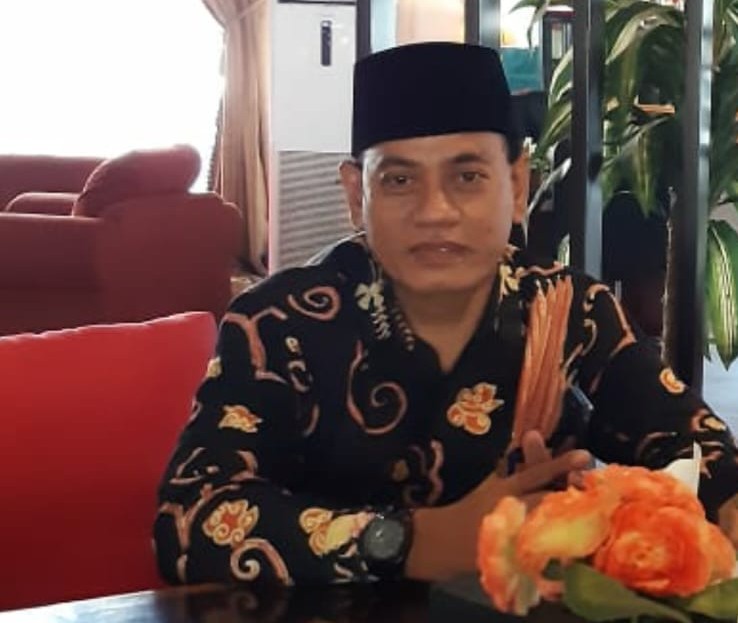
*Dr. H. Masduki Duryat, M. Pd.I., CLA., CFLS*
(_Rector of the Al-Amin Islamic Studies Institute, Indramayu, and Postgraduate Lecturer at UIN Siber Syekh Nurjati Cirebon_)
During an event organized by the Indramayu Regency Indonesian Ulema Council (MUI)—followed by a working meeting and coordination session involving commissions, affiliated bodies, and district-level MUI chapters under the overarching theme “Elevating Intentions, Grounding Public Benefit” (*Melangitkan Niat, Membumikan Maslahat*) on Saturday, August 22, 2026, at the Istana Bangun Jagat Hotel in Balongan, Indramayu—numerous agreements were reached regarding the MUI’s work program.
Following the event, the hotel owner, H. Gorry Sanuri, presented the author with a book titled *Indramayu Darussalam*. Upon careful study and reading, the author found it to be a compelling work.
Reading the book *Indramayu Darussalam: Menapaki Jalan Otonomi Daerah—Otobiografi Haji Gorry Sanuri* (Indramayu Darussalam: Walking the Path of Regional Autonomy—The Autobiography of Haji Gorry Sanuri) by Soimin, S.H., M.Hum., feels like viewing Indramayu through two mirrors simultaneously: the mirror of history and the mirror of the future. This book is not merely the autobiography of a prominent figure; it also offers a vision for how the land of Wiralodra should be managed—a region rich in resources, yet one where that wealth must ultimately translate into the well-being of the people.
The concept of *Indramayu Darussalam* appears to have deep historical roots. It seems to resonate with the aspirations of Prince Arya Wiralodra, as inscribed in the historical record: *”Nanging benjing Allah nyukani kerahmatan kang linuwih, darma ayu mulih harja tan ana sawiji-wiji…”* (But in the future, God shall bestow abundant grace; Dharma Ayu shall return to prosperity, free from all want…). It is a prophetic vision of a future Dharma Ayu that is prosperous, safe, and peaceful—a place where the people and their leaders work hand-in-hand, and where prosperity is shared by all.
From that perspective, *Darussalam* is far more than just a beautiful name. It is a civilizational project.
This book is organized into five chapters. The first chapter introduces the grand vision being proposed. The second chapter acquaints the reader with Haji Gorry Sanuri and his work in the land of Wiralodra. The third chapter forms the heart of the book, detailing the philosophy and actions of Haji Gorry in realizing *Indramayu Darussalam*. The fourth chapter links this vision to far more concrete agendas: poverty alleviation and the creation of public welfare. Finally, the fifth chapter serves as a conclusion, summarizing the ideas and aspirations presented.
Intriguingly, the *Indramayu Darussalam* concept does not stop at historical romanticism. Haji Gorry offers a set of relatively concrete principles: being community-oriented and responsive to community needs, respecting local customs and culture, maintaining environmental awareness, avoiding discrimination, building partnerships, ensuring clean governance, and implementing performance-based budgeting.
Herein lies both the strength and the challenge of this book.
Indramayu possesses extraordinary assets. A vast sea rich in fisheries and salt, agricultural lands, forest areas, the oil and gas industry (including Pertamina), and various other economic potentials constitute a form of natural capital not enjoyed by every region. Theoretically, a region with such assets should possess strong fiscal and economic capacity. Yet, natural wealth does not automatically generate prosperity.
This is the paradox of Indramayu’s development: a wealthy region does not necessarily mean a prosperous populace.
Therefore, the most crucial question after reading this book is not whether the *Indramayu Darussalam* concept is beautiful—it clearly is. The question is far more serious: can it be turned into reality, or will it remain merely a political and moral—perhaps even utopian—concept?
The answer hinges on one thing: governance.
Abundant natural resources can become a blessing if managed with integrity and transparency, and with a commitment to the public interest. Conversely, natural wealth can turn into a curse if controlled by a select few, exploited without regard for the environment, or fails to generate a “trickle-down effect” for the community.
Therefore, the principle of clean governance proposed in this book is not merely an accessory but the fundamental cornerstone. Without clean governance, performance-based budgeting risks becoming nothing more than figures in a document. Without a commitment to the community, development may look magnificent on paper yet yield meager results. Without the principle of non-discrimination, regional autonomy could actually give rise to new forms of inequality.
Furthermore, the vision of *Indramayu Darussalam* must be tested against measurable indicators: Has poverty genuinely declined? Has education improved? Has healthcare advanced? Are farmers and fishermen more prosperous? Have job opportunities increased? Do the children of Indramayu face a better future than the previous generation? And most importantly, does Indramayu’s natural wealth return to its people in the form of prosperity?
These questions are crucial because regional autonomy is, at its core, about more than just transferring authority from the central government to the regions. Autonomy represents an opportunity to build a government closer to the people, one that better understands local needs while remaining accountable for the well-being of its community.
In this context, Soimin’s book on Haji Gorry Sanuri deserves to be read not merely as the autobiography of a prominent figure, but as a set of *ideas to be tested by time*. It offers a roadmap. Yet, a map is never the journey itself; a concept does not automatically translate into reality.
*Indramayu Darussalam* will only find its true meaning when its waters continue to sustain fishermen, its rice fields bring prosperity to farmers, its industries create jobs, its budget serves the people, its government remains clean, and no citizen feels like a mere spectator amidst the wealth of their own region.
The legacy of Arya Wiralodra is an aspiration. Haji Gorry’s ideas represent the intellectual and political endeavor to carry that legacy forward. Yet, its realization is a task for an entire generation.
For ultimately, *Darussalam* is not a slogan for a region merely wishing to appear prosperous. *Darussalam* signifies a state where the people truly feel safe and valued, enjoy a decent standard of living, and possess a future.
And therein lies Indramayu’s greatest test: will the wealth bestowed by God become a blessing for the people, or will it remain nothing more than figures in a development report?
Indramayu, August 23, 2026
——-