“Mataan Lakum Walian‘amikum: When Livestock Tests Human Consciousness”
(Livestock Day Reflection, April 10)
By: Ali Aminulloh
That morning, chickens were calling, cows chewed quietly, and dew still hung on the tips of the grass. Life seemed simple, until we realized that it was on this that human life rests.
In the Quran, Allah reminds us with a sentence that is both clear and moving:
“mataa‘an lakum wa li-an‘aamikum”: a pleasure for you and for your livestock.
One sentence, two subjects: humans and animals. No one is superior. No one is inferior. Only a relationship.
However, in the modern world, that relationship has slowly transformed into domination.
When “Pleasure” Turns into Exploitation
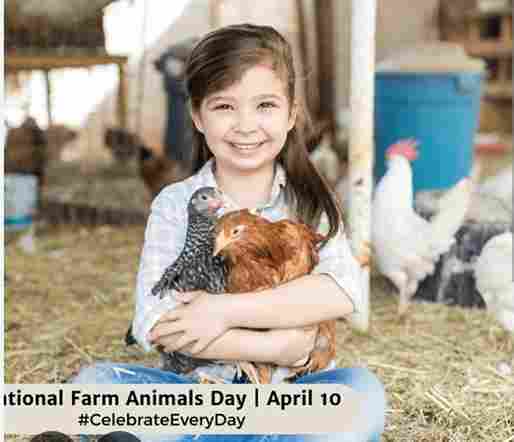
Every April 10, the world commemorates National Farm Animals Day. A momentum born of concern that behind the meat we eat, the milk we drink, and the eggs we enjoy, there is a life that is often overlooked.
In many industrial farms, animals are no longer seen as living beings, but rather as production machines. Cows that never experience pasture. Chickens that live in cramped spaces without light. Goats that are forced to grow rapidly with chemical interventions.
They appear on our dinner tables without ever truly entering our consciousness. Out of sight, out of mind.
Yet the Prophet Muhammad (peace be upon him) warned long ago:
Whoever does not have mercy on the creatures of the earth will not be shown mercy by the One in Heaven. Even in slaughtering, Islam teaches ihsan: the gentlest, least painful method (Idza dabahtum fa ahsinul dzibhata).
This means that, from the beginning, Islam has not only regulated halal (permissible) but also civilized (civilized).
Trilogy of Awareness: From Philosophical to Social
Amidst this reality, the concept of the Trilogy of Awareness, initiated by Shaykh Al Zaytun, finds relevance.
First, philosophical awareness.
That livestock are not merely objects of consumption, but part of a living system created with a purpose. They are a trust. When humans forget this meaning, they easily slip into exploitation.
Second, ecological awareness.
Livestock farming is not just about food production, but also about the balance of nature. Unsustainable practices, such as excessive antibiotic use, livestock waste, and overpopulation, not only harm animals but also damage the earth we share.
Third, social awareness.
What we consume is a moral choice. Every egg we buy, every piece of meat we consume, is a vote. Are we supporting a just system, or perpetuating hidden suffering?
Restoring Lost “Relationships”
National Livestock Day is not just a commemoration. It is a reflection.
A mirror that reflects one simple question:
Do we still see animals as living beings, or merely as products?
The Quran places humans and animals on equal footing. The Prophet exemplified compassion even in the most technical matters. And modern consciousness demands that we choose: whether to continue living in oblivion, or to begin building more civilized relationships.
We may not be able to change the world all at once.
But we can start with one small awareness: choosing to be more ethical, treating others more humanely, and respecting life, no matter how small.
Because ultimately,
how we treat animals…
is a reflection of who we are as human beings.**
Indonesia, April 10, 2026
———-