Is Health a Choice or a Consciousness?
(Reflection on World Health Day, April 7)
By: Ali Aminulloh
While the world is becoming increasingly sophisticated in treating disease, humans are actually becoming more familiar with illness. Hospitals are increasing, medical technology is advancing, but lifestyles are moving away from health. This is the paradox of our times: we know more about health, but we are living increasingly unhealthy lives.
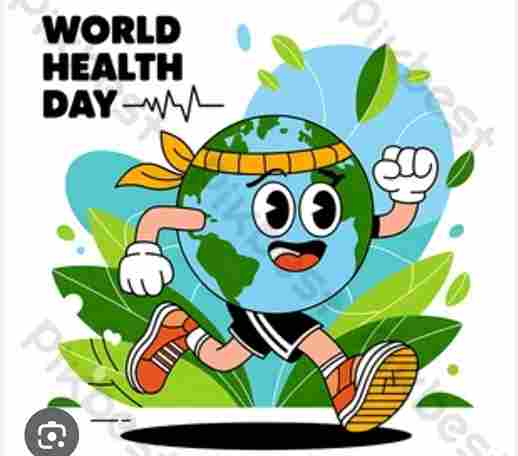
Every April 7, the World Health Organization reminds us through World Health Day that health is not merely the absence of disease, but rather a state of completeness: physical, mental, and social. The 2026 theme, “Together for Health, Stand with Science,” is a call to re-establish a foundation for collective awareness and scientific truth amidst the fog of hoaxes and instant lifestyles.
However, amidst this global hustle and bustle, a model of healthy living is growing quietly but consistently in the Al Zaytun community.
Here, health is not understood as a temporary program, but as a living culture. The educational vision is clear: a center for education to develop a culture of tolerance and peace, leading to a healthy, intelligent, and humane society. A vision that doesn’t stop at slogans, but is translated into daily practice.
The main foundation is the trilogy of awareness initiated by Sheikh Al Zaytun: philosophical, ecological, and social awareness.
Philosophical awareness teaches humans to understand the deeper meaning of life, that the body is a trust that must be protected, not exploited. From here, health becomes a value, not just a necessity.
Ecological awareness is present in concrete form: the organic farming movement promoted in the Al Zaytun community. Food is not simply produced, but is ensured to be clean, natural, and in harmony with nature. Without excessive chemicals, without artificial flavors or preservatives, a choice that may seem simple, but has a significant impact on long-term health.
Meanwhile, social awareness fosters shared responsibility. No smoking is allowed in the community, not simply because of prohibition, but because of the collective awareness that one bad habit can harm many. The environment becomes a space for mutual care, not neglect.
A culture of healthy living is also manifested in structured physical activities, such as the OKEKE (Leg Fitness) program. A simple yet consistent movement that affirms that health doesn’t always require expensive equipment; it simply requires willpower and discipline.
Al Zaytun’s work demonstrates one important point: that true health doesn’t arise from a reaction to disease, but from a conscious, planned, and sustainable lifestyle.
While the world is still busy addressing the health crisis, Al Zaytun offers a more fundamental approach: building conscious individuals. Aware of themselves, their environment, and their fellow human beings.
Because ultimately, health isn’t just about living longer, but about living more truly.**
Indonesia, April 7, 2026
———-