KICK-OFF STRENGTHENING THE ROLE OF THE MUI INDRAMAYU FROM THE PERSPECTIVE OF THE HISTORIC ROLE OF ISLAMIC CIVIL ORGANISATIONS
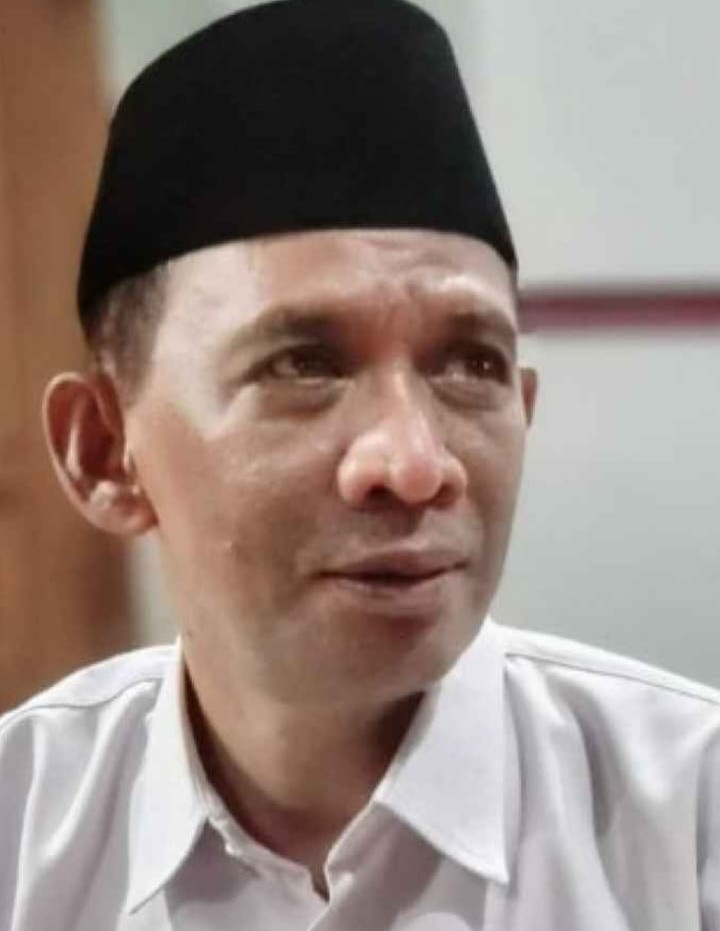
By: H. Adlan Daie
National Political Analyst/General Secretary of the MUI, Indramayu Regency.
The Indonesian Ulema Council (MUI) of Indramayu Regency, under the leadership of Chairman KH Syairozi Bilal, must be projected not merely as a “melting pot,” a gathering point for diverse Islamic organizations, but also as a “kick-off,” a meeting point for new awareness to strengthen the cohesion of their historical roles.
Dr. Aqib Suminto, in his book “Politics of Islam in the Dutch East Indies” (Published 1985), a book from his Doctoral Dissertation (S3), provides insight and a historical review of the role of Islamic organizations in the past. The “kick-off” point is reflected in the formation of the Majelis Islam A’la Indonesia, abbreviated as “MIAI.”
That was the “kick-off” for the historical awareness of the unity of Islamic mass organizations under the umbrella of “MIAI,” formed in September 1937, at the end of Dutch colonial rule in Indonesia—then known as the “Dutch East Indies,” to counter Dutch discriminatory policies.
MIAI was a critical voice against Dutch policies, including the “Ordonantie” regulation, or tightening of religious teaching, budget discrimination against Islamic schools, and even opposing the Dutch policy of permitting large corporations to enter traditional markets—the majority of which were Muslim merchants.
In 1943, colonial rule shifted from Dutch rule to the Japanese regime. During the Japanese occupation, MIAI transformed into the “Majelis Syuro Muslimin Indonesia,” abbreviated as “Masyumi.” In its initial form, it was not a political party but rather a federation of Islamic mass organizations in Indonesia.
Prominent Islamic mass organizations that united within “Masyumi” included Ki Bagus Hadikusumo (Muhammadyah), KH. Wahid Hasyim (NU) and H. Agus Salim (Sarekat Islam) would later become key Muslim figures in the Investigating Committee for Preparatory Work for Indonesian Independence (BPUPKI), established by the Japanese in June 1945.
It was within the BPUPKI that these prominent Islamic organizations united in a unified effort to formulate the foundations of the Indonesian state, which was about to become independent, by adopting the first principle, “Belief in the One and Only God.” The process was long and tortuous, leading to its final ratification on August 18, 1945. This was the historical role of Islamic organizations in the founding of the Indonesian nation-state.
This historical role served as the starting point for Major General Alamsyah Ratu Prawira Negara, the Minister of Religious Affairs at the time, explaining that the formation of the Indonesian Ulema Council (MUI) was a historical continuation of the roles of the MIAI and Masyumi mentioned above. The objective reality of the Indonesian nation, with an absolute Muslim majority, would be difficult without the involvement of Islamic organizations in development.
The point to be emphasized in this short article is that the relationship between the MUI and the government, in the context of Indramayu, the relationship between the MUI and the local government, the Regional People’s Representative Council (DPRD), and other public institutions, is crucially positioned within a “compatible” relationship, as reflected in the historical role described above.
A “compatible” relationship, to cite the metaphor of Prof. Dr. Nurcholis Madjid, a Muslim scholar, is not about who needs whom, but about mutual need, like a computer where the particles within each have their own functions but can only function optimally when interconnected.
From Imam Al-Ghazali’s perspective, in his book “Al Iqtishad fil i’tiqad,” the relationship between religion and power is like “twin brothers.” Religion is the foundation, and power is its guardian. Religion without power has minimal social influence, while power without the foundation of religion easily collapses in its political authority.
In other words, the MUI Indramayu’s vision of “Shodiqul Hukumah” must be positioned within a “compatible” relationship. This means that not only must the MUI partner with the local government, but also that the local government must position itself as a symbiotic partner, not a dominant one, to create a “religious” social climate and ecosystem.
In the policy of allocating budgets to Islamic organizations, including the MUI Indramayu, for example, the local government should not position itself in a “power egocentric” position to “suspend” the MUI’s role, but rather, it is the government’s constitutional obligation to revitalize the MUI’s religious role.
Furthermore, Indramayu was designed with a “religious” vision, which would be impossible without a “compatible” relationship with Islamic organizations and the MUI Indramayu Regency as an authoritative religious institution, unless the “religious” vision is merely a tool for “scamming” electoral campaigns.
The fundamental variables of the religious vision, from the MUI’s perspective, must be maintaining social order, adherence to the law, and maintaining morals and public decency among a predominantly Muslim population.
Within the framework of these historical roles, both the regional government and the Indramayu MUI must project their social roles in the public interest within a “compatible” relationship, mutually dependent on each other in a proportional and elegant balance in short, in Indramayu, where the absolute majority of the population is Muslim, the local government finds it difficult to establish relationships with Islamic organizations and the Indonesian Ulema Council (MUI), which represents the diversity of Islamic organizations within the region.
This is where the awareness of the relationship between the local government and Islamic organizations, including the Indramayu MUI, is placed, building a relationship of mutual need in a joint effort to maintain social order and maintain the boundaries of propriety in public spaces within the social hierarchy.
Wassalam.**
Indramayu, February 24, 2026
——