The Poor and Abandoned Children Are Cared for by the State
Author: Jacob Ereste
Freelance Journalist
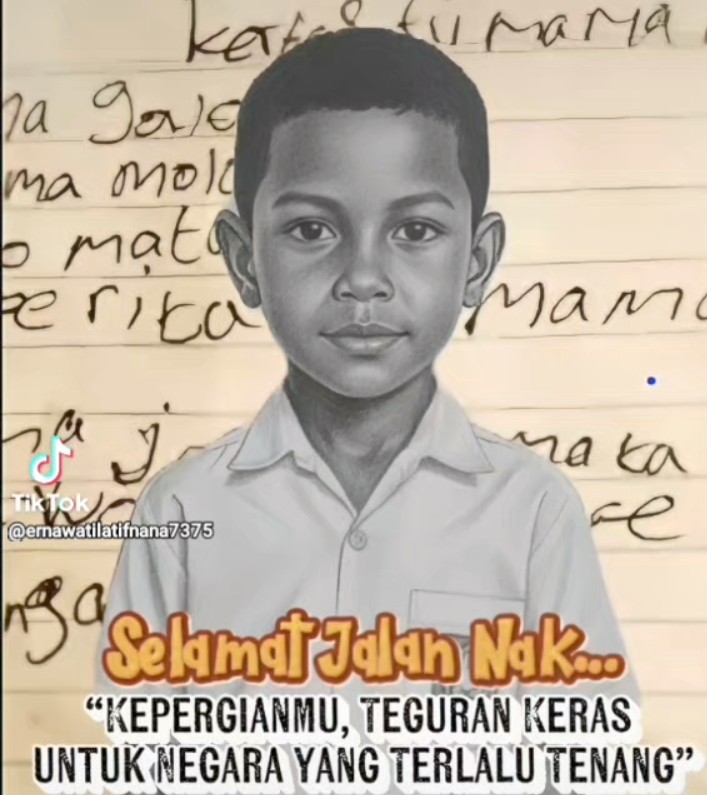
A fourth-grade elementary school student in Jerebuu District, Ngada, East Nusa Tenggara, committed suicide to free his mother from school fees, as he could not afford to buy notebooks, which probably cost more than 10,000 rupiah.
The 10-year-old’s choice immediately struck a chord with everyone who still had a vestige of humanity, sympathy, empathy, and solidarity, regardless of their origin, religion, family background, or even their own identity.
This tragic choice, coupled with the heroism of this 10-year-old, truly captured the attention of many. Because in his conscious choice of attitude, he marked it with a heroic message for his mother, yet it cut through a sense of humanity that was nearly exhausted due to powerlessness in the face of real economic pressures during the most strategic preparatory period for preparing for the 100th anniversary of Indonesian independence. It is fitting that all Indonesians enjoy blissful prosperity, no longer plagued by poverty and ignorance, a shared determination and agreement, as clearly and explicitly written in the preamble to the 1945 Constitution.
The tragedy of poverty and the desire to address the problem of ignorance of the Indonesian people becomes even more ironic when referring to the principle of social justice for all Indonesians, as enshrined in Pancasila as the nation’s philosophy of life and state ideology, which still has neglected children of the nation, such as the reality faced by YBR from Jerebuu District, Ngada, East Nusa Tenggara, which has shaken the sense of national solidarity that has faded, like a carp living on a rock, reluctant to live and unwilling to die.
This young boy from Jeberuu, Ngada, East Nusa Tenggara, represents a vivid portrait of Indonesian children who may already enjoy free nutritious meals, still being taught by honorary teachers who also work as motorcycle taxi drivers, like those in Sukadana, East Lampung, who are forced to sell fried rice until the evenings to meet the basic needs of their household and their two children.
The hard work of Abdul Somad from Jambi and Umar Bakri from Martapura, South Kalimantan, who have served more than eight years as honorary teachers, for whatever reason, has not yet led to a better standard of living, allowing them to enjoy a more comfortable and peaceful old age. It seems this same reality often fuels feelings of injustice, causing many of the nation’s leading generations to decline and fade, including those who are now reluctant to sing the songs of our patriots: “For You, Our Country, We Promise”… or the song “Maju Tak Gentar…” (a distorted translation of “Membela Yang Bayar” or “Membela Yang Bayar” or “Membela Yang Bayar” or “Membela Yang Bayar” or “Membela Yang Bayar” or “Membela Yang Bayar” or “Membela Yang Bayar” or “Membela Yang Bayar” (Defending Those Who Pay).
It may be that the meaning of the concept that the poor and neglected children are cared for by the state, as written in the preamble of our country’s constitution, has been misinterpreted or misunderstood. Therefore, for nearly a century of this republic’s existence, the promises and ideals to overcome the problems of poverty and ignorance have never been able—or indeed, unwilling—to be fulfilled, so that the position of Indonesian independence does not continue to languish before the gates of independence, never entering and experiencing a truly independent atmosphere.**
Banten, February 8, 2026
——