Why Does the State Celebrate Villages and What Answers Are Quietly Growing in Mekarjaya?
By Ali Aminulloh
January 15th is commemorated as National Village Day. A seemingly simple date, yet it raises a big question: why does the state feel the need to “pause” for villages? Haven’t villages often been positioned as the backyard of development: far from the spotlight, far from a priority? If villages are truly important, why is the gap between them and cities still so stark?
National Village Day was established through Presidential Decree Number 23 of 2024 and is rooted in the ratification of Law Number 6 of 2014 concerning Villages, which was signed on January 15, 2014. Through this decree, President Joko Widodo wanted to emphasize one thing: villages are not merely administrative units, but the foundation of national development. Villages are the centers of social, economic, and cultural life. They are where the majority of Indonesians live and depend on their hopes.
However, the commemoration would be meaningless if it stopped at ceremony. The question then shifts: how can villages truly be equal to cities? How can villages not only be “built” but also be able to rebuild themselves?
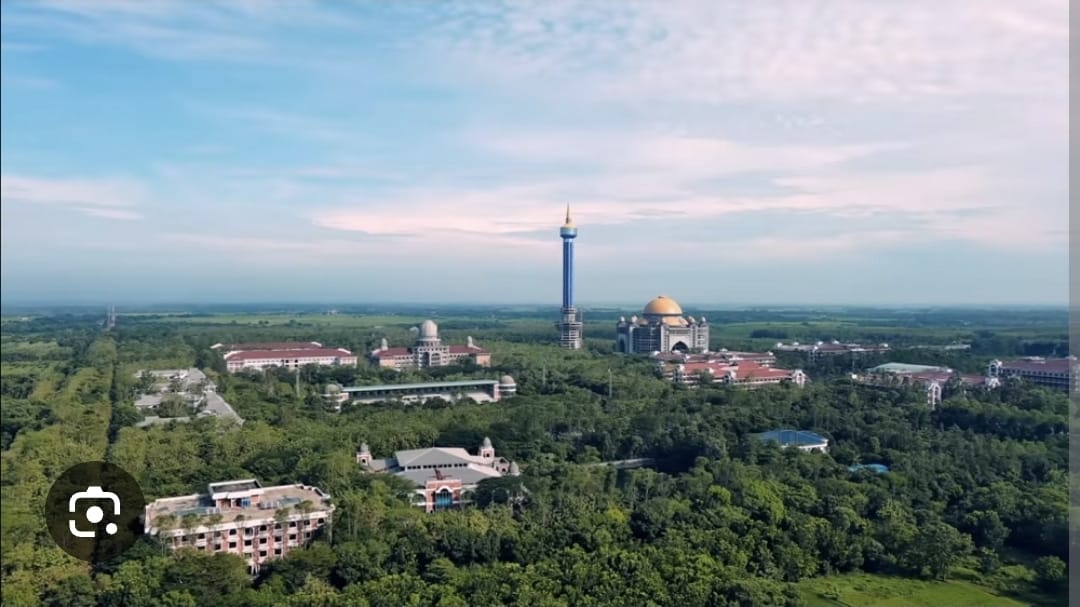
This is where a story from Mekarjaya is worth reading as a mirror, perhaps even an answer. This village, once known as arid and unproductive, is slowly changing its face. Not because of mining, nor because of large-scale industry, but because of education. Through the skilled hand of Sheikh Al Zaytun, Mekarjaya is being transformed into a space of civilization: green, lush, and vibrant. Education is not just embedded in the classroom, but integrated with nature and the social pulse of the community.
From this center of education, the economy begins to move. Food stalls thrive, services grow, and communities discover new roles. The realization that villages and cities cannot remain at odds has given rise to an important symbol: the Indonesian Village and City Multipurpose Cooperative. This name is not a compromise, but a bridge. It connects the village’s backwardness with the city’s progress, bringing equality and affirming the empowerment of villages. A symbiotic relationship ensues: education drives the economy, the economy supports social life, and nature is cared for as a shared home.
All of this is built on a trilogy of awareness: philosophical awareness to honor humanity, ecological awareness to maintain environmental sustainability, and social awareness to ensure progress is shared. In Mekarjaya, this trilogy is not merely a concept but is present in daily practice.
Furthermore, this idea extends beyond one village. The Sheikh initiated the development of boarding education centers in 500 regencies/cities across Indonesia. His overarching vision is clear: education as the driving force behind village transformation. To support this, since June 1, 2025, public lectures and student training have been held every Sunday, featuring 45 professors from across the LSTEAMS (Land and School Management) disciplines. At the culmination, these professors are again invited to formulate a draft for the transformation of boarding education that will be donated to the state. Because, ultimately, only the state has the power to implement it broadly and sustainably.
National Village Day, when read from Mekarjaya, is not simply a calendar marker. It is a reminder that Indonesia’s future is not solely determined by the glitz of the city. It is also being sown in the villages, as exemplified by Ma’had Al-Zaytun. Empowered villages are not a utopia. They may be growing, quietly, in places we’ve long considered marginal.
Indonesia, January 15, 2026
——–