We’re Getting Ready to Welcome the New Year. But, Do We Know Where the Gregorian Year Comes From?
Author: Dr. Ali Aminulloh, M.Pd.I., M.E.
With every second approaching midnight, fireworks are ready to explode, prayers are said, and new hopes are pinned on the numbers of the coming year. But rarely do people ask: who first assigned numbers to time? Why do we call it 2025, and not some other number? And is the year we celebrate truly accurate?
The answers to these questions take us on a long journey, passing through quiet monasteries, Roman imperial palaces, and even the heavens where the earth revolves around the sun.
When Time Was Named: The Beginning of the Gregorian Year
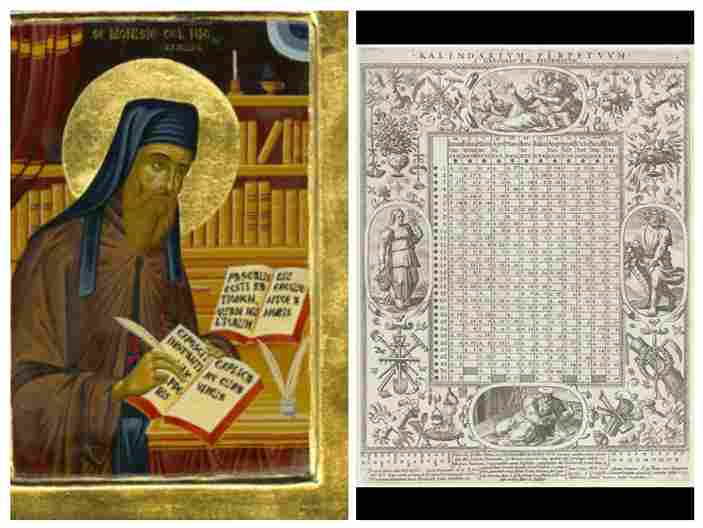
The Gregorian year wasn’t born from a feast or celebration. It was born from the silent calculations of a monk named Dionysius Exiguus. In 525 AD, Dionysius was asked to create a calendar to determine Easter. In the process, he made a major decision: to calculate time based on the birth of Jesus Christ.
He established a starting point: Anno Domini, the year of the Lord. Thus was born what we now call 1 AD.
Ironically, Dionysius himself never imagined that his calculations would one day be used by almost the entire world.
Before the Common Era: A Diverse and Fragmented Time
Before the 6th century, humans lived by many “historical clocks.” The Romans counted years based on the reigns of emperors. The Greeks used the Olympic Games. Other civilizations had their own calendars, each valid, each limited.
The calendar was more than just a matter of days and months. It was a civilization’s identity.
Julius Caesar and the Effort to Tame the Sun
Long before Dionysius, the Roman Empire had already attempted to streamline time. In 45 BC, Julius Caesar introduced the Julian Calendar. This calendar defined a year of 365 days, with an additional day every four years, called a leap year.
This was revolutionary. For the first time, the calendar was aligned with the sun’s orbit. But the universe proved to be more precise than humans. An eleven-minute difference per year may seem trivial, but over hundreds of years, it shifts the seasons and holidays.
Time is “off” again.
The Great Reformation: The Birth of the Gregorian Calendar
These small errors eventually accumulated. Until in 1582, the Catholic Church took drastic action. Pope Gregory XIII introduced the Gregorian Calendar, the calendar we use today.
Ten days were “removed” from the calendar. After October 4, 1582, the world immediately jumped to October 15. The leap year rules were also refined: not all multiples of 100 are leap years, unless they are divisible by 400.
This is the calendar that most closely follows the cosmic rhythm: it is only off by one day every 3,300 years.
Accurate, But Not Perfect
Interestingly, modern historians believe that Dionysius may have miscalculated the year of Jesus’ birth. This means that Jesus was probably born several years before 1 AD.
But history doesn’t always demand perfection. It demands consensus.
And the world has agreed.
The Calendar as a Global Language
Today, the Gregorian calendar, or Gregorian calendar, is used almost everywhere in the world as a shared language of time. Although Muslims use the Hijri calendar, Jews the Hebrew calendar, and some Orthodox churches still refer to the Julian calendar for liturgy, the modern world operates on a single, unified time reference.
Time is a bridge between civilizations.
Welcoming the New Year with New Awareness
So when the clock strikes twelve tonight, remember: the new year is not simply a changing number. It is the result of humanity’s long quest to understand the universe, harmonizing faith, science, and culture.
The Gregorian year is not just about when we live.
It is a reminder that humans have always sought to give meaning to time so that life does not simply pass us by.
Happy New Year.
May we not only age with time, but also grow with awareness.**
Indonesia, December 31, 2025
——–