Reflections on Literature 2025, Riri Satria, Chair of JSM: Literature Isn’t Dead, It’s Just Changing Habitat
JAKARTA-JAYA NEWS.COM – Throughout 2025, the pulse of literary literacy in Indonesia remained vibrant, and in some aspects, even showed a new freshness.
Poetry, short stories, and prose found alternative spaces: social media, online communities, independent poetry reading stages, and the publication of collective anthologies by communities.
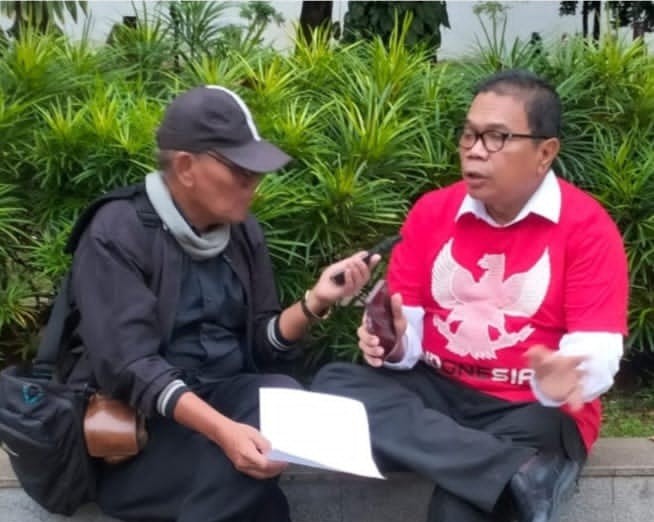
“Literature isn’t dead, it’s just changing habitat,” said the poet and writer, who is also Chair of the Millennium Literature Community (JSM), in a written interview in Jakarta on Saturday (December 27, 2025) regarding Reflections on Literature in Indonesia throughout 2025 and into 2026.
However, the main obstacle remains: the lack of a sustainable supporting ecosystem, beyond mere ceremonial events. Literary literacy often falls into an elitist trap, feeling distant from people’s daily lives, and the distribution of works remains limited to the same community circles.
The solution is not simply to increase competitions or festivals, but rather to build intergenerational and interdisciplinary meeting spaces, strengthening the role of communities as hubs of local literacy. Encourage literature to be presented in a down-to-earth language, without losing depth.
Social Relevance
Therefore, as we approach 2026, the main challenge for Indonesian literature is no longer simply to produce aesthetically beautiful works, but to make them socially relevant.
Literature that revolves solely around language play and metaphor, without engaging with the realities of society, risks alienating itself within its own small circle of readers. Yet, since its inception, Indonesian literature has been born from the anxieties of the times and the struggles of real people.
Social relevance does not mean that literature must become slogans or propaganda. Literature continues to work through subtlety, empathy, and spiritual touch.
It becomes important when it can provide language for everyday experiences, give voice to the marginalized, and assist readers in understanding their wounds, hopes, and questions. Amidst the social crisis, digital culture, and the anxiety of the younger generation, literature should exist as a space for shared reflection.
Therefore, in welcoming 2026, literature needs to be more courageous in stepping out of its comfort zone, approaching the community, engaging in dialogue with new generations, and being present in public spaces. Maintaining beauty remains important, but living beauty is meaningful beauty, one that is not only admired but also felt and needed.
“Literature is one of the pillars of civilization,” said Riri Satria, whose poetry has been published in more than 50 books.
So what about the government’s appreciation of the pulse of Indonesian literature and the future of writers?
“I see the government, through the Ministry of Culture and related agencies, has begun to show good intentions, but it still tends to be programmatic and administrative, not fully addressing the concrete lives of writers,” he replied.
Support for the publication of literary anthologies, as is done by various literary communities, is a positive step.
However, going forward, it is necessary to consider transparent and sustainable subsidy and funding schemes, not based on proximity, and to recognize literature as a cultural endeavor, not merely a supplementary activity. Literature is an intellectual work.
Meanwhile, regarding the future of literary figures, Riri Satria, also known as a digital and creative economy observer, acknowledged that Indonesia lags behind countries like Malaysia, which have the concept of “Positive Nationalists.”
We need to consider long-term forms of recognition (residency, socio-cultural security, state awards), state recognition of literary figures as living archives of the nation’s culture, and, no less importantly, recognition that is not about luxury, but about cultural dignity. The key is cultural dignity.
Proposals for the Indonesian House of Representatives
Asked again about proposals for the 2026 Indonesian House of Representatives, Riri Satria, whose poetry has been published in the poetry anthologies “Jendela (2016),” “Winter in Paris (2017),” “Siluet,” “Senja,” and “Jingga” (2019),”
said that a stronger legal framework for the literary and literacy ecosystem, not just the creative industry, is needed.
“Strengthening the cultural budget that truly reaches grassroots communities,” he argued.
Regulations that support literature’s entry into public spaces and education.
Regarding generational shift, poets and writers need to step out of their comfort zones. Generation Z lives in a visual, fast-paced, and dialogic world. Therefore:
Literature needs to be presented in new formats such as performative poetry readings, musicalization, and digital content.
Literary language must be honest and relevant, not patronizing.
Schools and universities need to make literature a space for dialogue, not just memorization.
Literature should not be merely “taught,” but lived.
Generation Z in the literary world presents an interesting paradox in that they are often perceived as far removed from literature but instead, they are creating new literary forms.
Generation Z grew up in a fast-paced, visual, and interactive digital world. They rarely encounter literature through thick books or classic canons, but rather through short excerpts, micro-poems, song lyrics, spoken word, and personal narratives on social media.
For them, literature isn’t always about “great works,” but about emotional honesty and the connection of experiences.
Because of this, Gen Z poetry is often simple, direct, and even seemingly “too honest,” but that’s precisely its appeal.
The challenge is that Gen Z literature is often viewed as shallow or aesthetically immature by previous generations.
In fact, this is more a difference in medium and era, not a lack of quality.
Many of them are searching for form, language, and the courage to speak out. If given space for dialogue rather than judgment, they could potentially enrich the Indonesian literary landscape with new perspectives on identity, mental health, relationships, and the digital world.
“Going forward, the role of writers and literary institutions is to bridge the generation gap, not close doors. Literature needs to be present in spaces familiar to Gen Z: schools, campuses, open stages, and digital platforms, without losing its depth, of course. If literature is willing to listen and engage in dialogue, Generation Z is not a threat to literature, but its future,” said the poet, who was born in Padang on May 14, 1970.
The phenomenon of poetry transformed into song, whether through the hands of composers like Ananda Sukarlan or through the aid of artificial intelligence (AI), demonstrates one important fact: poetry is never frozen. It is not a museum artifact worthy only of being read in the silence of a book, but rather a living creature that can move through mediums, breathe in sound, and find its audience in new ways.
When poetry becomes music, it expands its sphere of influence, transcending the page and into the realm of hearing and feeling.
What Ananda Sukarlan does through art songs, or poetic renditions, demonstrates that poetry and music share the same roots in rhythm, pauses, and emotion. Music doesn’t “destroy” poetry; it reveals layers of meaning that might otherwise be hidden behind the words. Tone gives body to metaphor, tempo breathes into lines. For me, at this point, interpretation becomes multiple, and that’s not a weakness of literature, but rather its strength.
The presence of AI in this process brings a new dynamic. AI can transform poetic text into song, selecting harmonies, and even determining the musical mood in a matter of seconds. However, here’s an important limitation: AI is a tool, not a creator of meaning. Machines don’t have childhood memories, never have heartbreak, don’t know fear, longing, or hope. Poetry is born from human pain and love, something that cannot be simulated, only imitated, something that doesn’t fall within the realm of AI at all.
Therefore, what needs to be maintained is not a rejection of technology, but rather its ethics. Copyright must be respected. The poet’s name must not be lost behind the sophistication of algorithms. Poetry is not simply “raw material” that can be processed without permission or moral awareness. Technology should enrich the literary experience, not reduce poetry to mere content.
If used wisely, AI can actually be a crucial bridge, especially for the younger generation. Poetry sung, visualized, or digitally processed can reach Gen Z, who live in an audio-visual culture. From song, they can return to text. From sound, they find words. From technology, they ultimately encounter literature.
“Ultimately, poetry transformed into song, whether by humans or with the help of machines, teaches us one thing: living literature is literature that is willing to dialogue with its times, without losing its dignity and humanity,” he emphasized.
Technology may evolve, media may change, but meaning remains rooted in humanity. And as long as those roots are maintained, poetry will always find a way to live. (***)
Contributor: Lasman Simanjuntak
———