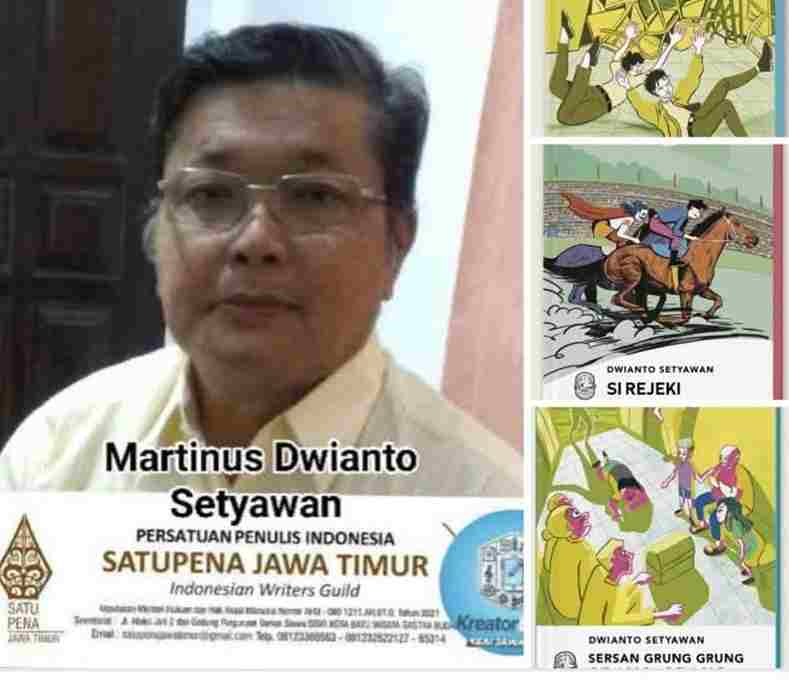
SatuPena East Java Carves History on the Tombstone of Writer Martinus Dwianto Setyawan
Author,Jacob Ereste
Freelance Journalist
SatuPena East Java’s initiative to write about the work of Martinus Dwianto Setyawan, a writer who has contributed to the world of East Javanese literature, deserves to be appreciated as a tribute to the profession of writing. This book features poetry, essays, or poem-essays about him, reflecting on his memory and appreciation for Martinus Dwianto Setyawan.
This ingenious initiative is not merely an award and respect, but also a spiritual awareness and understanding of those who have worked and made contributions of eternal value. Therefore, their work deserves to be immortalized for memory—or as food for reflection—for future generations, knowing that in his time there was a figure who did good to enlighten the nation through his work and tangible activities.
Similar ideas have been repeatedly proposed and socialized by authors to commemorate activists, particularly in Jakarta. Starting from Doli Yatim, a driving force behind the rejection of the amendments to the 1945 Constitution since its initial ratification in 2002, Muchtar Pakpahan, a phenomenal labor movement figure during the New Order era, AE Priyono, a writer and activist, and Muhammad Taufik, a journalist who persistently resisted through his works and activities, as well as Muchtar Efendi Harahap, a journalist, writer, and activist from Yogyakarta (1978) to Jakarta, only Agus Santoso (Lenon) was able to realize Isti Nugroho’s dream by publishing a memoir written by fellow activists who were also his peers. This book was published on the 40th anniversary of his death.
Therefore, the idea and desire of SatuPena East Java to publish a memorial book for literary figures deserves support, so that a similar frequency can signal to all stakeholders the importance of honoring a figure—including in other fields—as a marker, if not a “tombstone” of eternity, marking the journey of a figure who has dedicated his knowledge and skills in any positive way to this nation and state, which has not yet been freed from ignorance and poverty in the broadest sense. It goes beyond mere financial means.
The idea and initiative of SatuPena East Java to publish a memorial book for Martinus Dwianto Setyawan is truly commendable, if realized. This could initiate a movement of awareness and understanding of the need to recognize those who have made social, moral, and spiritual contributions. The role of civil society can only be appreciated and rewarded through the ideas and initiatives of civil society itself. It is impossible to expect the government, including the Ministries and cultural institutions involved in the role—and all the sacrifices they have made—to contribute to the intellectual life of the Indonesian nation, which is of no small value.
The hope of publishing a memorial book for a public figure who has contributed so much and is worthy of emulation by future generations is sincerely hoped for and successful. It is no exaggeration to believe that the idea and initiative to publish diverse impressions and recollections of the figure in question—written by various authors from diverse disciplines and personal backgrounds—can enrich our literary heritage in Indonesia, which is increasingly being marginalized and marginalized.
Hopefully, SatuPena East Java’s desire to publish a book for Martinus Dwianto Setyawan can be realized and successful. This will inspire enthusiasm—as part of a movement to awaken spiritual awareness and understanding—not merely as a personal practice but also as a shared perspective and collective thought united within a noble framework for those who have passed away. It will also plant the seeds of thought and reflection that are brilliant for us all.*
Pasar Baru, July 31, 2025
—