Culture and Religion as Guides to the Ethics, Morals, and Morality of Noble Humans on Earth
Author,Jacob Ereste
Freelance Journalist
The role of religion in shaping the mindset, behavior, and cultural expression of society. This phenomenon is clearly evident in the diversity of customs influenced by the religions existing in Indonesian society. This includes the belief systems unique to local regions.
Culture strongly influences the development of religion, especially in understanding the religions practiced and passed down from generation to generation. Consequently, in Indonesia, religions influenced by local culture include Kejawen Islam, Javanese Christianity or the Batak Protestant Christian Huria (HKBP), Javanese Hinduism, and Theravada Buddhism (Hinayana), Mahayana, and Vajrayana.
Therefore, the reciprocal relationship between religion and culture does not exist in a vacuum, as religion and culture interact closely with local culture, forming distinctive religious practices. Religion, in turn, provides a moral framework and values for culture. Therefore, religious expression in the archipelago is highly diverse and contextual in nature.
However, culture, logically and historically, existed before religion became the chosen faith of humans on earth. Historically, culture emerged because it encompasses all patterns of human life, beginning with customs, language, and values developed by certain communities since they began interacting and living together within a group or community. Logically, religion emerged later as a refinement of human culture, a system of beliefs and spiritual practices designed to answer questions about the origins, meaning of life, and purpose of human interaction with nature and the Creator of the universe and all its contents.
Therefore, culture serves as the social and symbolic framework of life within the framework of human communication, starting from communities and broader social ties, while religion followed later as a form of cultural expression based on spiritual and moral experiences.
The role of culture in influencing the presence and development of religion—especially in its practice—is heavily influenced by the interpretation of teachings, including sacred texts, teachings, and religious doctrines, which are deemed more contextual and acceptable to local communities.
Therefore, everything from symbols to religious practices is imbued with cultural elements, from spoken language and clothing to art and food, to the architecture of residences, meeting halls, and places of worship—strongly reflecting local characteristics that enrich and embellish religious expression and the character of the religion that developed in that area.
The language of religions that develop in a region—as a means of conveying religious teachings and guidance—is constantly growing and developing, heavily influenced by local culture, including language, terminology in customs, and literature and art with local characteristics.
In social structures, kinship systems, customs, and social status influence the institutional structure of religion, even to the extent that local religious figures become distinctive in their symbolic representation.
This is how syncretism emerges in various places where religions develop through the blending of local cultures and traditions, thus taking on local characteristics, such as Javanese Islam, often called Kejawen, or Catholicism in Flores, which is deeply ingrained in local customs and traditions.
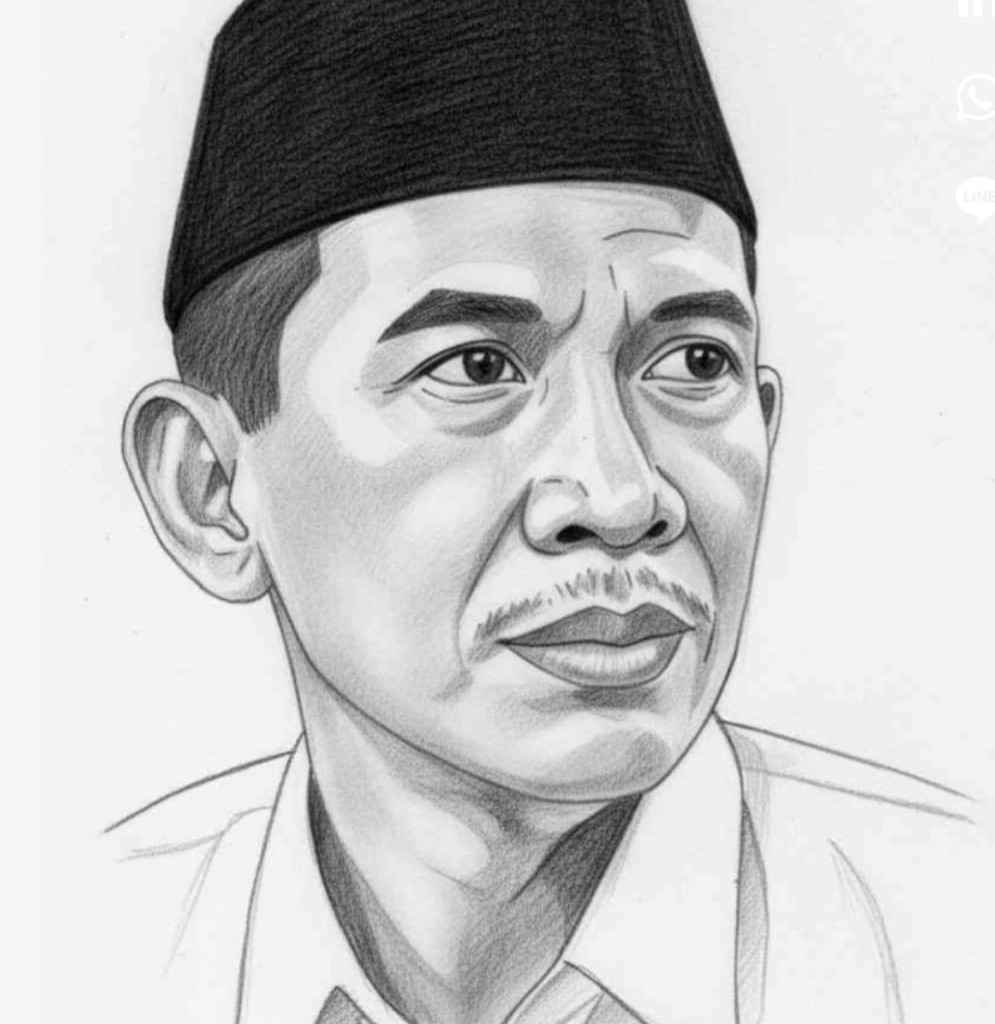
It seems that this is the basis for misunderstandings about culture and religion, often misinterpreted when expanding knowledge of reality. The kopiah is often claimed to originate from, or even belong to, a particular religion, simply because it is predominantly worn by its adherents. Similarly, the obligatory wearing of sarongs during obligatory worship—prayer—is interpreted as requiring the wearing of a sarong, as is the tradition in Islamic boarding schools in Indonesia. However, just as the tradition of wearing kopiah is viewed from a national and international perspective—no longer through local lenses—the kopiah, which has become a hallmark of Sukarno’s appearance, is understood by the international community to belong to the Indonesian nation.
The story of Prophet Adam’s dialogue with the ruler of the heavens during his interrogation after his fall to earth clearly implies a culture that preceded the discussion of the values of religious obedience that must be upheld and adhered to by humanity, so that they remain on the path of sirotalmustakim and adhere to the guidance of amar ma’ruf nahi munkar, namely the command from heaven to do good and righteousness and reject and prevent evil or wrongdoing, in accordance with the values taught by religion, and the ethics, morals, and noble character of humans bestowed by God as His representatives on earth.***
Banten, July 19, 2025
—